



Decoding the 'Free-From' Label
When you see a claim like 'gluten-free' or 'nut-free', it signifies that a food manufacturer has followed specific procedures to ensure the final product is safe for people with particular allergies. In India, the Food Safety and Standards Authority of
India (FSSAI) governs these declarations. The goal is to provide clear, trustworthy information, allowing individuals with food allergies to avoid potentially life-threatening reactions. These labels are not just helpful suggestions; they are legal declarations that carry significant weight and responsibility. A misleading claim can result in severe penalties, including fines up to ₹10 lakh, because consumer health is at stake.
India's Mandatory Allergen List
FSSAI has mandated the declaration of eight specific categories of allergens, which are responsible for the majority of food-allergic reactions. If a product contains any of these, they must be clearly stated on the label. The list includes: cereals containing gluten (like wheat and barley), crustaceans (like shrimp and crab), milk and milk products, eggs, fish, peanuts, soybeans, and tree nuts (like almonds and walnuts). Sulphites, a type of preservative, must also be declared if they are present in concentrations of 10 mg/kg or more. This list aligns closely with international standards, helping to ensure safety for a wide range of consumers.
Preventing Cross-Contamination
Making an 'allergen-free' product isn't just about the ingredients; it's about the entire production process. Manufacturers must implement strict Allergen Control Plans to prevent cross-contamination, which happens when an allergen is unintentionally transferred from one food to another. This involves measures like having separate production lines, using dedicated tools and utensils, and implementing rigorous cleaning schedules for all equipment. Even employee traffic patterns within a facility may be designed to keep allergen-containing materials separate from 'free-from' production zones. Some companies even manage airflow to prevent airborne allergen particles from settling on other products.
The Science of Verification
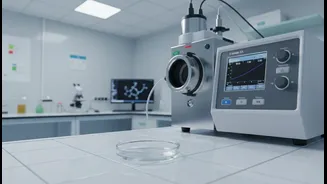
How can a company be sure its product is truly free of an allergen? The answer lies in scientific testing. The most common and widely trusted methods are the Enzyme-Linked Immunosorbent Assay (ELISA) and Polymerase Chain Reaction (PCR) tests. ELISA is the gold standard for routine screening; it detects the specific proteins that cause allergic reactions. This method is highly sensitive and can identify even trace amounts of an allergen. PCR testing, on the other hand, identifies the DNA of an allergenic ingredient. It is particularly useful for heavily processed foods where proteins might have broken down but DNA remains. These tests are used on raw materials, environmental swabs from machinery, and the final products to validate the 'free-from' claim.
What Consumers Should Look For
As a consumer, you can make more informed choices by carefully reading labels. Don't just look at the front of the package. Check the full ingredients list, where allergens are required to be declared. FSSAI regulations mandate a separate summary statement, such as "Contains: Milk, Soy," for easy identification. Pay attention to precautionary statements like "May Contain." While voluntary, this indicates that the product was made in a facility that also handles allergens, posing a potential risk of cross-contamination. Understanding these distinctions helps you navigate the grocery aisles more safely and confidently.