





The Traditional Orbit: An ISRO-Centric World
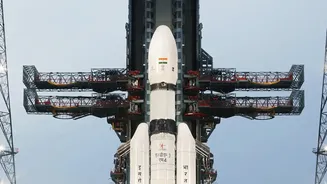
For generations of aspiring engineers and scientists in India, the ultimate dream was to secure a position at ISRO. This path promised stability, the prestige of working on national missions of immense importance, and the chance to contribute to a legacy
of incredible achievements, from launching satellites to reaching the Moon and Mars. The journey was well-defined: excel in competitive exams like the JEE for entry into premier engineering colleges, specialize in fields like aerospace, electronics, or mechanical engineering, and then clear ISRO's own rigorous recruitment process. While prestigious, this career path was also singular. Opportunities were limited, and the work, while groundbreaking, was housed within the structured, and sometimes bureaucratic, environment of a government organisation.
A New Constellation: The Rise of Private Players
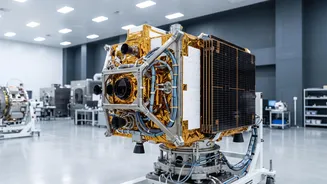
The game changed in June 2020, when the Indian government officially opened the space sector to private participation. This single policy decision ignited a startup boom. Today, India is home to hundreds of private space companies. Firms like Skyroot Aerospace, which successfully launched India's first privately developed rocket, and Agnikul Cosmos, known for its 3D-printed rocket engines, are building launch vehicles to send satellites to space. Others like Pixxel are deploying constellations of advanced earth-observation satellites, while companies like Dhruva Space offer end-to-end solutions for building and launching satellites. This new ecosystem, supported by the nodal agency IN-SPACe, is not just supplementing ISRO's efforts; it's creating a brand-new commercial market for space-based services and products.
The Modern Skillset: Beyond Rocket Science
The private space industry is creating a diverse range of jobs that go far beyond traditional aerospace engineering. While a strong foundation in mechanical, electrical, and aerospace engineering remains crucial, startups are aggressively hiring for roles that reflect the sector's commercial and digital nature. Software is at the heart of modern space missions, creating huge demand for engineers skilled in Python, C++, and embedded systems. The vast amounts of data sent back from satellites require data scientists and geospatial analysts who can turn raw information into valuable insights for industries like agriculture, insurance, and urban planning. Furthermore, these new companies need professionals in business development, finance, and marketing to build a customer base and secure funding, opening doors for graduates from non-engineering backgrounds.
Culture Shift: Agility vs. Stability
Working for a space startup is fundamentally different from a career at ISRO. Private firms offer a fast-paced, agile environment where decision-making is quick and hierarchies are flat. For many, this offers an opportunity for faster career growth, broader exposure to different aspects of a project, and the potential for significant financial rewards through employee stock ownership plans (ESOPs). This dynamism has even led to a migration of experienced talent from ISRO to the private sector, where their expertise is highly valued. On the other hand, ISRO continues to offer unparalleled job security, government perks, and the unique satisfaction of working on large-scale, mission-critical national projects. The choice is no longer between having a space career or not, but what kind of career one wants.
The Government's Role: Fuelling the Private Engine
This transformation is not happening in a vacuum. It is being actively encouraged by government policy. The creation of the Indian National Space Promotion and Authorisation Centre (IN-SPACe) as a single-window agency is a cornerstone of this strategy. IN-SPACe's role is to promote, authorise, and supervise the activities of private space companies, effectively acting as an interface between them and ISRO. This includes facilitating access to ISRO's world-class testing facilities, launchpads, and technologies, which significantly lowers the barrier to entry for new startups. By enabling private firms to build upon the foundation laid by ISRO over decades, the government is aiming to expand India's overall capacity and capture a larger share of the global space economy, projected to grow to over $40 billion by 2030.