






The Smoke That Thunders
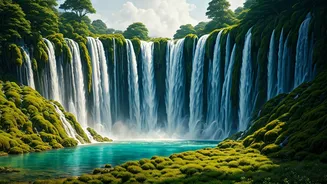
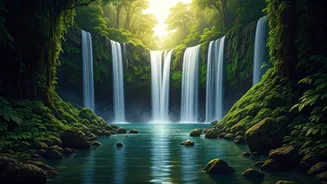
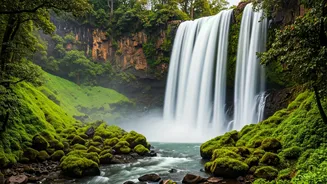
Any conversation about Zambia’s waterfalls begins with Mosi-oa-Tunya, “The Smoke That Thunders.” Known more widely as Victoria Falls, it is one of the world's largest and most awe-inspiring waterfalls. Stretching over 1.7 kilometers along the border with Zimbabwe,
the Zambezi River plunges into a gorge, sending a plume of mist into the sky that can be seen from miles away. The sound is a deafening roar, a visceral reminder of nature’s power that shakes the very ground you stand on. This isn't just a sight to be seen; it's an experience to be felt. The local Lozi name captures it perfectly: it is a thundering smoke, a sacred and powerful place that has commanded respect for centuries. Activities around the falls range from thrilling micro-flights and bungee jumping to the famous Devil's Pool, a natural rock pool at the very edge of the cascade where the brave can swim during the drier season.
Beyond the Famous Falls
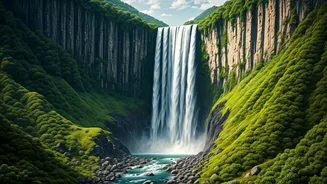
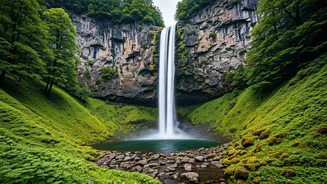
But the true magic of Zambia, the secret held by this “gem” of Africa, is that Victoria Falls is only the beginning. The country is crisscrossed by numerous rivers, creating an astonishing 17 other named waterfalls, many of them remote and rarely visited. In the north, you find a circuit of cascades that feel like treasures on a secret map. There's Kalambo Falls, which at 221 meters, is one of Africa's highest single-drop waterfalls, plunging into a gorge on the border with Tanzania. Then there's Lumangwe Falls, often called a 'mini Victoria Falls' for its wide, powerful curtain of water that appears almost out of nowhere in the dense landscape. Exploring these lesser-known sites is an adventure in itself, often requiring a 4x4 and a willingness to go off the beaten path, but the reward is immense: the chance to stand before a magnificent cascade, often with no one else in sight.
The Energy of the Land
This abundance of water shapes the entire country, fueling not just its natural beauty but also its vibrant spirit. Zambia is often called 'The Real Africa' for its vast, unspoiled wilderness and authentic safari experiences. The great rivers—the Zambezi, Kafue, and Luangwa—create lush ecosystems that support incredible wildlife. South Luangwa National Park is considered the birthplace of the walking safari and is renowned for its high density of leopards. The Lower Zambezi National Park offers canoe safaris, where you can glide past elephants drinking at the river’s edge. Kafue National Park, one of the largest in Africa, remains relatively unexplored, offering a sense of true wilderness. This connection to nature is deeply ingrained in the Zambian identity, a country that lives in rhythm with its rivers and the life they sustain.
A Country in Motion
The 'waterfall energy' isn't just about nature; it's about a nation that feels dynamic and alive. The capital, Lusaka, is one of the fastest-growing cities on the continent. There's a palpable sense of warmth and welcome from its people, who live in a country acknowledged as one of the safest to visit in the region. The culture is rich and diverse, with traditional festivals, vibrant local markets, and a growing arts scene. In towns like Livingstone, you can visit art galleries and craft associations, seeing how the inspiration drawn from the landscape is channeled into creative expression. This blend of raw natural power and human warmth creates a uniquely compelling destination. It’s a place that moves, that roars, that inspires—a country with an energy all its own.