
The Universe's Smoky Veil
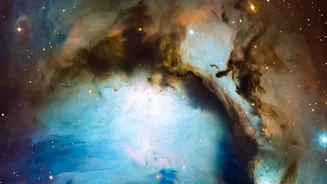
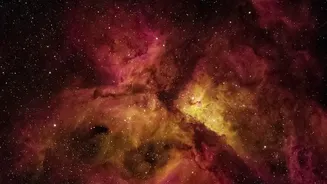
Imagine trying to see through thick smoke or fog. The light from objects on the other side gets scattered and blocked, making it impossible to get a clear view. Space has a similar problem. Vast, cold clouds of interstellar dust drift between the stars.
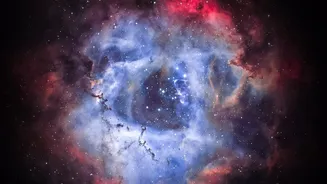
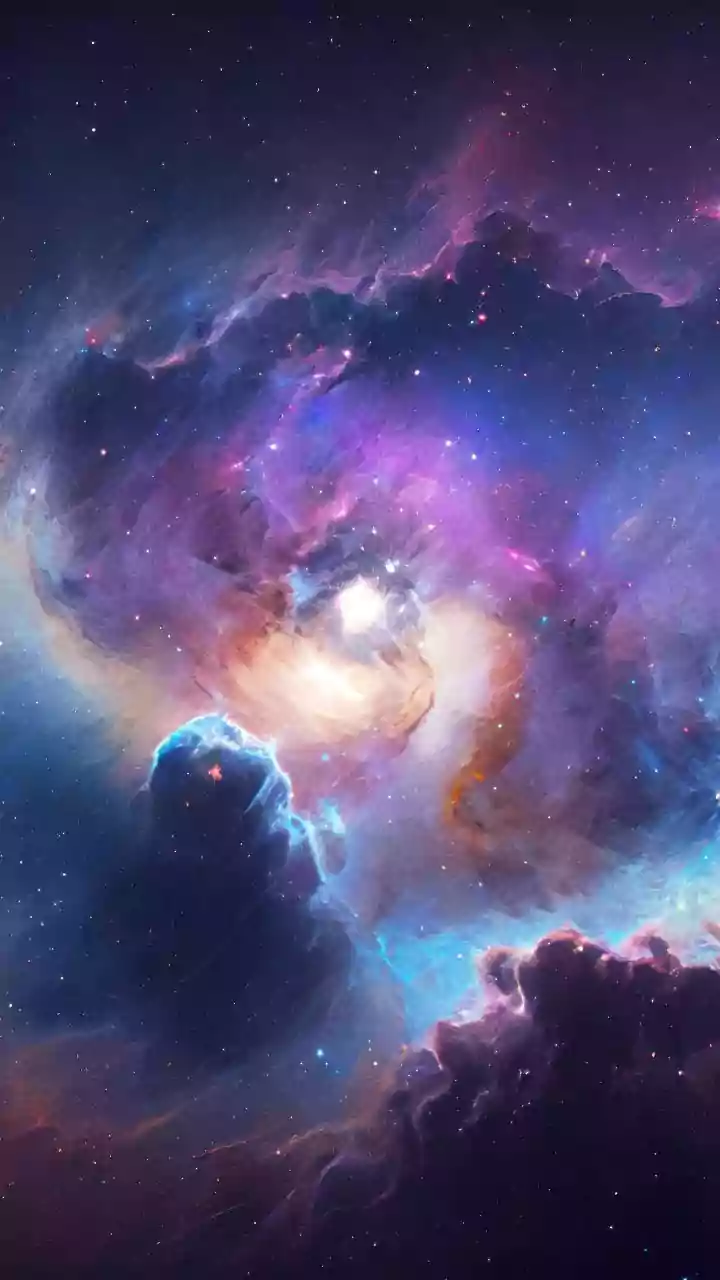
These dust clouds, though beautiful and mysterious, are opaque to visible light—the kind our eyes can see. For traditional telescopes that operate in the visible spectrum, these regions are like cosmic curtains, hiding the secrets within. This is particularly frustrating for astronomers because these dusty clouds are stellar nurseries, the very places where new stars and planetary systems are formed. For decades, the hearts of these nebulae and the center of our own Milky Way galaxy remained largely obscured, their stories waiting to be told.
Infrared Light: The Secret Passkey
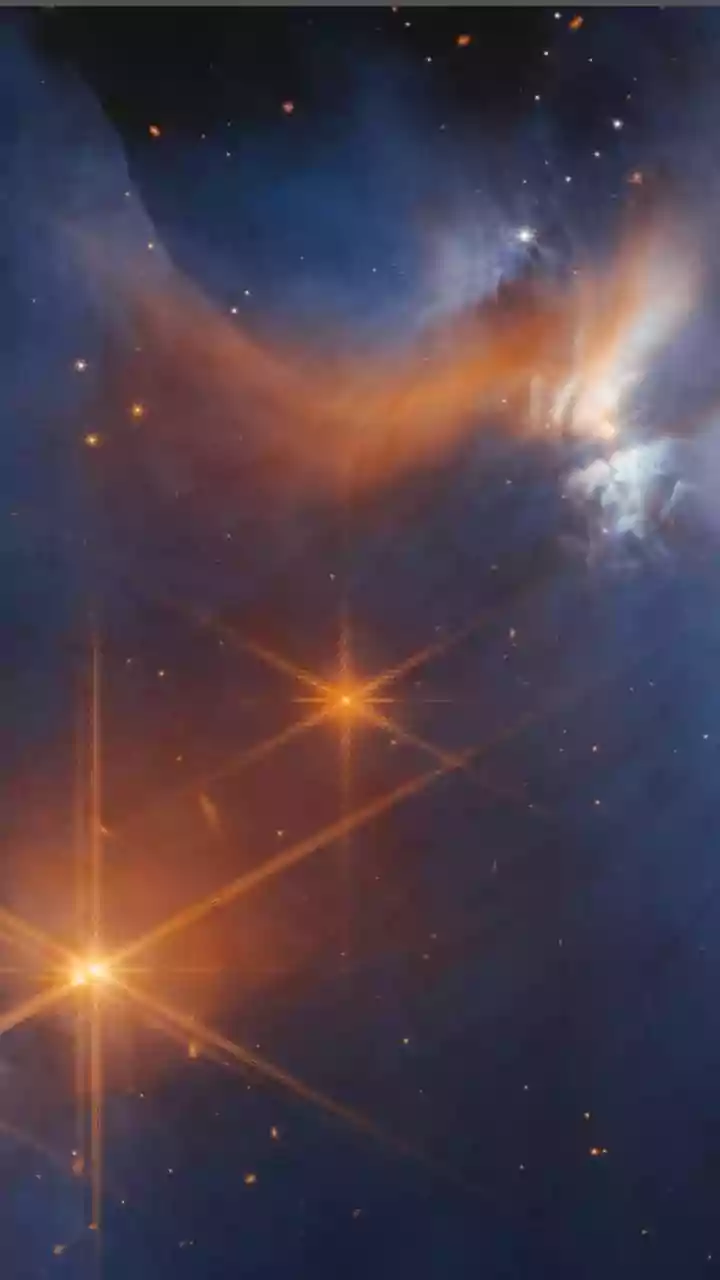
The solution is to look at the universe in a different light: infrared. Infrared is a type of electromagnetic radiation with wavelengths longer than visible light. While we can't see it, we often feel it as heat. The key to its power is that its longer wavelengths don't easily scatter when they encounter the tiny particles that make up cosmic dust. Instead of being blocked or bounced away like shorter-wavelength visible light, infrared radiation can pass straight through all but the densest dust clouds. This makes dust effectively transparent to an infrared telescope. It allows astronomers to peer into those once-hidden stellar nurseries, observe the chaotic cores of galaxies, and discover faint, cool objects like brown dwarfs that don't shine brightly enough to be seen in visible light.
The Heart of the Machine: Supercooled Sensors
Capturing this invisible light requires incredibly sophisticated technology. Space telescopes like NASA's James Webb Space Telescope (JWST) are equipped with specialized infrared detectors. These sensors are typically made of materials like mercury-cadmium-telluride, which are designed to absorb infrared photons and convert them into an electrical signal. This signal is then translated into the breathtaking images we see. However, there's a major challenge: heat itself produces infrared radiation. The telescope's own instruments can create an infrared glow that would blind its sensitive detectors. To combat this, the sensors must be cooled to cryogenic temperatures, just a few tens of degrees above absolute zero. For JWST's Mid-Infrared Instrument (MIRI), this means operating at a frosty 7 Kelvin (about -266°C), ensuring that the only heat it detects is from distant cosmic sources.
Revealing a Hidden Universe
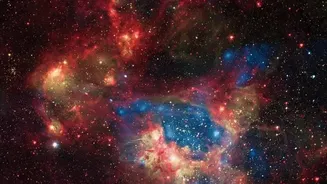
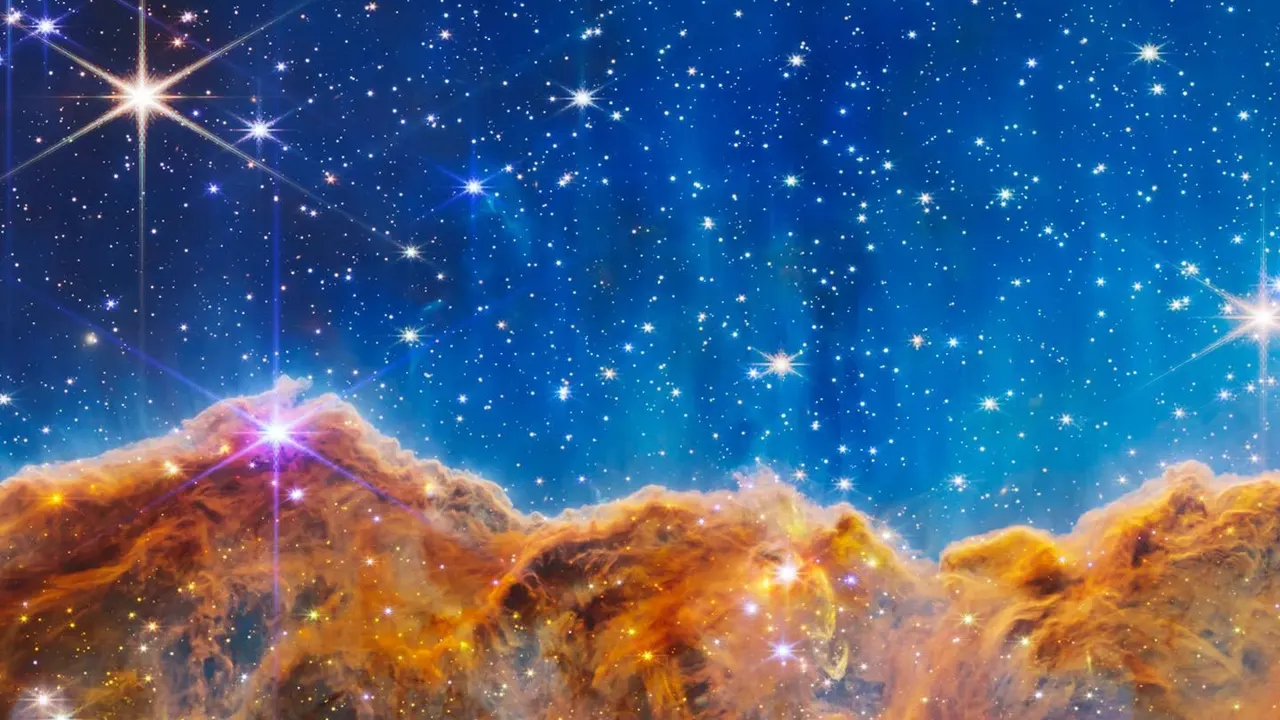
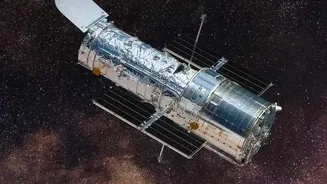
With this technology, astronomers have opened up a new window on the cosmos. Where the Hubble Space Telescope might see a dark patch of dust, the James Webb Space Telescope reveals a brilliant cluster of newly formed stars, each surrounded by the raw material for planets. Instruments like JWST's Near-Infrared Camera (NIRCam) and MIRI work in tandem to capture different slices of the infrared spectrum. NIRCam excels at imaging the formation of the earliest stars and galaxies, while MIRI is perfect for studying the cooler dust and gas that surrounds them. This ability has led to groundbreaking discoveries, from getting the first direct images of multi-planet systems around other stars to studying the supermassive black hole at the center of our own galaxy. These infrared eyes give us a front-row seat to the processes of cosmic creation.
More Than Dust: Seeing Back in Time
Peering through dust isn't the only superpower of infrared telescopes. They are also essential time machines. Because the universe is expanding, light from the most distant objects gets stretched as it travels across billions of light-years. This phenomenon, known as "cosmological redshift," shifts the light to longer wavelengths, often moving it from the visible spectrum entirely into the infrared. This means that to see the very first stars and galaxies that formed after the Big Bang, we must look for them in infrared light. Telescopes like JWST are specifically designed to capture this faint, ancient light, allowing scientists to piece together the story of the early universe and understand how the cosmos evolved into the state we see today. It’s not just about seeing through a cosmic fog, but about looking across the entire span of cosmic history.