





What is Prompt-to-Design?
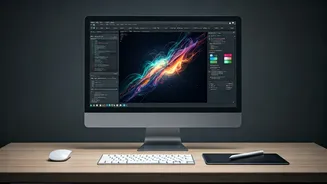
At its heart, prompt-to-design is the process of using text-based instructions, or 'prompts', to generate visual content with artificial intelligence. Think of it as a creative conversation with an AI model. A marketer can type, “Create an image of a person
enjoying a new brand of coffee in a sunlit café in Mumbai, with a warm and inviting feel,” and the AI generates multiple visual interpretations in seconds. This technology, powered by generative AI tools like Midjourney, DALL-E, and Adobe Firefly, transforms written ideas into tangible images, graphics, and even video scripts almost instantly. Unlike traditional design, which starts with a blank canvas, this approach starts with a concept, allowing for rapid exploration of creative directions.
From Curious Experiment to Core Strategy
Only a short while ago, generative AI was seen as a novelty. Now, it has become a standard tool in the creative industries. Marketing teams are moving beyond simply playing with these tools and are now integrating them into their daily workflows. The initial phase of individual experimentation has given way to structured team planning. Marketers are using prompt-to-design for everything from brainstorming campaign concepts and creating mood boards to generating dozens of ad copy variations for A/B testing. This shift allows even small teams to produce a high volume of content, a crucial advantage in a digital world that demands a constant stream of fresh material.
The Promise of Speed, Scale, and Personalisation
The primary driver for this adoption is efficiency. Tasks that once took days or weeks—like developing initial mockups or sourcing stock photography—can now be done in minutes. This radical acceleration allows teams to focus more on strategy and less on the manual labour of content creation. Beyond speed, the technology offers unprecedented scale. It's now possible to generate countless personalized content variations for different audience segments, a task that was historically limited by human bandwidth. Brands report higher engagement and conversion rates by using AI to tailor campaigns to specific user behaviours and preferences. This makes hyper-personalization, once a lofty goal, a practical reality.
Navigating the New Challenges
However, the adoption of prompt-to-design is not without its hurdles. One of the biggest challenges is maintaining brand consistency. AI models, drawing from vast and varied datasets, can sometimes produce visuals that feel generic or don't align with a brand's specific aesthetic. This requires a strong human 'editor' to curate and refine the AI's output. Furthermore, the legal landscape around copyright and ownership of AI-generated assets remains complex and is still evolving. There are also concerns about an over-reliance on automation leading to a loss of the unique 'human touch' that makes creative work resonate emotionally.
The Future is Human-AI Collaboration
The consensus among industry leaders is that these tools are not here to replace human creativity, but to augment it. The role of the creative professional is shifting from pure creation to creative direction. Success in this new era requires a blend of skills: the strategic vision of a marketer, the aesthetic eye of a designer, and the precision of a 'prompt engineer' who knows how to communicate effectively with the AI. The most effective creative teams will be those that master this collaborative dance, using AI as an tireless brainstorming partner and production assistant, while the human expert provides the strategy, taste, and final approval.