


An Environment of Extremes
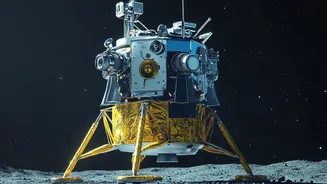
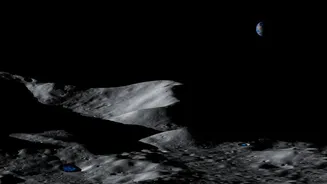
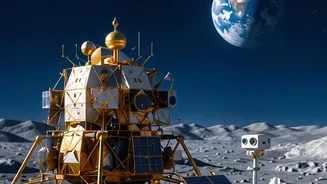
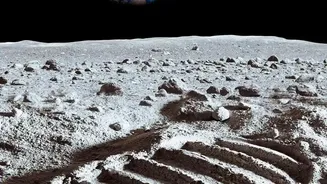
The Moon's lack of a protective atmosphere is the primary cause of its brutal temperature swings. Without air to trap or circulate heat, surfaces exposed to direct sunlight can soar above 100°C. In shadow, or during the two-week-long lunar night, temperatures
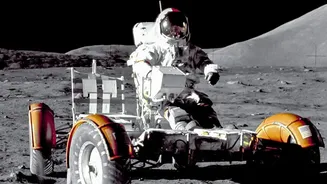
can plummet to below -200°C. The Apollo missions cleverly avoided the worst of this by landing during the lunar morning, when conditions were relatively mild. However, for the long-duration stays planned for the Artemis program, astronauts must be equipped to withstand the full spectrum of these harsh conditions, a challenge that requires a multi-layered approach to thermal management.
The First Line of Defence: Advanced Spacesuits
The spacesuit is an astronaut's personal spacecraft, and the next generation of suits is being designed for these extremes. The new Axiom Extravehicular Mobility Unit (AxEMU) for the Artemis III mission is a significant upgrade over Apollo-era suits. Its outer layers will be white to reflect solar radiation and reject heat when in sunlight. Inside, multiple layers of advanced insulation, an evolution of the radiant barrier technology first developed for Apollo, protect against both heat and cold. A key innovation is the Portable Life Support System, a backpack that actively manages temperature. It circulates cool water through a network of tubes in a garment worn close to the skin, absorbing the astronaut's body heat and rejecting it into space through a device called a sublimator. These suits are being built to endure temperatures as low as -175°C, enabling astronauts to explore permanently shadowed regions at the lunar south pole for hours at a time.
Shelter from the Storm: Habitation Systems
When not on a spacewalk, astronauts will rely on habitats for protection. These structures will employ both passive and active thermal control systems. Passive methods include using multi-layer insulation and even covering the habitat with lunar soil, or regolith, which can act as a natural shield against temperature fluctuations and radiation. Active systems are more complex, involving pumped fluid loops to move heat around. One concept uses a dual-loop architecture: an internal loop with a non-toxic coolant circulates through living spaces, while an external loop with a freeze-tolerant fluid transfers heat to large radiators that dump the excess into space. These radiators themselves are a technological challenge, needing to be deployable, dust-tolerant, and capable of operating without freezing during the long, cold lunar night.
Powering Through the Night
Surviving the 14-day lunar night is perhaps the single greatest thermal challenge. During this extended darkness, solar-powered systems are useless, and temperatures drop to levels that can destroy electronics and batteries. Keeping a habitat warm requires a tremendous amount of energy. It's estimated that for every watt of power needed, an additional 5kg of battery mass is required, making battery-only solutions incredibly heavy. This has led engineers to explore next-generation radioisotope power systems (RPSs). These are essentially nuclear batteries that generate electricity from the heat produced by decaying radioactive material, providing a constant source of power regardless of sunlight. This technology would not only keep habitats warm but also power the systems needed to keep rovers and scientific equipment functional through the deep freeze.
Strategic Location and Future Tech
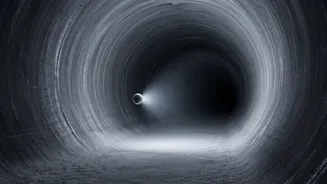
Where you set up camp matters. Future lunar bases may be strategically located near the poles in 'peaks of eternal light,' areas that receive near-constant sunlight, simplifying power generation and thermal management. Conversely, establishing bases within the stable, moderate temperatures of underground lava tubes is another promising concept being explored. For equipment, engineers are developing new thermal 'toolboxes' that combine different technologies. These include thermal switches that can transport heat away during the day and then passively shut down at night to prevent heat loss. Another innovation involves using phase change materials (PCMs), substances that absorb heat as they melt and release it as they freeze, helping to maintain a stable temperature inside a habitat or piece of equipment.