



The Moon's Two Faces
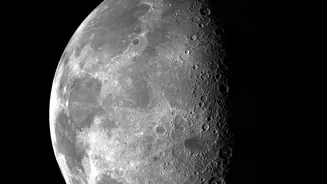
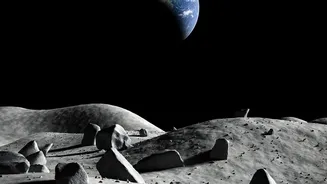
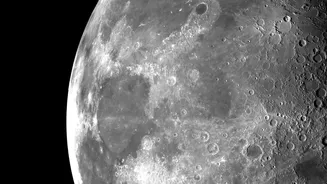
The side of the Moon that perpetually faces Earth, the near side, is characterized by vast, dark, smooth plains called 'maria' or seas. These are the remnants of ancient volcanic lava flows that cover huge portions of the surface. In stark contrast, the far
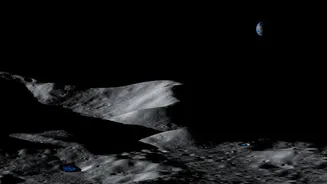
side is a rugged, heavily cratered world with a noticeably thicker crust and very few maria. This stark difference, known as the lunar dichotomy, has been one of the most significant and enduring puzzles in planetary science since the first spacecraft, the Soviet Union's Luna 3, photographed the hidden hemisphere in 1959. Why would one side of the same celestial body evolve so differently from the other?
A Puzzle of Heat and Gravity
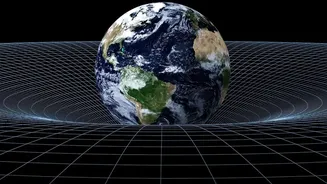
Scientists have proposed several theories to explain this asymmetry. One popular idea involves the initial formation of the Moon, likely from debris created when a Mars-sized object slammed into a young Earth. Another theory suggests a second, smaller moon might have eventually had a slow-motion collision with the far side, essentially splattering itself across the surface and thickening the crust. More recent models focus on the Earth's influence after the Moon became tidally locked, with its rotation matching its orbit. Some scientists propose that the residual heat from the still-molten Earth warmed the near side, creating a thermal gradient that concentrated heat-producing radioactive elements there, fueling volcanism. Others suggest Earth's gravity created tidal forces that drove massive convection currents in the Moon's ancient magma ocean, pushing crustal material to the far side.
Clues from a Hidden Realm
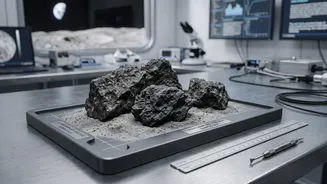
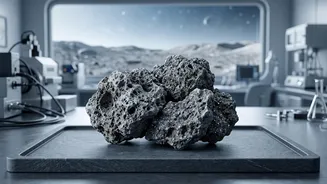
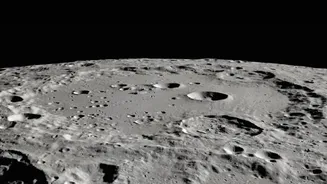
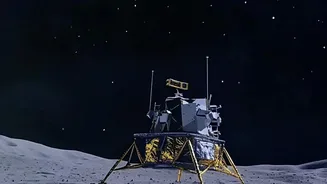
For decades, all theories about the far side were based on remote sensing data from orbiters and analysis of meteorites. All physical samples, collected by the Apollo and previous robotic missions, came from the near side. That changed dramatically with China's historic Chang'e-6 mission, which in 2024 became the first to successfully land on the far side and return samples to Earth. The probe touched down in the South Pole-Aitken (SPA) basin, a colossal and ancient impact crater—one of the largest in the solar system. By bringing back nearly two kilograms of soil and rock from this unique geological setting, scientists finally have physical evidence to test their long-standing hypotheses.
What the Far Side Samples Reveal
Initial analysis of the Chang'e-6 samples has already yielded fascinating results. Geochemically, the far side material is distinct. While the underlying mantle appears broadly similar to the near side's, the crustal rocks show key differences. Scientists found that far side samples are depleted in certain elements like potassium, thorium, and other 'KREEP' elements that produce heat and are abundant on the near side. This supports the idea that these heat-producing elements were concentrated on the near side, leaving the far side mantle 'drier' and less prone to the widespread volcanism that formed the near side's seas. The far side rocks also tell a story of a more intense bombardment from the solar wind, as they are not shielded by Earth's magnetosphere.
An Impact's Lasting Legacy
Some of the most compelling evidence points to the profound influence of giant impacts. One study found that far side rocks are enriched in a heavier version of potassium. The theory is that the immense heat from the impact that formed the SPA basin was so intense it literally boiled away lighter elements into space, fundamentally altering the chemistry of the crust. This loss of volatile elements would have suppressed later volcanic activity. In essence, the crash didn't just leave a crater; it may have permanently changed the geological destiny of the Moon's entire far side, setting it on a different evolutionary path from the side we see in our night sky.