




An Indian Startup Reaches for the Asteroids
In a significant moment for India's 'New Space' ecosystem, Technopark-based startup HEX20 has been selected to contribute critical technology to the United Arab Emirates' (UAE) landmark mission to the asteroid belt. The company, founded by a group of
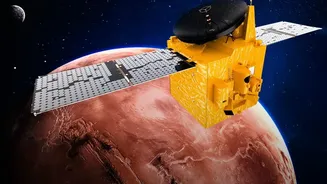
engineering alumni, has developed the spacecraft bus and software for the lander probe that will be deployed from the main MBR Explorer spacecraft. This makes HEX20 the first Indian private company to be chosen for a deep-space mission by the Gulf nation, a testament to its advanced engineering capabilities. With an engineering hub in Thiruvananthapuram and operations in the UAE's Masdar City, HEX20 developed the onboard computer and power systems designed to endure the extreme conditions of deep space, delivering them in just 15 months.
The Ambitious MBR Explorer Mission
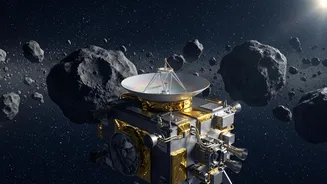
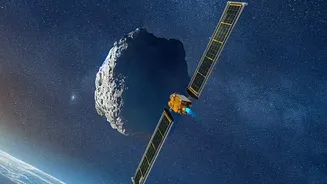
The Emirates Mission to the Asteroid Belt (EMA) is a monumental undertaking led by the UAE Space Agency. Scheduled for a tight launch window in March 2028 aboard a Japanese H3 rocket, the MBR Explorer spacecraft will embark on a five-billion-kilometre journey. Its destination is the main asteroid belt located between Mars and Jupiter. The mission plan is incredibly ambitious: to perform high-speed flybys of six different asteroids before arriving at its primary target, the asteroid 269 Justitia, in 2034. The journey will involve a complex series of gravity-assist manoeuvres, using the gravitational pull of Venus (in 2028), Earth (2029), and Mars (2031) to gain speed and set its course for the outer solar system.
The Probe's Moment of Truth
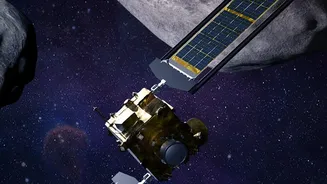
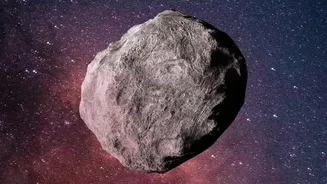
The culmination of the mission will occur in early 2036, when the MBR Explorer enters orbit around Justitia. At this point, the lander probe featuring HEX20's technology will separate from the main spacecraft for its final descent. Operating fully autonomously hundreds of millions of kilometres from Earth, the probe will touch down on the asteroid's surface, a feat that would make Justitia only the seventh asteroid ever to be reached by a man-made object. The probe's job is to capture close-range images and analyse the surface, providing invaluable data. Scientists are particularly interested in Justitia because its unusual reddish colour suggests it may have originated in the distant Kuiper Belt, meaning it could hold clues about the solar system's formation and the origins of water and organic materials.
A 'Made in India' Boost to Global Space Goals
HEX20's involvement is more than just a single contract; it's a powerful signal of the Indian private space industry's arrival on the global stage. Since the government opened the sector to private participation in 2020, over 400 space startups have emerged in India. These companies are increasingly moving beyond component manufacturing to developing entire systems and participating in international collaborations. For a startup to be entrusted with developing the core systems for a deep-space lander—a component that must function perfectly without real-time human intervention—demonstrates immense trust in Indian engineering and innovation. This collaboration with the UAE Space Agency and the Technology Innovation Institute (TII) paves the way for future partnerships and elevates India's status as a reliable hub for advanced space technology.