



What Exactly Is the Trend?
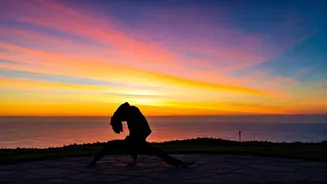
The trend involves practitioners waking before or at dawn to perform a series of yoga postures known as Sun Salutations, or Surya Namaskar. [13] But this isn't just the classic sequence. The “dynamic” element comes from adding creative variations, increasing
the pace, or incorporating more challenging poses like lunges and planks, turning the meditative flow into a more vigorous, heat-building workout. [8, 16] Social media is filled with videos showcasing these personalised flows against the stunning backdrop of a rising sun, inspiring others to roll out their mats at the crack of dawn. [3]
Beyond the Traditional Sun Salutation
A classic Sun Salutation is a set sequence of 12 postures linked by breath, designed to warm up the body. [7] The popular Surya Namaskar A and B, staples in Vinyasa and Ashtanga yoga, form the foundation. [9, 18] A 'dynamic' version builds on this framework. It might mean flowing from one pose to the next without pausing, creating a continuous, dance-like movement. [8] It could also involve integrating extra poses like Chair Pose (Utkatasana) or Warrior I (Virabhadrasana I) to make the sequence more strengthening and strenuous. [9, 12] The goal is to move beyond a simple warm-up and create a full-body workout that is both a moving meditation and a cardiovascular challenge. [17, 16]
The Magic of a Daybreak Practice
Practicing yoga at sunrise is about more than just a beautiful view. Traditional yogic texts suggest that the hours before dawn are ideal for meditation and practice, as the mind is at its most still. [3] Aligning your practice with the body's natural circadian rhythm can help boost energy levels and improve mental clarity for the rest of the day. [5] Starting the day with this mindful movement can help set a positive, calm tone, reducing stress and anxiety before the daily hustle begins. [2, 4] The early morning light may also help boost your mood by increasing serotonin levels. [4]
Key Benefits for Body and Mind
This morning ritual offers a wealth of benefits. Physically, it's a full-body workout that improves flexibility, builds muscle strength, and enhances balance. [10, 16] The flowing movements increase blood circulation and oxygenate the body, providing a natural energy boost without caffeine. [4, 3] Mentally, synchronizing breath with movement creates a meditative state that enhances focus and mindfulness, helping to clear mental clutter and reduce stress. [10, 18] Regular practice can help regulate sleep patterns, improve digestion, and support emotional well-being. [3, 15, 5]
How to Create Your Own Dynamic Flow
Ready to try it yourself? Start with a classic Sun Salutation A or B to get comfortable with the base sequence. [14] To make it more dynamic, try linking each movement to a breath—one inhale or exhale per pose—to create a continuous flow. [12] You can add intensity by incorporating poses like a high lunge between Downward-Facing Dog and your forward fold, or adding Chair Pose at the beginning and end of the sequence. [8, 12] Another option is to increase the pace at which you move through the flow, which will elevate your heart rate and build more heat. [15] The key is to listen to your body and create a sequence that feels both challenging and nourishing.
Practice Safely and Mindfully
While the trend is inspiring, it's crucial to prioritize safety. If you're a beginner, it's wise to learn the basic poses individually before linking them into a dynamic flow to minimise injury risk. [7] Don't push into a pose that causes pain. Use modifications, like bending your knees in a forward fold or dropping your knees to the mat during the plank-to-cobra transition. [11] Remember, the goal isn't to perfectly replicate a video you saw online, but to connect with your own body and breath. The most beneficial practice is one that you can sustain consistently and safely. [5]