



The Urban Gardening Dilemma
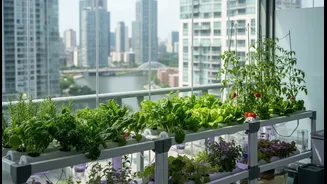
More people are living in cities than ever before, often in apartments or homes with little to no outdoor space. Yet, the interest in health, wellness, and food security has also skyrocketed. This creates a significant challenge: how do you grow your
own herbs, salads, and vegetables when your only available space is a kitchen counter, a small balcony, or a windowsill? Traditional soil-based gardening is messy and requires horizontal space, a luxury many urban dwellers simply don't have. The dream of plucking fresh basil for a pasta sauce or crisp lettuce for a salad seems out of reach for those without a backyard, creating a clear and pressing consumer need.
Hydroponics: A Soil-Free Solution
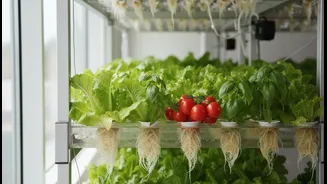
Enter hydroponics, a method of growing plants without soil by using a water-based nutrient solution. This technique isn't new, but its application for home use has exploded recently. By delivering nutrients directly to the plant's roots, hydroponics can lead to faster growth—up to 30-50% quicker than in soil—and often results in higher yields. Crucially, it eliminates the need for dirt, reducing mess and the risk of soil-borne pests. Initially, however, home hydroponic systems were often bulky, complex, and expensive, putting them out of reach for the average person. The technology was promising, but the design hadn't yet caught up to the realities of apartment living.
Thinking Vertically: The Rise of the Tower Garden
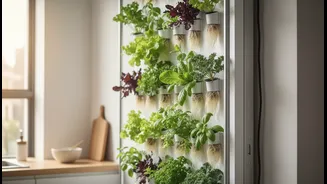
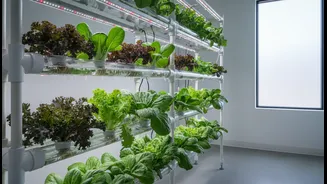
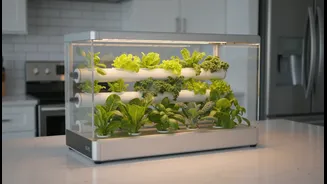
The single biggest innovation driven by space constraints is the move from horizontal to vertical design. Designers realised that if you can't build out, you have to build up. Vertical hydroponic towers are now one of the most popular solutions for small spaces. These systems, often taking up no more floor space than a small stool, can grow dozens of plants by stacking them in layers. Brands in India and abroad offer towers that can cultivate anywhere from 20 to over 30 plants in a footprint of just one or two square feet. This vertical approach fundamentally changes the equation, making it possible to produce a significant amount of food in a tiny corner of a room or on a balcony.
Making It Modular and Affordable
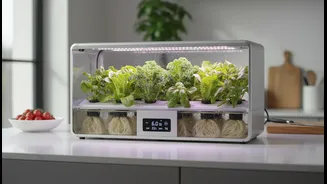
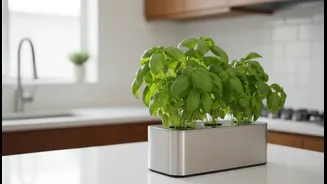
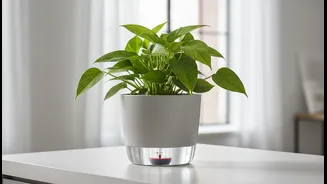
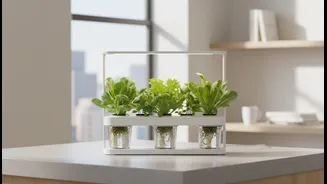
Alongside verticality, modularity has become a key driver of innovation. Modular systems are like building blocks; users can start with a small, affordable base unit and add more modules as their confidence and needs grow. This lowers the initial barrier to entry. Affordability has been a major focus, with many companies now offering beginner-friendly countertop systems for under ₹10,000, and some even under ₹5,000. The simplest and most affordable entry point is the non-electric Kratky method, which can be done with a simple mason jar, making home hydroponics accessible to almost anyone. This focus on reducing cost is democratizing indoor gardening, moving it from a niche hobby to a practical solution for many households.
Smarter Systems for Smaller Spaces
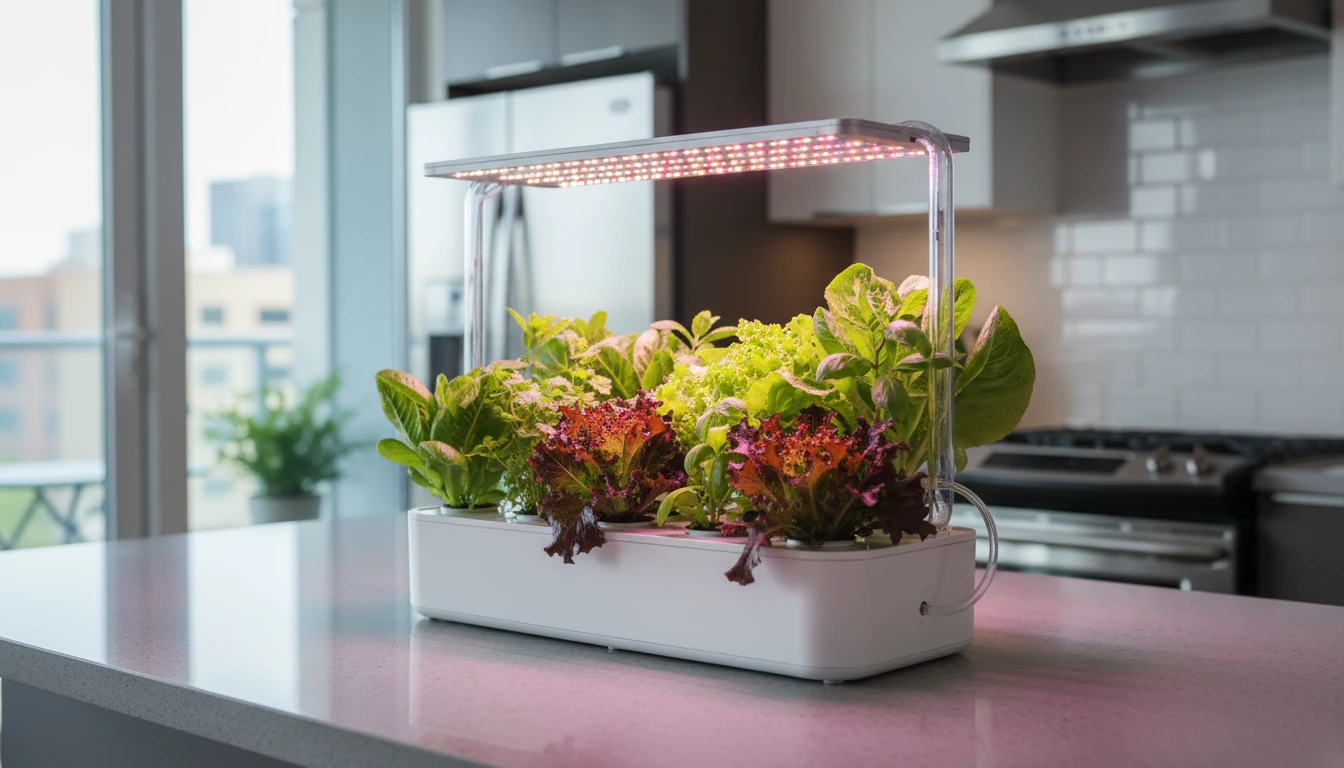
Innovation isn't just about physical shape; it's also about intelligence and efficiency. Modern compact systems are designed to be almost foolproof. They feature integrated, energy-efficient LED grow lights that mimic the full spectrum of sunlight, solving the problem of inconsistent light in indoor environments. Many systems come with automated timers for lights and water pumps, and send alerts to your phone when water or nutrient levels are low. Some are designed to be completely silent, a crucial feature for a device running in a small living space. These smart features reduce the time commitment and the learning curve, making it easier for busy people and beginners to achieve success.