



The Reality of Late Detections
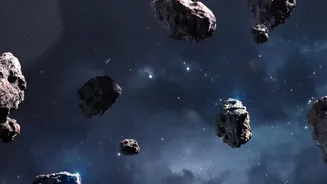
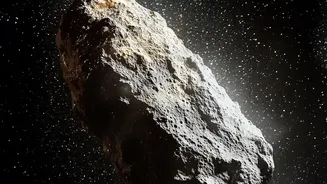
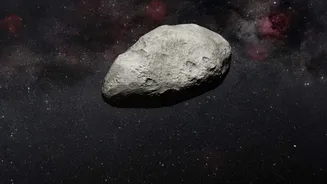
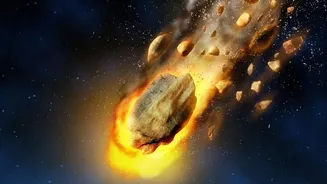
On September 6, 2026, a small asteroid measuring about one metre across entered the atmosphere over the Indian Ocean. Astronomers at the University of Arizona’s Mt. Lemmon Survey had spotted it just over seven hours earlier, making it the 13th asteroid ever
to be detected before impact. Similarly, in January 2024, the even smaller asteroid 2024 BX1 was found less than three hours before it harmlessly broke up over Germany. These events, while dramatic, are not cause for panic. The objects detected so late are typically very small—often just a few metres wide—and pose no threat, burning up completely in our atmosphere. Their faintness and speed make them incredibly difficult to spot until they are very close. The fact that we are now able to find these tiny impactors at all is a testament to how rapidly our detection capabilities are improving.
A Global Network of Sky Sentinels
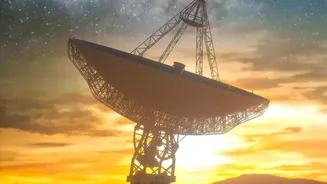
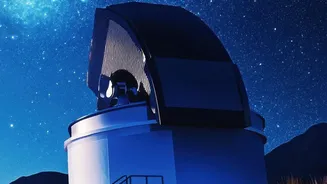
Planetary defense is a global, 24/7 effort. NASA’s Planetary Defense Coordination Office (PDCO) works with an international network of observatories to find, track, and characterize Near-Earth Objects (NEOs). Key players in this network include ground-based surveys like the Catalina Sky Survey in Arizona and the Pan-STARRS and ATLAS projects in Hawaii, Chile, and South Africa. These telescopes repeatedly scan the night sky, taking pictures of the same patch minutes apart. By comparing these images, automated software can spot faint points of light that have moved against the fixed background of stars. Once a potential NEO is flagged, its data is sent to the Minor Planet Center, a global clearinghouse that confirms the object and calculates its initial orbit. From there, systems like NASA's Scout take over to assess the immediate impact risk.
The Challenge of the Sun's Glare
One of the biggest blind spots for our current network of ground-based telescopes is the Sun. Asteroids that approach Earth from the direction of the sun are effectively hidden in its glare, making them nearly impossible to detect with optical telescopes on the ground. The 2013 Chelyabinsk meteor, a 20-metre object that exploded over Russia and injured over 1,000 people, came from this sunward direction and was completely undetected. Many small asteroids, like the recently discovered 2026 RW1, are part of the 'Aten' class, meaning their orbits are largely within Earth's, making them frequent visitors to this solar blind spot. This is why developing space-based observation capabilities is a top priority for planetary defense experts.
Future Guardians of the Solar System
The next decade will see a revolutionary leap in our ability to find hazardous NEOs. The Vera C. Rubin Observatory in Chile, which has already discovered thousands of new asteroids in its pre-survey operations, is set to begin its full 10-year survey of the southern sky. It is expected to find tens of thousands of new NEOs, drastically increasing our catalogue of potentially hazardous objects. More importantly, NASA is developing the NEO Surveyor, a space-based infrared telescope scheduled to launch no earlier than September 2027. By parking itself between the Earth and Sun, NEO Surveyor will be able to spot asteroids coming from the sunward direction. Because it detects the heat asteroids emit, it can find even the very dark objects that reflect little sunlight. Its goal is to find over 90% of all NEOs larger than 140 metres—the size that could cause major regional devastation.