



Start With Your First Instrument: Your Eyes
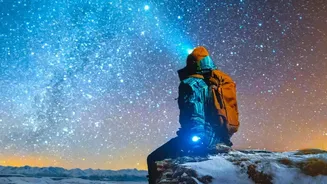
Your journey into astronomy begins with the most powerful tool you already own: your eyes. Before spending a rupee, spend time simply looking up. The first step is to let your eyes adjust to the darkness, a process called dark adaptation, which can take
20 to 30 minutes. During this time, avoid looking at your phone or any bright lights. Once adapted, you'll be amazed at how many more stars become visible. Start by identifying prominent and easy-to-find constellations. In India, Orion the Hunter is a spectacular sight in the winter sky from November to March, while Scorpius is a southern delight visible in the summer. Learning to spot these patterns is the foundation of navigating the night sky. You can also distinguish planets from stars; planets tend to shine with a steady light, while distant stars twinkle.
Location, Location, Location: Escape the Glow
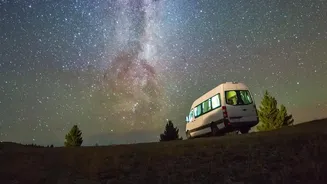
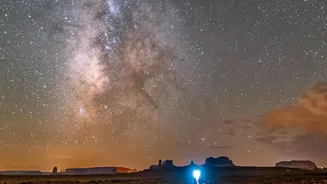
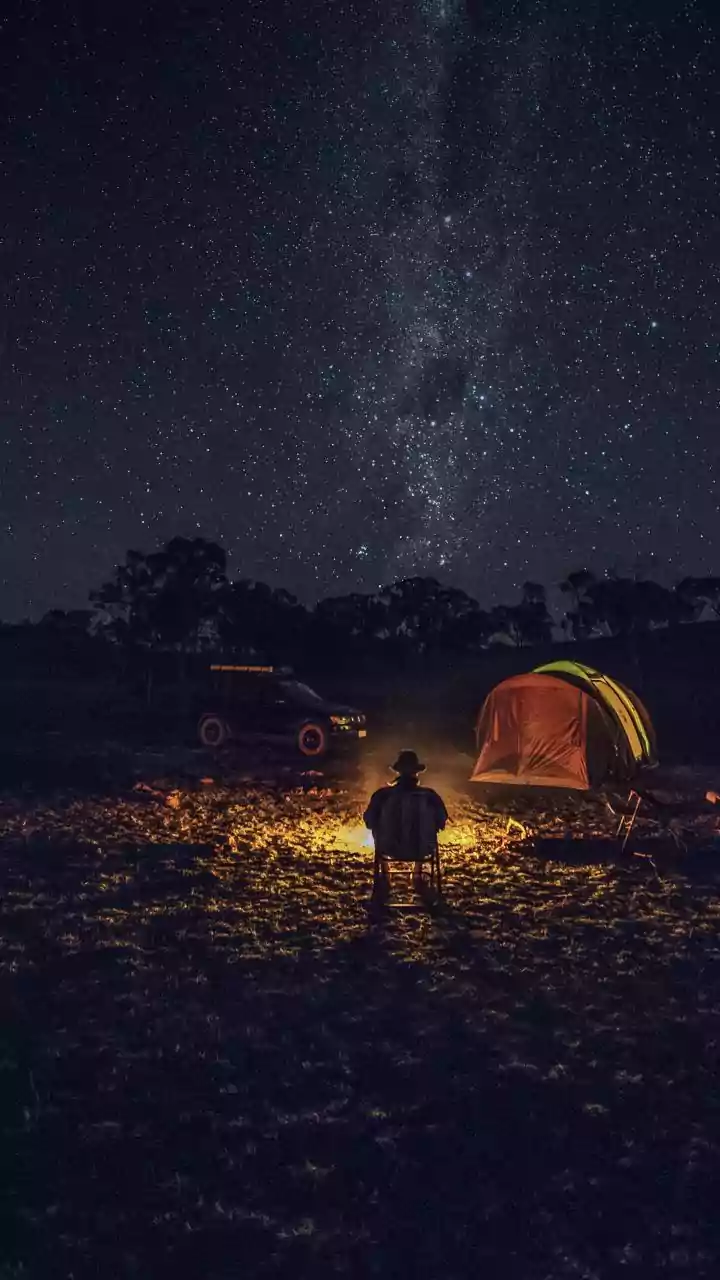
The biggest enemy of a budding stargazer is light pollution. The bright glow of cities washes out all but the brightest celestial objects, reducing a sky of thousands of stars to just a handful. To truly see the cosmos, you need to find a dark sky. This doesn't necessarily mean a Himalayan expedition. Often, driving an hour or two away from a major city can make a dramatic difference. India is blessed with incredible stargazing spots. High-altitude deserts like Ladakh and Spiti Valley offer some of the darkest and clearest skies in the world, with places like Hanle in Ladakh being designated as India's first Dark Sky Reserve. For more accessible options, consider the Rann of Kutch in Gujarat, parts of the Thar Desert in Rajasthan, or hill stations in the Western Ghats like Coorg. The key is to find a spot with an open horizon, far from the glare of city lights.
Your Smartphone is a Star Chart
While you should keep your phone screen dim, it can be an invaluable guide. Modern stargazing apps use your phone's GPS and compass to create an augmented-reality map of the sky. Point your phone upwards, and the app will identify constellations, stars, planets, and even satellites like the International Space Station in real time. Popular and user-friendly apps available in India include Stellarium Mobile, SkyView, and Star Tracker. Many of these apps also have features to show you what the sky looked like in the past or will look like in the future, and provide details and mythology behind the constellations. Some apps like Bhagol even offer an interface based on the Indian system of astronomy, showing nakshatras and rashis.
The Binocular Advantage
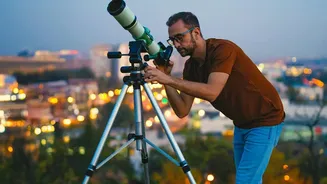
Before you take the expensive leap to a telescope, consider a good pair of binoculars. They are often called the best first 'telescope' for a reason. Binoculars are portable, easy to use, and offer a wide field of view that makes finding objects simple. A standard pair of 7x50 or 10x50 binoculars will dramatically enhance your view, revealing craters on the Moon, the four largest moons of Jupiter, and the fuzzy, ethereal shapes of star clusters and nebulae that are invisible to the naked eye. Scanning the Milky Way with binoculars on a dark night is an unforgettable experience, turning a faint, milky band into a river of countless individual stars. They are the perfect intermediate step, helping you learn the sky and decide if you want to invest more deeply in the hobby.
Join a Community of Sky-Watchers
You don't have to learn astronomy alone. India has a vibrant and growing community of amateur astronomers. Joining a local astronomy club is a fantastic way to learn from experienced observers, get advice, and even look through different types of telescopes before you consider buying one. Clubs like the Bangalore Astronomical Society, Jyotirvidya Parisanstha in Pune, and the India Astronomy Club often organize public stargazing sessions, workshops, and star parties at dark-sky locations. These events are welcoming to beginners and provide a hands-on learning experience. You'll meet people who share your new passion and can guide you on your journey from casual sky-watcher to dedicated stargazer.