





How Microwaves Actually Cook
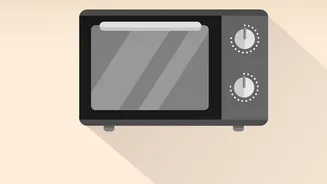
First, let's dispel a common myth: microwaves don't cook food from the inside out. Instead, they use a form of energy called microwaves, a type of electromagnetic radiation similar to radio waves. Inside every microwave oven is a device called a magnetron,
which generates these waves. The waves travel into the food compartment, bounce off the metal interior walls, and start to heat your food through a process called dielectric heating. Unlike a conventional oven that heats food from the outside surface inward, microwaves can penetrate the food to a certain depth, depositing energy along the way. This creates the illusion of 'inside-out' cooking, but the energy is actually being absorbed throughout the food's outer layers simultaneously.
It's All About the Water
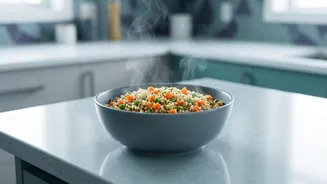
The secret to this heating process lies in water. Water molecules are 'polar', meaning they have a slightly positive end and a slightly negative end, like tiny magnets. The microwaves create a rapidly flipping electric field inside the oven. The water molecules in your food try to align with this flipping field, causing them to rotate back and forth billions of times per second. This frantic molecular dance creates friction, which in turn generates heat. This is why foods with high water content, like soups or vegetables, tend to heat up much faster than drier foods like bread. It also explains why a ceramic plate, which contains very little water, can remain cool while the moist food on top of it gets hot.
The Real Culprit: Standing Waves
So if the waves are filling the oven, why isn't the heating smooth? The main reason for those infuriating hot and cold spots is a phenomenon called 'standing waves'. As microwaves bounce off the metal walls of the oven, they interfere with each other. This creates a stationary pattern of wave energy, with peaks (antinodes) and troughs (nodes). Areas of your food that happen to be in a peak get a strong dose of energy and become very hot. Meanwhile, areas in a trough receive very little energy and stay cold. The result is a patchy, uneven heating pattern that is a natural consequence of confining waves inside a metal box.
Why Your Food Goes for a Spin
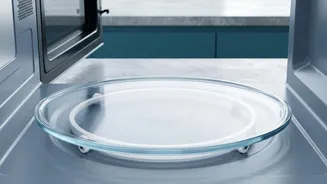
Microwave engineers are well aware of the standing wave problem, and the turntable is the most common solution. By rotating the food, the turntable moves it through the different hot and cold zones, helping to average out the energy exposure over time. This is why food placed on the outer edge of the turntable often heats more evenly than food in the very center, as it travels a greater distance through the wave pattern. Some models without a turntable use a 'mode stirrer', which is a small metal fan that scrambles the wave pattern to achieve a similar effect. However, neither solution is perfect, which is why user intervention is often still needed.
From Science to Solutions
Understanding the science gives you the power to outsmart your microwave. For more even heating, arrange food in a ring on the plate, leaving an empty space in the middle; this avoids the often-cooler central spot and exposes more surface area. Stirring your food halfway through the cooking time is crucial, as it manually redistributes heat from the hot spots to the cold spots. Covering your food with a microwave-safe lid helps trap steam, which further aids in even cooking. For dense or thick foods, try using a lower power setting for a longer period. This allows heat to conduct from the outer, microwave-heated layers to the center more gradually. Finally, always let your food rest for a minute or two after the microwave stops. This 'carryover cooking' time allows the temperature to equalize as heat continues to spread from hot areas to cooler ones.