





The Science of a Few Seconds
Earthquake early-warning systems don't predict quakes before they happen. Instead, they cleverly exploit a basic fact of seismology: an earthquake releases two main types of waves. The first to arrive is the P-wave (primary wave), which travels quickly
but is largely harmless. Following it is the slower, but far more destructive, S-wave (shear wave). The crucial time gap between the arrival of the P-wave and the S-wave is the window of opportunity for an alert. Traditional systems rely on expensive, strategically placed seismometers. The new revolution, powered by the Internet of Things (IoT), uses a vast network of cheaper, smaller sensors that can be deployed across urban landscapes. These sensors detect the initial P-wave and instantly transmit the data to a central server, which analyzes the information and triggers an alert faster than the S-wave can travel.
Your Smartphone as a Seismometer
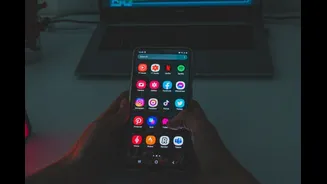
The most powerful part of this new infrastructure is already in your pocket. Modern smartphones are equipped with highly sensitive accelerometers—the same technology that rotates your screen. These tiny sensors can detect the tell-tale vibrations of a P-wave. When a phone is stationary and charging, it can act as a mini-seismometer. Systems like Google's Android Earthquake Alerts System, which launched in India in consultation with the National Disaster Management Authority (NDMA), harness the power of millions of phones to create a massive, crowdsourced detection network. When multiple phones in one area detect a tremor, Google's servers rapidly analyze the data to confirm if a quake is occurring, estimate its magnitude, and broadcast an alert to users in the projected path of the shaking.
From Detection to Alert in an Instant
Once a quake is confirmed, the system sends out two main types of alerts. A "Be Aware" alert is typically for light shaking (magnitude 4.5 or greater), while a louder, more insistent "Take Action" alert is reserved for moderate to heavy shaking. These alerts are designed to give people precious seconds to take life-saving action: drop to the ground, take cover under a sturdy table, and hold on. While it might only be a few seconds, this advance warning can be enough to move away from windows, stop surgical procedures, slow down trains, or shut off gas lines, dramatically reducing injury and damage. The alert is delivered via a notification on the phone screen, often with a loud alarm to ensure it is noticed.
The Indian Context and Global Efforts
Google's Android Earthquake Alerts System became available in India in September 2023 for all users with Android 5.0 or later. To receive these potentially life-saving notifications, users need to have location services and Wi-Fi or mobile data enabled, along with the specific earthquake alert setting turned on in their phone's 'Safety & emergency' menu. India is one of many countries benefiting from this crowdsourced approach. Beyond Google, initiatives like the MyShake app, developed by UC Berkeley, and the citizen science project Earthquake Network, also use smartphone data to issue warnings. These systems demonstrate a global shift towards democratizing disaster preparedness by using existing consumer technology.
Challenges on the Road Ahead
Despite its immense potential, the technology faces hurdles. The accuracy of alerts depends on a high density of participating phones or sensors; sparse coverage can lead to slower or missed warnings. False alarms, though rare, can erode public trust. Furthermore, the warning time is shortest for those closest to the epicenter, who may receive the alert only as the shaking starts, or just after. There is also the challenge of ensuring connectivity, as the entire system relies on data being transmitted instantly from the sensors to the cloud and then back to users' phones. Continuous maintenance and overcoming environmental factors like electromagnetic interference are also key to ensuring these networks remain reliable.