






The Crowded Highway in the Heavens
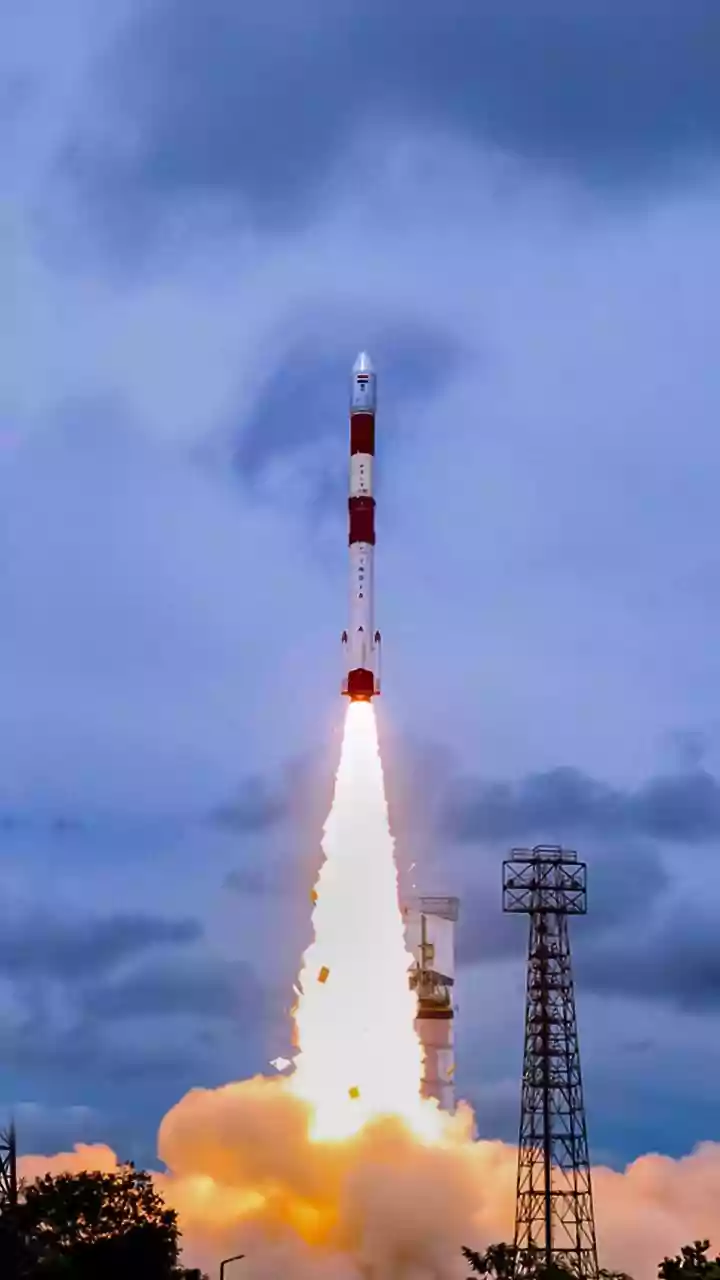
Low Earth Orbit (LEO), the zone stretching a few hundred kilometres above our heads, is becoming dangerously congested. Since the dawn of the space age, we have launched thousands of rockets and satellites. What we have also launched is a staggering amount
of garbage. This includes everything from defunct satellites and spent rocket stages to tiny flecks of paint and frozen coolant. There are an estimated 130 million pieces of debris, with hundreds of thousands large enough to be a mission-ending threat. These objects aren’t just floating; they are hurtling through space at speeds exceeding 27,000 kilometres per hour. At that velocity, a collision with an object even the size of a marble can be catastrophic, destroying a multi-million dollar satellite and, in the process, creating thousands of new pieces of debris. Experts have long warned of the Kessler Syndrome, a theoretical cascade where collisions create so much debris that LEO becomes unusable for generations.
The Challenge of a Cosmic Cleanup
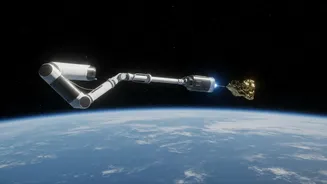
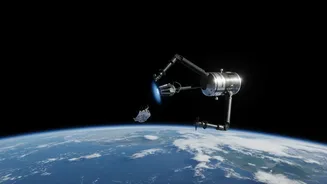
Cleaning up this mess is one of the biggest challenges facing the space industry. Early concepts for active debris removal have explored solutions like nets, harpoons, and robotic arms. The European Space Agency is planning a mission using a four-armed robot to capture a single piece of debris. While innovative, these methods have a significant drawback: they require making physical contact with an object that is often tumbling wildly and unpredictably. Attempting to grab a fast-spinning, multi-tonne piece of metal with a robotic arm is a high-risk manoeuvre that could fail or, worse, create even more debris if the collision goes wrong. Many of the most dangerous pieces of debris are considered “uncooperative targets,” meaning they were not designed to be captured and are tumbling out of control.
A Magnetic Handshake for Future Satellites
The first generation of magnetic solutions offers an elegant answer for future satellites. Spearheaded by companies like the Japanese firm Astroscale, this approach involves building satellites with a pre-installed ferromagnetic “docking plate.” When the satellite reaches the end of its life, a ‘servicer’ spacecraft can be sent to rendezvous with it. The servicer uses a powerful electromagnet to lock onto the docking plate with a secure, magnetic handshake. From there, it can safely tow the defunct satellite down into Earth’s atmosphere to burn up on reentry. Astroscale has already successfully demonstrated this technology in orbit with its ELSA-d mission. This is a huge step forward for responsible spaceflight, but it only addresses future debris, not the millions of legacy objects already in orbit.
Taming the Tumble with Invisible Forces
The true revolution lies in a second, more advanced magnetic technology: using eddy currents to control debris without physical contact. Most space junk, including old rocket bodies, is made of non-magnetic but electrically conductive materials like aluminum. Here's how it works: a chaser satellite approaches a piece of tumbling debris and projects a strong, rotating magnetic field at it. This field induces electrical whirlpools, known as eddy currents, within the conductive debris. These currents, in turn, generate their own magnetic field that opposes the one from the chaser. This opposition creates a braking force, or torque, that can slow the object’s chaotic tumble and bring it under control—all from a safe, contactless distance. Once stabilised, the debris can be nudged into a decaying orbit or captured by other means. This method is revolutionary because it can handle the most difficult targets: uncooperative, non-magnetic, and rapidly tumbling debris.
India's Stake in a Cleaner Orbit
For India, a major and growing space power, the issue of space debris is a matter of national priority. With a fleet of over 50 operational satellites vital for communication, navigation, weather forecasting, and security, protecting these assets is paramount. In response, the Indian Space Research Organisation (ISRO) established Project NETRA (NEtwork for space objects TRacking and Analysis). This initiative is India's own Space Situational Awareness (SSA) system, designed to independently track debris and issue collision warnings for its satellites. Project NETRA uses a network of sophisticated radars and telescopes to monitor objects as small as 10 centimetres. Furthermore, India has committed to a “Debris-Free Space Mission by 2030,” aiming to mitigate debris from its own launches. Advanced cleanup technologies like magnetic capture probes are not just an academic curiosity; they will be critical tools to help India protect its orbital infrastructure and fulfill its commitment to a sustainable space environment.