


A Storm From the Sun
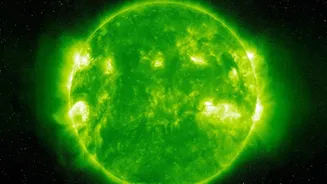
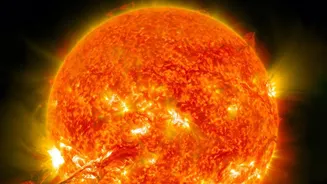
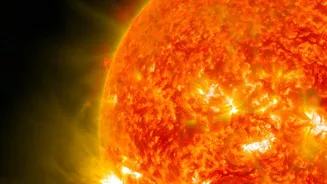
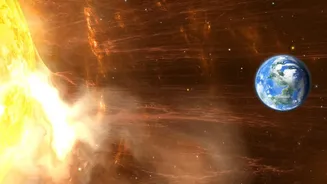
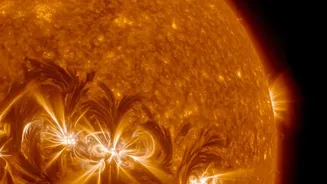
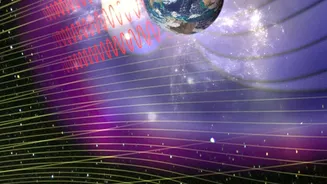
The Sun continuously sends out a stream of charged particles called the solar wind. Occasionally, it erupts with massive explosions known as solar flares or coronal mass ejections (CMEs), hurling vast clouds of plasma and magnetic fields into space. If
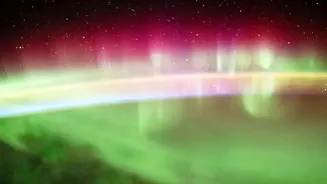
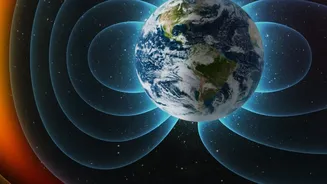
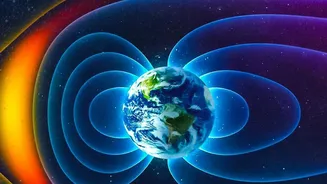
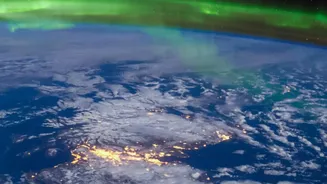
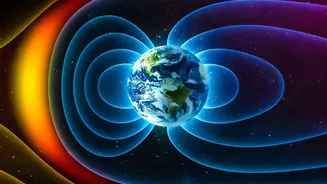
Earth is in the path of one of these eruptions, the particles interact with our planet's protective magnetic field, or magnetosphere. This interaction can trigger a geomagnetic storm, a major disturbance that, while creating beautiful auroras, can have serious consequences on the ground.
How Solar Storms Overload the Grid
During a geomagnetic storm, the rapid fluctuations in Earth's magnetic field induce powerful, low-frequency electrical currents in the planet's crust. These are called geomagnetically induced currents, or GICs. Power grids, with their long transmission lines, act like giant antennas, picking up these currents. The problem is that GICs are quasi-DC (direct current), while our power systems are built for AC (alternating current). This unwanted DC current flows into high-voltage transformers, causing their magnetic cores to saturate. This can lead to overheating, harmonic distortions, and protective relays tripping, potentially causing permanent damage and widespread blackouts. The 1989 storm that plunged Quebec, Canada, into darkness for nine hours is a prime example of this vulnerability.
The Ground Beneath Our Feet Matters
For years, the primary focus was on the intensity of the solar storm itself. However, recent research has confirmed that local geology plays a critical role in determining the actual risk. The ability of the ground to conduct electricity—its conductivity—varies significantly based on the type of rock and soil. Highly conductive ground, like that found in some sedimentary basins, allows the induced currents to flow through the earth more easily. In contrast, areas with resistive rock, such as many igneous and metamorphic formations, impede the flow of current through the ground. In these regions, the path of least resistance becomes man-made conductors, like power lines and pipelines, forcing larger and more dangerous GICs into the grid.
Mapping High-Risk Zones
This new understanding is transforming how experts assess space weather threats. Instead of a uniform global risk, scientists can now create detailed hazard maps that pinpoint specific vulnerabilities. Studies have shown that regions with complex geology or abrupt changes in conductivity are particularly at risk. Coastal areas, for instance, have a sharp contrast between highly conductive seawater and less conductive land, which can amplify the local electric fields and, by extension, the GICs. Research in the US found that the resistive rock of the Appalachian Mountains poses a higher risk than the sedimentary rock of the coastal plains. This allows for more targeted and cost-effective strategies to protect the grid.
Implications for India's Infrastructure
As India rapidly expands its national power grid and reliance on technology like GPS and satellite communications, its vulnerability to space weather is growing. The entire technological backbone, from the NavIC satellite navigation system to the digital economy, can be affected by geomagnetic disturbances. Understanding how India's diverse geology influences GIC risk is crucial for national resilience planning. Identifying regions with resistive geological features or complex underground structures will allow engineers and grid operators to take preemptive measures. This could involve installing blocking devices, updating operational procedures for storm warnings, or reinforcing transformers in the most susceptible locations. The threat is no longer just about what the Sun does, but about how our specific corner of the Earth responds.