



An Explosion of Data
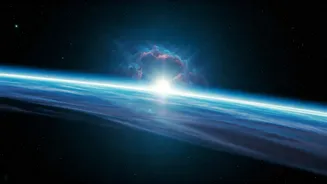
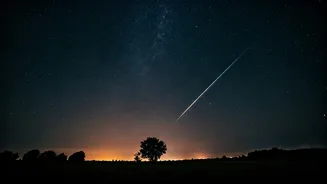
Deep space is not the serene, unchanging expanse it appears to be. It is a dynamic stage for some of the most powerful explosions since the Big Bang. These are known as transient astronomical events—phenomena that flare up and fade away, often in the blink
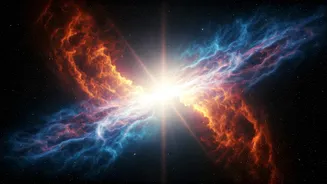
of an eye. They include supernovae, the cataclysmic death of massive stars; gamma-ray bursts (GRBs), the brightest electromagnetic events known to occur; and the collision of city-sized neutron stars. These events, often called 'deep space ignitions', release more energy in seconds than our sun will in its entire lifetime. For most of history, we only saw the lingering afterglow of these events, if we saw them at all. Catching one as it happened was pure luck. But that has changed dramatically. We have now entered the era of time-domain astronomy, where the focus is on the changing, evolving universe.
The Global Alert System
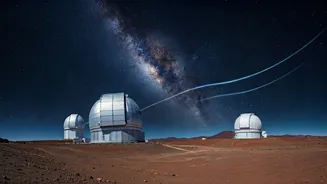
The secret to tracking these fleeting events is a global, automated system that acts like a cosmic emergency broadcast. It starts with survey telescopes like the Zwicky Transient Facility (ZTF) in California or, more recently, the powerful Vera C. Rubin Observatory in Chile. These facilities scan vast sections of the sky repeatedly, taking pictures every night. Sophisticated software then compares these new images to older ones, searching for anything that has changed—a new point of light, or an object that has suddenly brightened. When a change is detected, an automated alert is generated. Within minutes, this alert, containing the event's coordinates and brightness, is broadcast to astronomers worldwide. This system effectively sounds an alarm, telling the global community exactly where to point their own telescopes to witness a cosmic event as it unfolds. This rapid response is critical, as the most vital information from these events often appears in the first few hours or even minutes.
Multi-Messenger Astronomy
Today’s cosmic alarm system is not just about light. The most profound discoveries are made through multi-messenger astronomy, which combines data from completely different types of signals. For instance, the merger of two neutron stars doesn't just produce light; it also sends out ripples in spacetime called gravitational waves and emits tiny, ghost-like particles called neutrinos. Observatories like LIGO (Laser Interferometer Gravitational-Wave Observatory) and neutrino detectors like IceCube can detect these other 'messengers'. When one facility detects a signal, it can trigger an alert for telescopes that see light, leading to a coordinated observation effort across different platforms. This approach provides a much more complete picture of the event. Seeing both gravitational waves and a gamma-ray burst from the same source, as was done with the famous GW170817 event, confirmed theories about how heavy elements like gold and platinum are created in the universe.
India’s Role in the Cosmic Watch
India is a key player in this global quest. The nation is home to several world-class facilities that contribute to transient astronomy. India’s first multi-wavelength space observatory, AstroSat, has been crucial for studying cosmic sources in X-ray and UV light, providing vital follow-up data on these high-energy events. On the ground, the Giant Metrewave Radio Telescope (GMRT) near Pune, one of the world's most sensitive radio telescopes, is excellent at hunting for the radio afterglow of supernovae and GRBs. Furthermore, the fully robotic GROWTH-India telescope in Hanle, Ladakh, is part of an international network dedicated to continuously monitoring the sky for transient events, ensuring that when an alert goes out, an observatory is always in a position to respond. The upcoming LIGO-India project will further solidify the country's position, making it a crucial node in the global gravitational-wave detection network.
A New Era of Discovery
This ability to receive real-time alerts is fundamentally changing our relationship with the cosmos. It allows us to study the physics of dying stars, the formation of black holes, and the expansion of the universe with unprecedented detail. Each alert is a potential breakthrough. The Vera C. Rubin Observatory, which began sending alerts in early 2026, is expected to issue up to seven million alerts per night once fully operational, discovering thousands of supernovae and other transient events. This deluge of data will be driven by artificial intelligence and machine learning to filter and classify events, flagging the most scientifically interesting ones for immediate follow-up. We are moving from a static view of the universe to a dynamic one, watching the cosmic drama play out in real time, all thanks to these celestial alarm clocks.