





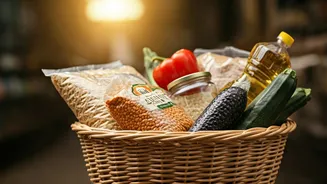


The Global Ripple Effect
For decades, the price of dal, rice, and vegetables in India was primarily a story of domestic factors: the success of the monsoon, local demand, government minimum support prices (MSPs), and supply chain efficiencies. While these elements still play
a crucial role, a new set of powerful, international forces are increasingly dictating the cost of your food. From geopolitical conflicts in the Middle East and Eastern Europe to weather patterns in South America, what happens abroad now lands directly in the Indian kitchen. This shift means that our household budgets have become deeply connected to the complex web of global trade, logistics, and diplomacy.
The Edible Oil Connection
Nowhere is this global link more apparent than in the edible oil aisle. India is the world's largest buyer of vegetable oils, importing nearly 60% of its needs. This heavy reliance means that when international prices for palm, soybean, or sunflower oil fluctuate, Indian consumers feel it almost immediately. Conflicts have disrupted sunflower oil shipments from the Black Sea region, while demand for biofuels in the US and Brazil can tighten the global supply of soybean oil. These factors, combined with jumps in global crude oil prices that increase shipping and freight costs, create a perfect storm for price hikes. A war or a policy change thousands of miles away can directly influence the cost of frying a pakora in Mumbai.
When Climate Crosses Borders
It's not just wars and trade policies. Climate change is a major global factor affecting food supply chains. An El Niño event can cause dry weather in Southeast Asia, impacting palm oil production, or floods in South America, affecting soybean crops. These climate-driven disruptions in major agricultural exporting nations create supply shocks that ripple across the world, influencing prices in import-dependent countries like India. Similarly, India's own agricultural output, still heavily reliant on the monsoon, faces increasing volatility due to climate change, impacting its ability to act as a buffer and sometimes necessitating export bans on items like rice to protect domestic supplies.
The Challenge of Packaged Goods
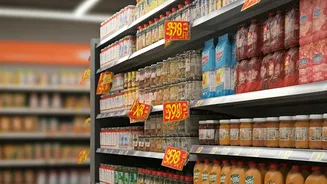
The global effect extends beyond raw commodities to packaged goods. A significant portion of the cost of Fast-Moving Consumer Goods (FMCG) is tied to crude oil derivatives used in production and, crucially, in packaging. When geopolitical tensions cause a spike in crude oil prices, the cost of materials like polyethylene and polymers, essential for everything from milk packets to biscuit wrappers, can jump significantly. This leads to a form of hidden inflation. While the price on the sticker might not change, companies may subtly reduce the quantity of the product—a tactic known as “grammage cuts”—to absorb rising costs without alarming consumers.
Navigating the New Normal
This new reality presents a complex challenge for both policymakers and households. The Indian government often uses tools like adjusting import duties and managing buffer stocks to shield consumers from the harshest effects of global price volatility. However, India's deep integration into the global economy means it cannot be fully insulated from these international cycles. For consumers, the era of predictable, locally-driven food prices is fading. Understanding that your grocery bill is now linked to global energy markets, international conflicts, and climate events elsewhere is key to navigating personal finance in an increasingly interconnected world.