








The Countdown to 'Aagaman'
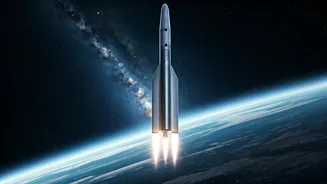
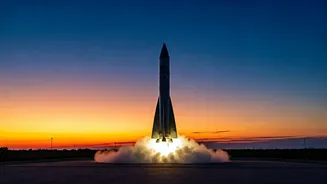
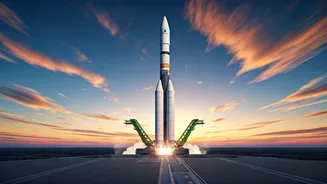
Skyroot Aerospace has confirmed a launch window between July 12 and August 4 for the maiden flight of its Vikram-1 rocket. The mission, aptly named 'Aagaman' (Sanskrit for 'Arrival'), represents a pivotal moment for India's burgeoning private space industry.
Unlike the sprawling, government-funded projects we often associate with space travel, this launch is the culmination of a focused, agile, and privately funded effort. The Vikram-1, a seven-storey-tall vehicle, is waiting at the Satish Dhawan Space Centre in Sriharikota, ready to prove that a startup can indeed reach orbit. A successful launch would not just be a technical victory; it would be the moment India’s private space sector truly arrives on the global stage.
From ISRO Engineers to Space Entrepreneurs
Skyroot was founded in 2018 by Pawan Kumar Chandana and Naga Bharath Daka, two former engineers from the Indian Space Research Organisation (ISRO). They saw an opportunity to do for space what low-cost airlines did for travel: make it more accessible, frequent, and affordable. The problem they identified was a global bottleneck in launching small satellites. While satellite technology was getting smaller and cheaper, getting a ride to space was still a slow and expensive process, dominated by national agencies with long waiting lists. Skyroot’s vision was to create a reliable 'space cab' service for the small satellite market. This ambition attracted significant investment, turning Skyroot into India's first space-tech unicorn with a valuation over $1 billion.
Building the Vikram Space Taxi
The company's workhorse is the Vikram series of rockets, named after Dr. Vikram Sarabhai, the father of India's space program. Following a successful sub-orbital test flight with Vikram-S in November 2022, the company is now ready for its first orbital mission with Vikram-1. This rocket is designed to carry payloads up to 350 kg into Low Earth Orbit. What gives Skyroot its 'startup energy' is its innovative approach to manufacturing. The Vikram-1 is built with a lightweight all-carbon composite structure and features 3D-printed engines, which drastically reduce production time and cost compared to traditional methods. This allows for rapid iteration and a manufacturing cadence that is essential for a commercial launch provider.
The Hustle is Real
The journey to Mission Aagaman has been a classic startup story of navigating delays and challenges. Each postponed launch was a learning opportunity, allowing the team to refine designs and conduct extensive ground testing. This mission's primary goal is to capture crucial in-flight performance data on everything from propulsion and stage separation to navigation. According to CEO Pawan Kumar Chandana, this real-world data cannot be fully simulated and is vital for validating their designs for future commercial flights. The upcoming flight will be partially commercial, carrying payloads for a mix of domestic and international customers, a crucial step towards generating steady revenue.
A New Orbit for India Inc.
The significance of the Vikram-1 launch extends far beyond Skyroot. Since India opened its space sector to private companies in 2020, over 200 space-tech startups have emerged. A successful orbital launch by a private firm would be a massive validation of this policy shift, encouraging more investment and talent to flow into the sector. India's space economy is currently valued at around $8-9 billion but is projected to grow to $44 billion by 2033. Companies like Skyroot are at the forefront of this expansion, aiming to capture a larger share of the global launch market, which is hungry for cost-effective solutions. This launch isn't just about putting a satellite in orbit; it's about launching a new era for Indian industry.