


The Cosmic Fingerprints of Life
When scientists hunt for life on exoplanets, they're not looking for little green men. They're searching for biosignatures: gases in a planet's atmosphere that are likely produced by living organisms. On Earth, the abundant oxygen is a direct result of
photosynthesis, and methane is constantly pumped out by microbes. The simultaneous presence of both gases is a particularly strong hint, as they tend to destroy each other and require a constant source—like life—to be replenished. These chemical imbalances are the key fingerprints astronomers are looking for light-years away. Detecting a gas like oxygen or methane could be the first step toward one of the most profound discoveries in human history.
Reading an Alien Atmosphere
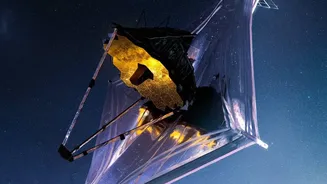
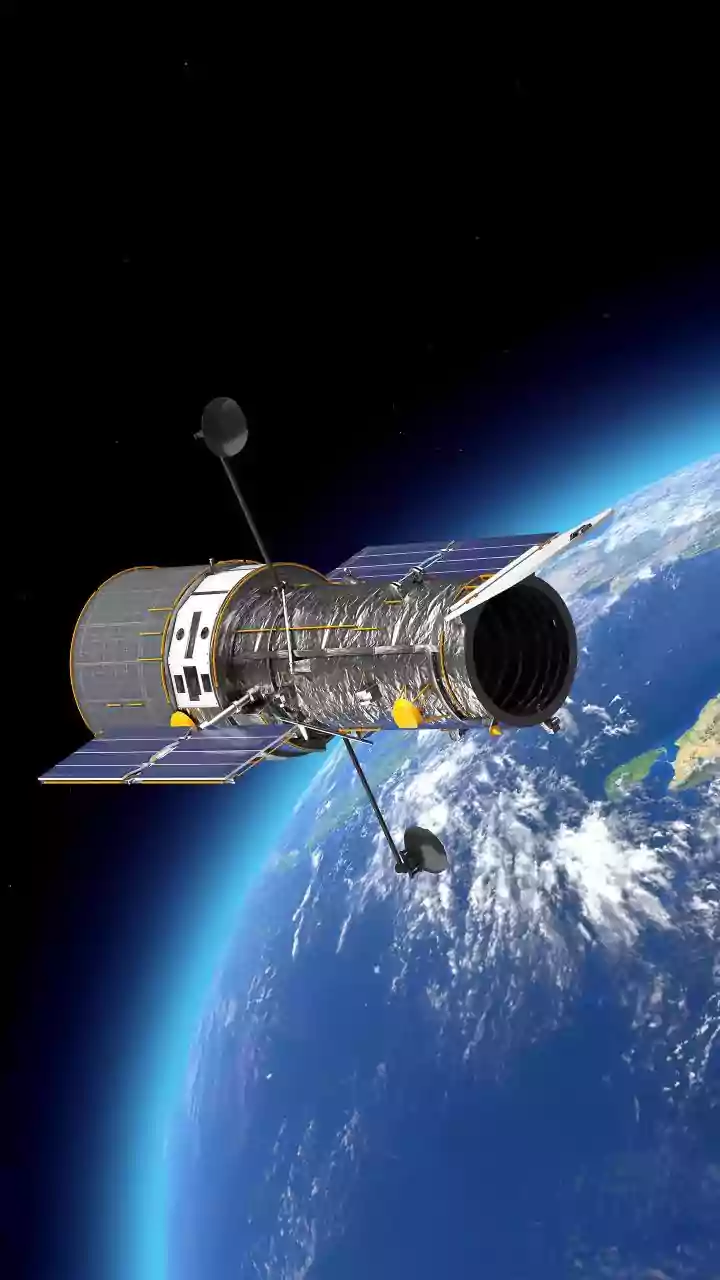
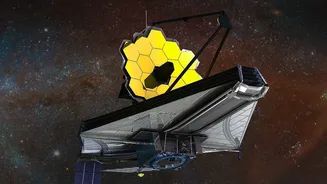
So how do you analyse the air of a planet you can't even see directly? The primary tool is a technique called transmission spectroscopy. When an exoplanet passes in front of its star from our point of view, a tiny amount of starlight filters through the planet's atmosphere. Telescopes like the James Webb Space Telescope (JWST) can capture this light and spread it into a spectrum, like a rainbow. Different gases in the atmosphere absorb specific colours, or wavelengths, of this light, leaving behind a unique barcode of dark lines. By reading this barcode, astronomers can deduce which molecules are present, giving them a chemical inventory of a world they will never visit.
The Great Geological Impostors
Here's the problem: nature is a master counterfeiter. Many of the gases we consider biosignatures can also be produced by non-biological, or abiotic, processes. This is the challenge of the "false positive." For example, a planet's atmosphere could build up oxygen if intense light from its star splits water molecules apart, with the lighter hydrogen escaping to space. Methane, another key biosignature, can be released by geological activity like volcanism or chemical reactions between water and certain types of rock. A telescope might detect a promising gas, but without understanding the planet's full context, it's impossible to know if the source is biological or merely geological.
Unmasking the True Source
Distinguishing a true sign of life from a geological mimic is a painstaking process of elimination. It's less about a single "gotcha" discovery and more about building a case with multiple lines of evidence. Astronomers use sophisticated models to determine if a planet's geological and atmospheric processes alone could create the observed gases. For instance, if they detect a lot of methane, they also look for gases like carbon monoxide. Large amounts of methane without carbon monoxide are difficult to explain with geology alone. They also consider the planet's environment: its size, its age, and the type of star it orbits. Some scientists propose comparing multiple planets within the same star system to establish a baseline of what "normal" abiotic chemistry looks like there, making any biological anomaly stand out more clearly.
Building a Case for Life
Even with an instrument as powerful as the JWST, finding definitive proof of life is incredibly difficult. Scientists acknowledge that detecting a potential biosignature is just the first step. The data can be complex, and different models might lead to different interpretations. No single gas will be a silver bullet. Instead, confidence will grow as more data is collected. Finding a combination of gases that are in chemical disequilibrium is a stronger indicator. Future observatories, like the planned Habitable Worlds Observatory, are being designed specifically to tackle this challenge, aiming to analyse dozens of Earth-like planets to build a statistical case. The goal is to move from a possible detection to a probable one, ruling out all known abiotic explanations until life becomes the most likely answer.