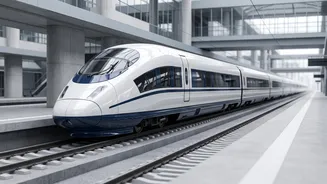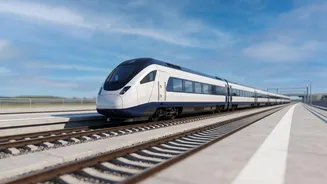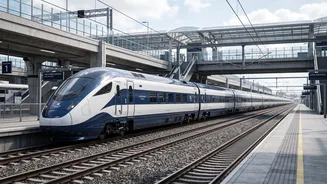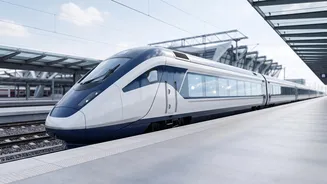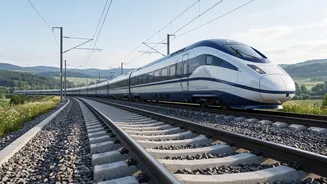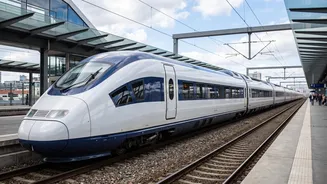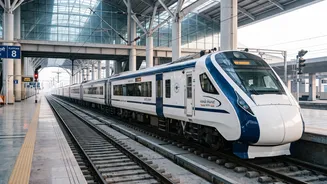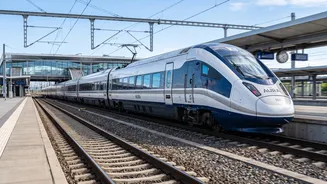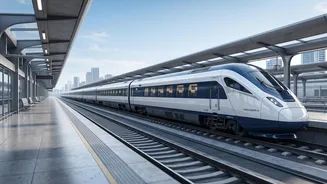






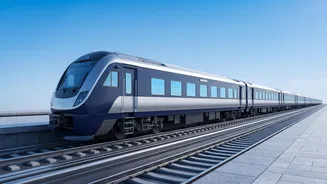
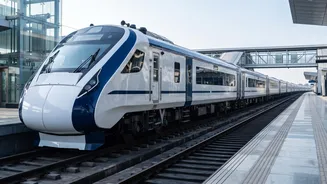
The much-anticipated rollout of a longer, 24-coach Vande Bharat sleeper train is on hold. While passengers eagerly await a new era in overnight travel, Indian Railways is prioritising safety, with extensive mandatory trials yet to be completed.
A Leap in Overnight Travel
Indian
Railways is planning a significant upgrade to its long-distance services with the introduction of a 24-coach Vande Bharat sleeper train. This new configuration is an extension of the successful 16-coach Vande Bharat sleeper, which first entered commercial service in January 2026. The goal is to enhance passenger capacity on high-demand overnight routes, offering a modern, faster, and more comfortable alternative to existing express trains like the Rajdhani. The Integral Coach Factory (ICF) in Chennai has been tasked with manufacturing 50 of these larger trainsets. The key difference will be the addition of eight coaches, including a dedicated pantry car for improved onboard catering on long journeys. This marks a substantial evolution from the 16-coach version, which accommodates about 823 passengers.
Why The Delay Is Non-Negotiable
The core reason for the delay is the rigorous and mandatory trial process. Before any new train can carry passengers, it must be certified by two key independent bodies: the Research Designs and Standards Organisation (RDSO) and the Commissioner of Railway Safety (CRS). This process is not a formality; it is a critical safety protocol designed to push the train to its absolute limits. The trials are comprehensive, covering everything from structural integrity and braking distance to ride comfort and performance on various types of track. Given that the 24-coach version is a new design with different weight distribution and dynamics, it must undergo its own full set of trials, even if it's based on the existing Vande Bharat platform. The rollout is tentatively targeted for mid-2027, after designs are finalised and the prototype successfully clears all tests.
Inside the Gruelling Trial Process
Mandatory trials are a complex engineering exercise. To simulate a full passenger load, coaches are filled with hundreds of sandbags. The train is then subjected to 'oscillation trials', where dozens of sensors measure every bump and shudder at progressively higher speeds. To be certified for a commercial speed of 160 km/h, the prototype must run safely at a test speed of 180 km/h to prove it has a sufficient safety margin. Engineers also conduct emergency braking tests under both wet and dry conditions to measure the exact stopping distance from maximum speed. Other tests include evaluating the propulsion and control systems, fire and smoke detection, and electromagnetic interference to ensure the train's systems don't disrupt trackside signalling or other equipment. Only after the RDSO analyses all this data and the CRS gives its final nod can the train be cleared for public service.
What Passengers Can Expect
Once launched, the 24-coach Vande Bharat sleeper promises a worldclass travel experience. In addition to the dedicated pantry car, the designs call for more biovacuum toilets, including some with babycare facilities. Passengers in First AC coaches can look forward to hot water showers, a feature highlighted in BEML's design for the 16coach variant. All coaches will feature ergonomically designed berths with better cushioning, individual reading lights, charging points, and automatic doors. Sealed gangways between coaches will reduce noise and dust while maintaining a stable temperature. The trains will also be equipped with the indigenous KAVACH automatic train protection system, adding another layer of safety. While the final passenger capacity has not been announced, the longer train is set to significantly ease demand on India's busiest overnight routes.