
A Shrinking, Shifting Giant
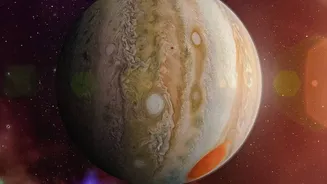
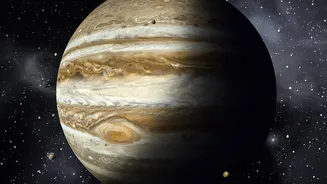
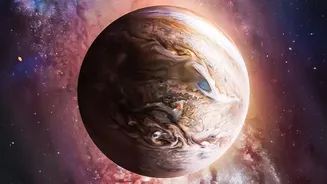
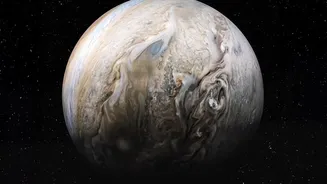
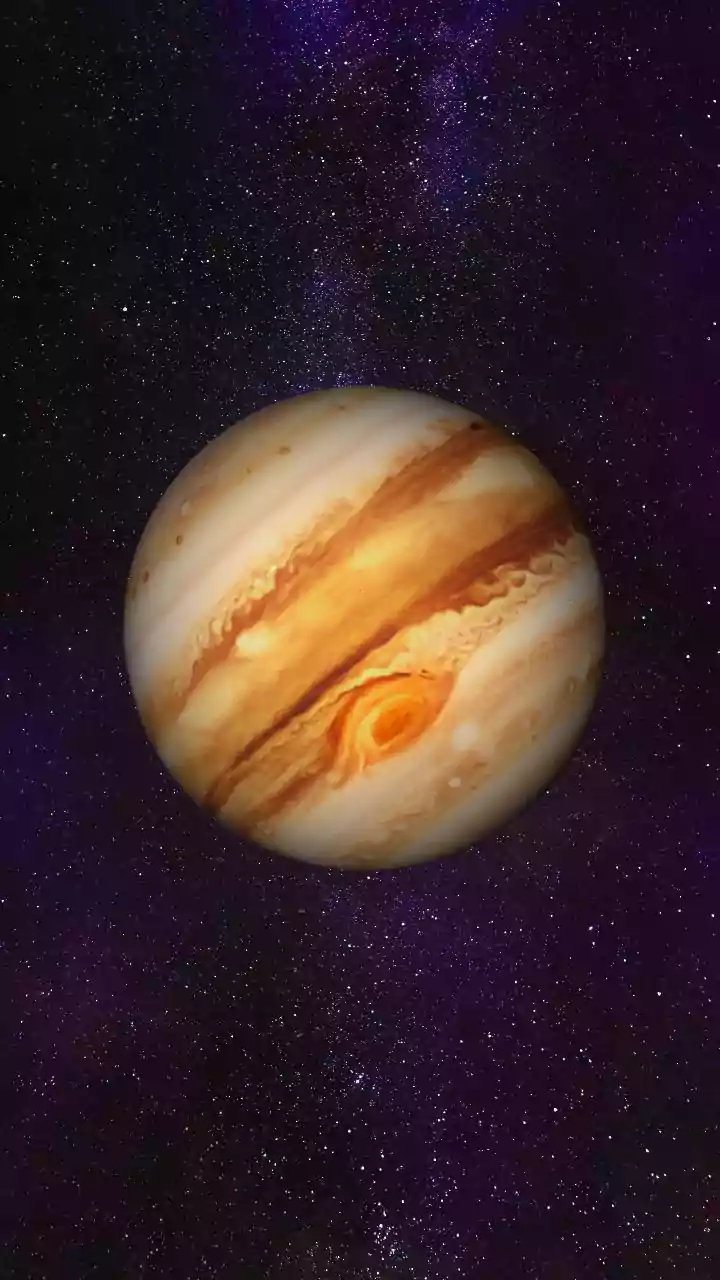
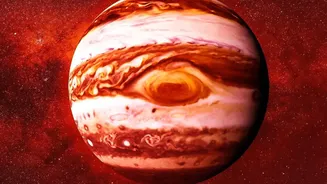
The most significant change, tracked by astronomers for decades, is that the Great Red Spot is shrinking. Historically, as far back as the late 1800s, the storm was estimated to be a colossal 40,000 kilometres across, wide enough to fit three Earths side-by-side.
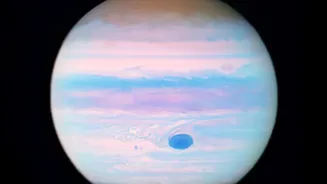
By the time NASA's Voyager spacecraft flew by in 1979, it had shrunk to about 23,335 kilometres. Recent observations from the Hubble Space Telescope confirm this trend has accelerated, with the storm’s diameter now measuring the smallest ever recorded. Its shape is also evolving, morphing from a distinct oval into a more circular form. Scientists note that while the storm is getting smaller horizontally, it appears to be growing vertically, stretching higher into Jupiter's turbulent atmosphere.
Wobbling Like a Bowl of Jelly
Beyond its shrinking size, recent dedicated observations by the Hubble telescope have revealed a new, unexpected behaviour. Data collected between late 2023 and early 2024 showed the storm oscillating, essentially wobbling and jiggling as it moves. According to NASA scientists, the storm is simultaneously squeezing in and out while its drift speed accelerates and decelerates over a 90-day cycle. This dynamic motion was a surprise to researchers, who had not previously identified such a fluctuation in the storm's size and speed. This behaviour indicates the Great Red Spot is far less stable than its long-lasting presence might suggest, with complex internal dynamics that are still not fully understood.
What's Driving the Changes?
Scientists are exploring several theories to explain these dramatic shifts. One leading hypothesis involves the storm's diet. It’s thought that the Great Red Spot has maintained its energy for centuries by absorbing smaller, surrounding storms. However, the rate of this 'feeding' may be changing. Some observations suggest that smaller eddies are interacting with the storm in a way that alters its internal energy, potentially sapping its momentum and contributing to the shrinkage. Another possibility is that the fundamental dynamics deep within Jupiter's atmosphere are evolving, slowly starving the storm of the energy that has fuelled it for so long. Despite shrinking, the storm's wind speeds in its outer ring have reportedly increased, adding another layer to the puzzle for scientists trying to model its future.
Our Unblinking Eyes on Jupiter
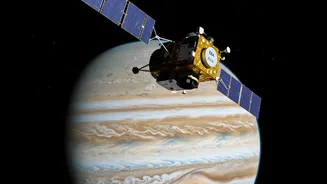
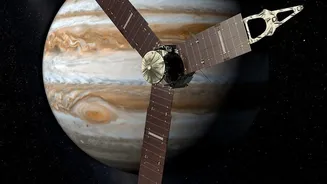
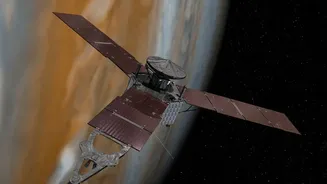
These discoveries are made possible by an array of powerful instruments. The Hubble Space Telescope, through its Outer Planet Atmospheres Legacy (OPAL) program, provides consistent, long-term monitoring that allows astronomers to track changes year after year. This steady cadence of high-resolution images is crucial for identifying trends like the storm’s shrinking size and oscillating behaviour. In addition to Hubble, NASA's Juno spacecraft, which has been orbiting Jupiter since 2016, provides incredibly close-up data, peering deep beneath the planet’s cloud tops to understand the storm’s structure and origins. The combined power of these observatories gives us an unprecedented view of the forces shaping the greatest storm in our solar system.