


The Bizarre Time-Warp Explained
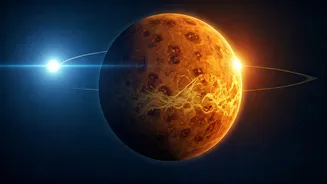
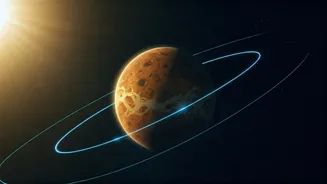
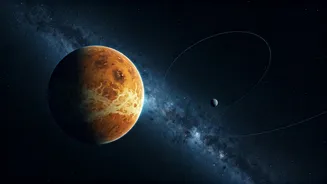
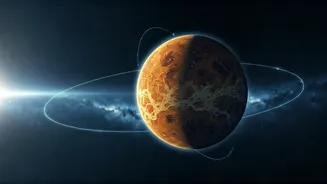
Let's get the mind-bending numbers out of the way first. On Earth, a year is about 365 days. On Venus, a year—the time it takes to complete one orbit around the Sun—is much shorter, lasting only about 225 Earth days. But here’s the twist: a single day on Venus, defined
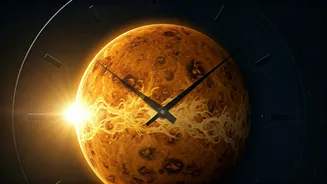
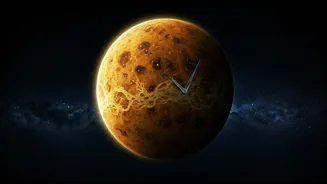
by how long it takes for the planet to complete one full rotation on its axis, is an astonishing 243 Earth days. That’s right. A single spin of the planet takes longer than its entire journey around the Sun. Imagine celebrating your birthday, then waiting another 18 Earth days for the planet to finish its 'day.' This isn't science fiction; it’s the strange reality of our nearest planetary neighbour. This type of day is called a 'sidereal day,' which measures rotation against the backdrop of distant stars.
Why is Venus Such a Slow Spinner?
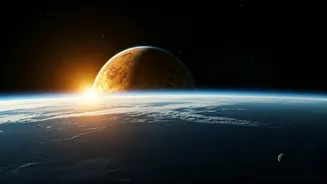
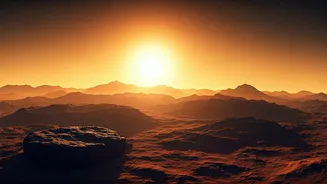
The primary reason for Venus's extraordinarily long day is its incredibly sluggish rotation. While Earth zips around on its axis, completing a turn in 24 hours, Venus takes its sweet time. But it gets even weirder: Venus spins backwards. Unlike Earth and most other planets in our solar system, Venus has a retrograde rotation, meaning it spins clockwise. If you could stand on its surface, you would see the Sun rise in the west and set in the east. Scientists aren't entirely sure why Venus is the solar system's oddball spinner. One leading theory suggests it was struck by a massive asteroid or planetary body billions of years ago, which sent it spinning in the opposite direction. Another hypothesis points to its thick, heavy atmosphere, which could create powerful tidal forces that have slowed its rotation to a crawl over aeons.
A Year with Only Two Sunrises
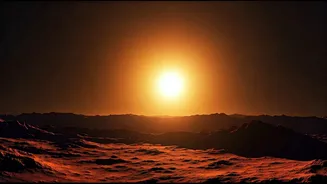
Because of this slow, backward spin, the concept of a 'day' in terms of sunrise and sunset is also completely alien. This is called a 'solar day.' While a single rotation (sidereal day) takes 243 Earth days, the time from one sunrise to the next on Venus is 'only' about 117 Earth days. This happens because as the planet slowly spins backward, it is also moving forward in its orbit around the Sun. The combination of these two motions means the Sun appears to cross the sky more quickly than the planet's actual rotation speed would suggest. The bizarre result? In one full Venusian year (225 Earth days), you would experience roughly two sunrises and two sunsets. It’s a place where the 'day' and 'night' cycle is completely decoupled from the passing of a year.
Earth's Hellish Twin
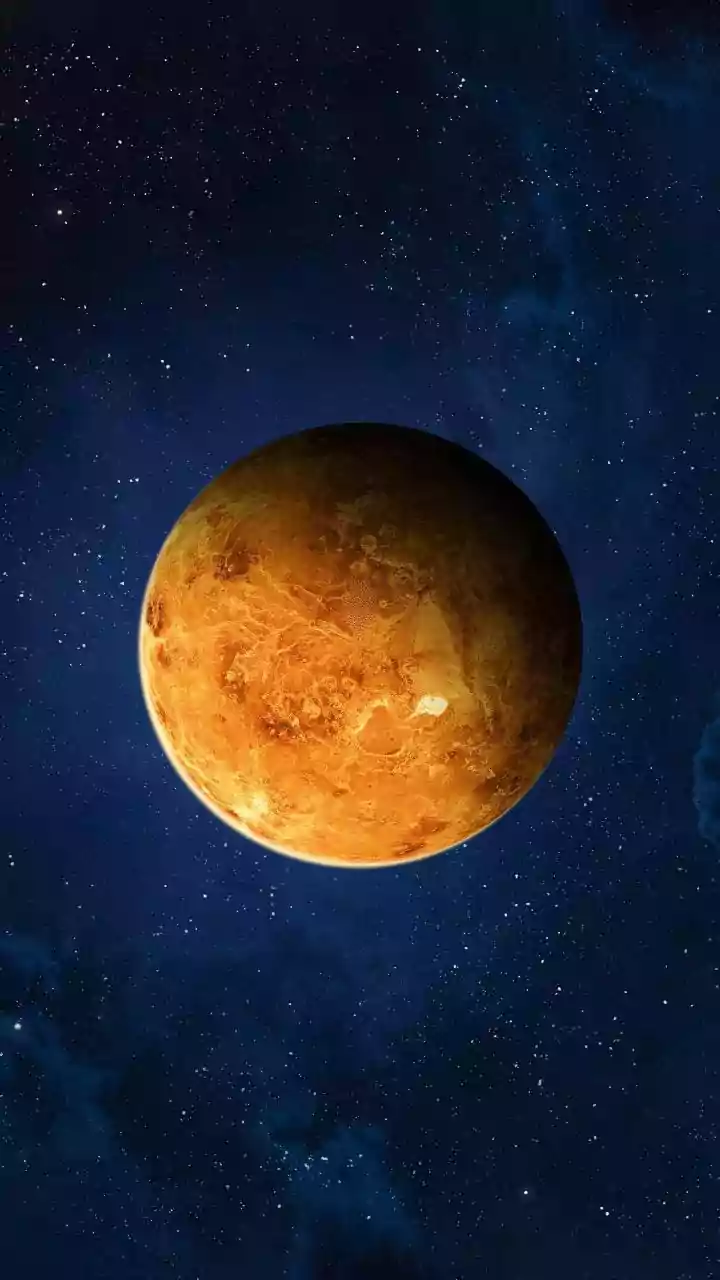
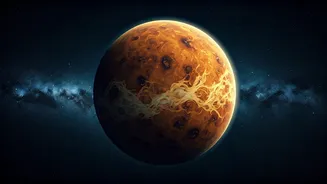
Venus is often called Earth's twin because it’s similar in size, mass, and composition. But the similarities end there. The same thick atmosphere that may have slowed its rotation has also created a runaway greenhouse effect, making it the hottest planet in the solar system. Surface temperatures hover around a scorching 465° Celsius—hot enough to melt lead. The atmospheric pressure at the surface is over 90 times that of Earth's, equivalent to being nearly a kilometre deep in our ocean. The sky is a murky yellow, and it rains sulphuric acid. These hellish conditions, combined with its bizarre timing, make Venus a fascinating but utterly inhospitable world—a cautionary tale of what can happen to a rocky planet.
How Did We Figure This Out?
For centuries, Venus was a mystery, its surface permanently shrouded by impenetrable clouds. Astronomers could track its orbit to calculate its year, but its rotation speed was a complete unknown. The breakthrough came in the 1960s with the advent of powerful radar astronomy. By bouncing radar signals off the planet's surface from Earth, scientists could finally 'see' through the clouds. These radar observations allowed them to track surface features and measure the planet's rotation rate and direction for the first time, revealing the shocking truth about its slow, retrograde spin. It was a stunning discovery that transformed our understanding of planetary dynamics and proved our solar system was even stranger than we had imagined.