

It’s Physics, Not Just Proportions
The core reason you can't just halve the time lies in the relationship between surface area and volume. When you make an object smaller, its volume decreases much faster than its surface area. Think of a large potato versus a small one; the small potato has
much more skin (surface area) relative to its starchy interior (volume). In cooking, heat is transferred from the outside in. A smaller piece of food, with its higher surface-area-to-volume ratio, absorbs heat more quickly and efficiently. So, while a whole chicken might roast for 90 minutes, a half-sized chicken won't necessarily be done in 45 minutes because it will cook through faster than a linear calculation suggests.
The Oven Is a Constant Force
When you preheat your oven to 200°C, it creates a constant environment of heat. The oven doesn't know or care if you've put in a large casserole for eight or a small one for two. The smaller dish has less mass to heat up, so it will reach the target temperature much more quickly than its larger counterpart. Similarly, on the stovetop, bringing a small pot of soup to a simmer will happen faster than with a large pot, but the simmering time needed to develop flavours might not change as dramatically. You also have to consider evaporation; a shallower layer of liquid in a smaller stew pot will reduce faster, potentially altering the consistency and flavour if you're not watching closely.
Baking: A Science of Its Own
Nowhere is this principle more critical than in baking, where chemistry and physics are partners. When you halve a cake recipe, you must also use a smaller pan. A smaller pan often means the batter is a different depth than the original recipe intended. If the batter is shallower, it will bake much faster, and you risk dry, overdone edges. If it's deeper, the outside may burn before the centre is cooked through. The chemical reactions of leavening agents, the setting of proteins, and the browning of sugars are all time-and-temperature dependent. Blindly halving the time is a recipe for a sunken, gooey mess.
A Practical Rule of Thumb
So, what's a home cook to do? Instead of halving the time, a safer starting point is to reduce the time by about 25% to 33%. For a recipe that originally called for 60 minutes, start checking for doneness around the 40 to 45-minute mark. However, this is just a guideline. There is no magic formula that works for every single dish. Your best tools are not the timer, but your own senses and a good thermometer. Check for visual cues like browning, listen for sizzling, and smell the aromas. For roasts, chicken, and even some baked goods, an instant-read thermometer is your most reliable friend, telling you exactly when the interior has reached the perfect temperature, regardless of time.
Rethink Your Cookware
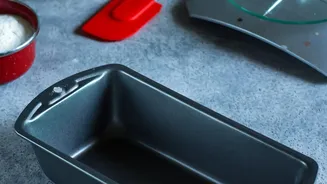
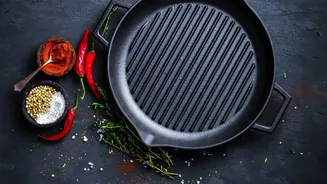
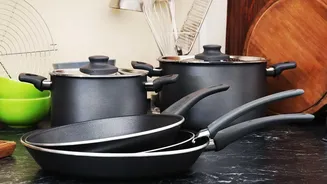
Using the right equipment is crucial when scaling down. Pouring a halved brownie batter into the original 9x13-inch pan will create a thin, cracker-like dessert that will burn in a fraction of the time. You must use a smaller pan that keeps the depth of the food consistent with the original recipe. If you halve a recipe meant for a 9x13-inch pan, one for an 8x8-inch pan is often a good substitute. Using a large pan for a small amount of food can also cause it to spread out and cook too quickly or unevenly. The pan material matters, too; a cast-iron skillet heats differently than a glass dish, which can also affect your final cook time.