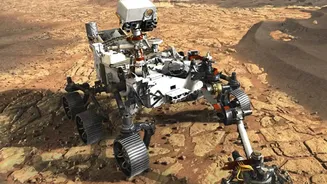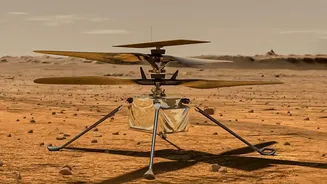




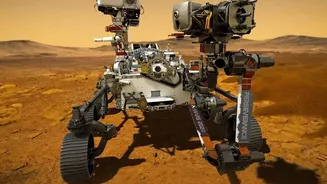
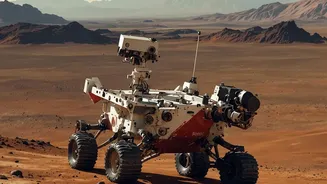
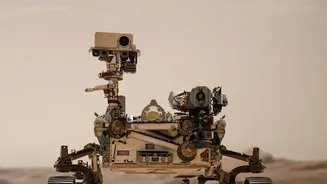
For years, NASA's Perseverance rover has been collecting a priceless geological treasure on Mars. But getting this cache of rock and soil samples back to Earth is proving to be one of the most complex challenges the agency has ever faced.
A Treasure Cache 33 Million Miles Away
Since its landing
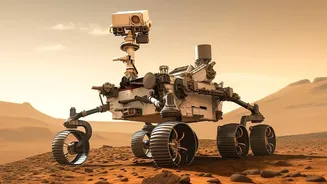
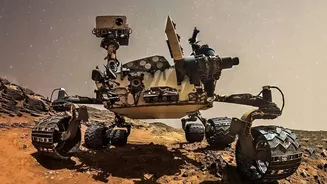
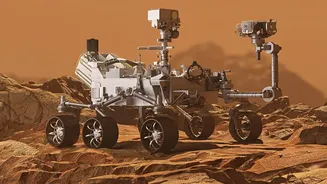
in February 2021, the Perseverance rover has been diligently exploring Mars' Jezero Crater, a location believed to have once been a river delta. Its primary mission is not just to analyze the planet, but to collect and store the most promising rock and soil samples in sealed, cigar-shaped tubes. Scientists believe these samples could hold the key to one of humanity’s biggest questions: was there ever life on Mars? The rover has gathered a diverse collection of igneous and sedimentary rocks, which could reveal the planet's geological history and past potential for habitability. Some of these sample tubes have been strategically dropped onto the Martian surface to create a depot, while others remain aboard the rover, waiting for a pickup that is proving fiendishly difficult to plan.
The Original Grand Plan
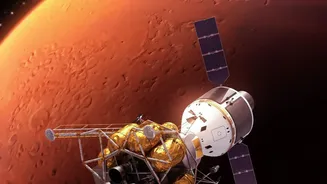
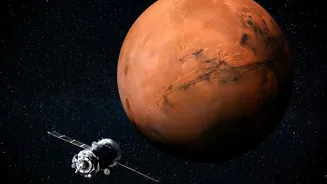
The initial plan for the Mars Sample Return (MSR) mission was a multi-part epic of space engineering, a collaboration between NASA and the European Space Agency (ESA). It involved sending a large Sample Retrieval Lander to the surface. This lander would carry a small rocket, known as the Mars Ascent Vehicle (MAV), and a robotic arm. The idea was for the Perseverance rover to deliver its onboard samples to the lander. The lander’s arm would then transfer the tubes into the MAV. That rocket would then make history by becoming the first to launch from the surface of another planet, carrying the samples into Mars orbit. From there, an ESA-built orbiter would rendezvous with the sample container, capture it, and begin the long journey back to Earth.
An 'Unacceptable' Price and Timeline
This complex, multi-stage plan came with an equally complex set of problems. An independent review board concluded that the mission's design, budget, and schedule were unrealistic. The estimated cost ballooned to as much as $11 billion, and the return date for the precious samples was pushed as far back as 2040. In April 2024, NASA Administrator Bill Nelson stated plainly that this price tag was 'too expensive' and the timeline 'too far away'. The review found that the original plan had a near-zero chance of meeting its launch dates and budget, forcing the agency to admit the current approach was unworkable. This triggered a major rethink, sending engineers and mission planners back to the drawing board.
A Call for Simpler, Faster, Cheaper Ideas
In response to the review board's stark conclusions, NASA has hit the reset button. The agency is now actively seeking new, innovative architectures from both its own centres and private industry partners. The goal is to find a 'simpler, less expensive and less risk alternative'. In early November 2026, NASA detailed a new initiative called the Perseverance Sample Retrieval Architecture, or PSRA. This effort, set to kick off in January 2027, is designed to generate fresh, impartial recommendations for getting the samples home sooner and more affordably, potentially by 2035 for around $8 billion. It represents a fundamental shift from a single, complex plan to a competitive search for a more elegant solution.
The Race to Bring Mars to Earth
While NASA re-evaluates, it isn't the only player in the game. China is moving forward with its own ambitious Mars sample return mission, Tianwen-3, with a potential launch in 2028 and a sample return as early as 2031. This adds a new layer of urgency to NASA’s efforts. The new proposals being considered by NASA aim to reduce complexity. For instance, one simplified concept involves a single lander carrying the Mars Ascent Vehicle, which would collect samples directly from Perseverance. The challenge remains immense, involving not just the launch from Mars but also ensuring the samples are not contaminated by Earth microbes upon their return, a process known as planetary protection. Every aspect, from the lander's design to the return vehicle, is being re-examined to shave off costs and years from the timeline.