
Looking Back Through Time
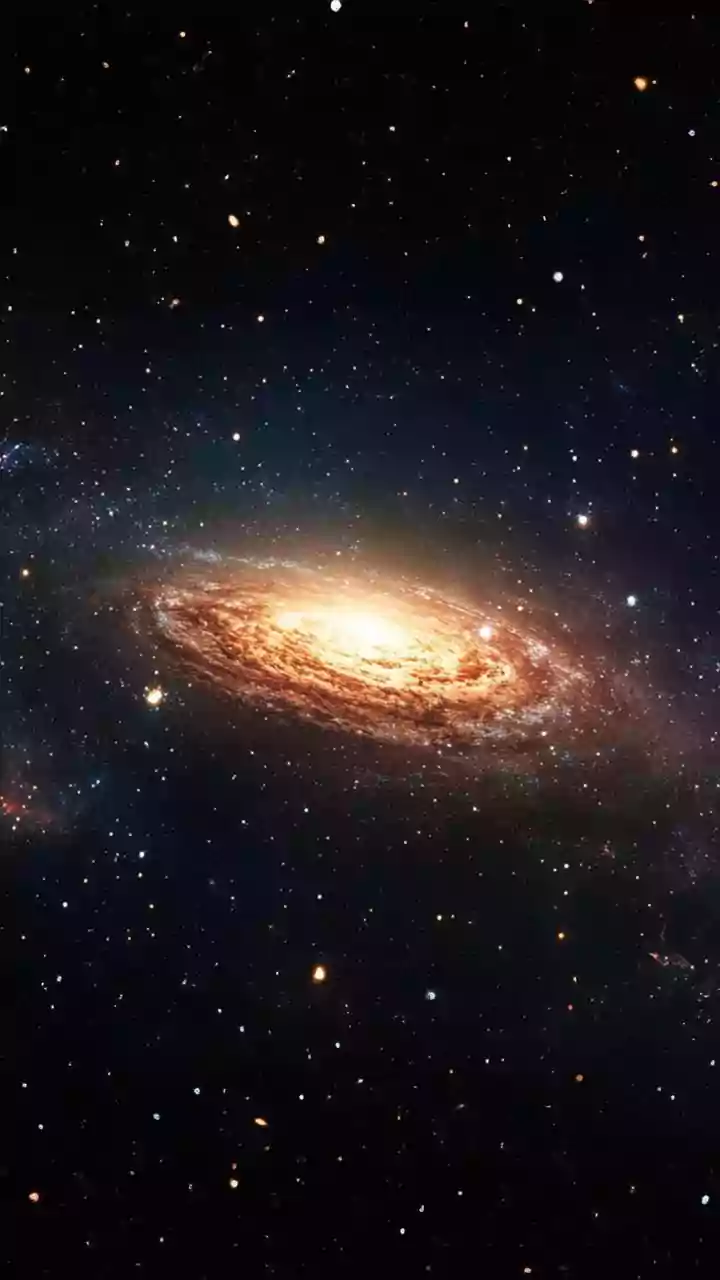
To understand the past, astronomers look far, far away. Light from distant galaxies travels for billions of years to reach our telescopes. This means we see these galaxies not as they are today, but as they were when the universe was young. This concept
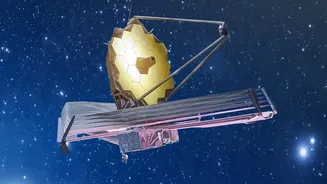
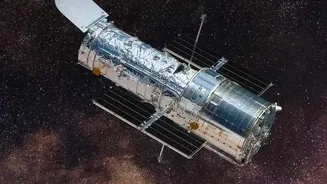
is powered by a phenomenon called "redshift." As the universe expands, it stretches the wavelengths of light traveling through it. Light from the most distant objects is stretched so much that its wavelength shifts from visible light to infrared. Telescopes like the Hubble and the James Webb Space Telescope (JWST) are designed to detect this faint, ancient, infrared light, allowing us to peer back to a time shortly after the Big Bang.
From Faint Blobs to Cosmic Clues
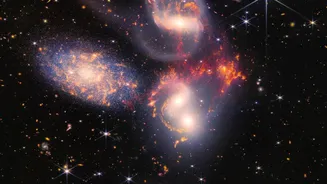
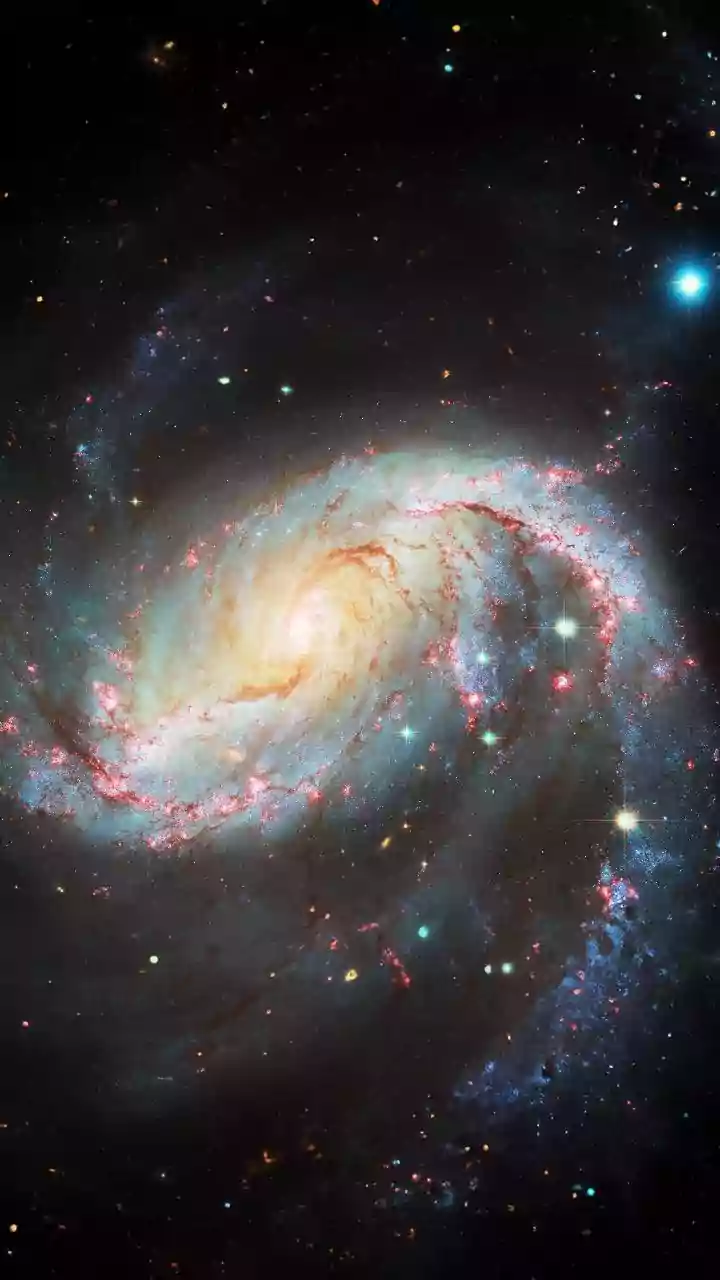
The first deep field images, taken by the Hubble Space Telescope, turned a seemingly empty patch of sky into a treasure trove of nearly 3,000 galaxies. These early observations showed that primordial galaxies were often smaller, more compact, and more irregular than the grand spirals we see today. The latest deep fields from the more powerful JWST go even further. Thanks to its incredible sensitivity to infrared light, JWST captures the universe's earliest structures in unprecedented detail, revealing faint features, star clusters, and diffuse gas that were previously invisible. These images provide the raw data for understanding how loose collections of stars and gas began to assemble into the first recognisable galaxies.
Decoding the Light: The Role of Spectroscopy
An image alone isn't enough; to truly understand star birth, scientists need to dissect the light itself. This is done through spectroscopy, a technique that splits light into its constituent wavelengths, like a prism creating a rainbow. Each chemical element has a unique spectral "fingerprint," a pattern of bright or dark lines in the spectrum. By analyzing these fingerprints from early galaxies, astronomers can determine their chemical composition, temperature, and density. This tells them what ingredients were available for star formation. For instance, the first generation of stars would have been made almost entirely of the hydrogen and helium created in the Big Bang, and spectroscopy helps identify galaxies with this primordial makeup.
The JWST Revolution: A Frenzy of Star Formation
The James Webb Space Telescope has been a game-changer, challenging and refining previous models of the early universe. Its observations revealed that some of the first galaxies were surprisingly bright and massive. Computer simulations suggest this is because these early galaxies experienced intense, rapid bursts of star formation. Furthermore, recent JWST studies have uncovered that these ancient galaxies may contain far more mass in smaller, fainter stars than was previously estimated. This discovery has significant implications, suggesting that our models for galaxy formation may need serious revision and that more planets might have formed in the early universe than previously assumed. JWST is also identifying mysterious objects like "Little Red Dots," which are now believed to be actively growing supermassive black holes from the cosmic dawn.