






A Fortunate Front-Row Seat
In an incredible stroke of luck, an international team of scientists captured a major geological event in real time. Just two months after deploying a sophisticated network of underwater sensors along the Southeast Indian Ridge, the ocean floor began
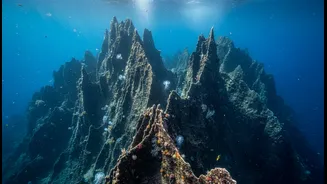
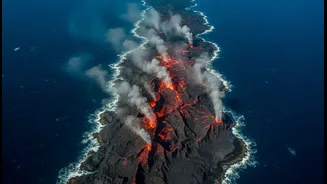
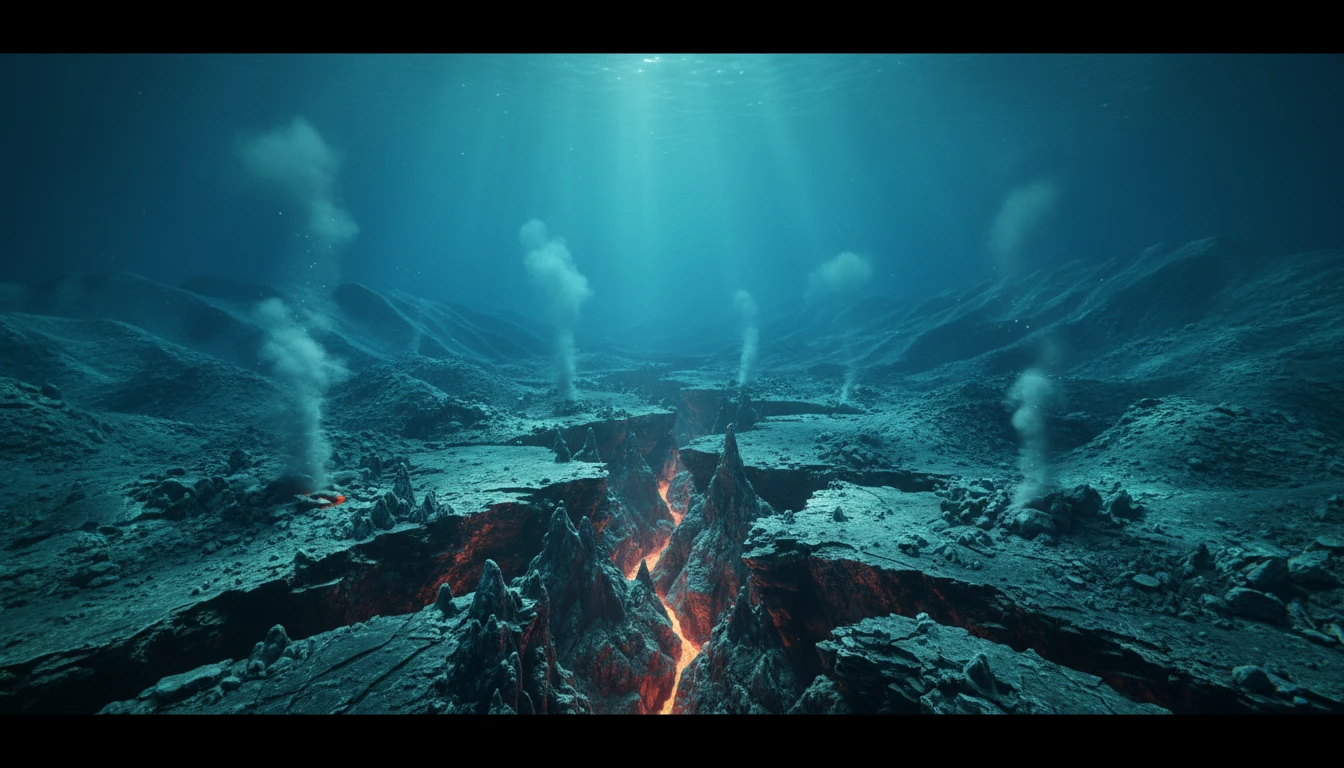
to split apart. On April 26, 2024, a swarm of earthquakes signaled the start of a dramatic sequence. Over the course of about 16 days, the valley floor of the ridge sank by four meters, the crust was pulled apart by more than a meter, and a colossal 160 million cubic meters of lava erupted onto the seabed. This was not just a tremor; it was the birth of new planetary crust, and scientists had a front-row seat.
How They Saw the Unseeable
Observing the deep ocean floor is one of the hardest challenges in science. To capture this event, researchers used an array of more than 20 instruments, including hydrophones to listen for seismic tremors, acoustic beacons to measure horizontal stretching, and pressure gauges to record changes in depth. When the earthquake swarm began, the hydrophones picked up the sound, and the acoustic beacons, which constantly pinged each other, started reporting increased travel times, confirming the seafloor was widening. Subsequent seafloor mapping revealed the enormous volume of fresh lava. It was the combination of these different data streams that allowed scientists to piece together a complete, moment-by-moment picture of the rifting event.
The Engine of Plate Tectonics
So, what is seafloor spreading? The Earth's crust is not a solid shell but a puzzle of massive tectonic plates. At mid-ocean ridges, like the Southeast Indian Ridge, these plates are pulling away from each other. As they separate, magma from the Earth's mantle rises to fill the gap. When this molten rock hits the cold seawater, it cools and hardens, forming a new strip of ocean floor. This process literally pushes the plates apart, widening ocean basins and moving continents over millions of years. The Southeast Indian Ridge, which separates the Australian and Antarctic plates, spreads at about six centimetres per year, but this event showed that years of accumulated stress can be released in just a matter of days.
A 'Seismic Deficit' Explained
One of the most profound findings from this observation relates to how the crust moves. Scientists have long been puzzled by a “seismic deficit” at mid-ocean ridges—the measured fault movements were far greater than what could be explained by the number of recorded earthquakes. This event provided the answer. The data showed that most of the fault movement happened silently, without generating tremors. This 'aseismic slip' appears to be directly driven by the movement of magma beneath the surface. The magma didn't just cause earthquakes; it physically pushed the fault apart, accounting for the missing motion. This fundamentally changes the understanding of how these powerful geological systems operate, suggesting magma is a much more direct driver of plate movement than previously thought.
From Theory to Ground Truth
For decades, our understanding of seafloor spreading was based on geological theory and the study of ancient rock formations. We knew it happened because we could see the evidence left behind, such as symmetrical magnetic stripes on the ocean floor. However, no one had ever observed the entire process from start to finish. This direct, in-situ observation moves the science from theory to reality. It provides what scientists call a 'ground truth'—a verified, real-world event against which all previous models and seismic data can be tested. It confirms that the planet's crust is shaped by these rapid, dynamic events, not just slow and steady movement, and offers an unprecedented blueprint for the birth of new Earth.