




The Solar Panel, Reimagined
For decades, solar power has meant bulky, rigid panels made from crystalline silicon. While effective, they are expensive and energy-intensive to produce. Perovskite solar cells offer a radical alternative. Named after their specific crystal structure,
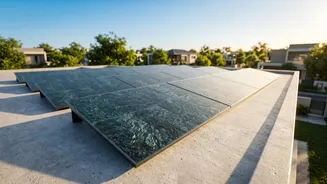
these cells are made from a family of materials that can be synthesized cheaply at low temperatures. Think of it less like carving a solid block of silicon and more like printing with a special ink. This process allows for the creation of ultra-thin, lightweight, and even flexible solar films that are just a fraction of a millimetre thick. This not only reduces material and manufacturing costs but also opens up new possibilities for where solar power can be generated, from curved rooftops to windows and vehicles.
The Durability Dilemma
If perovskites are so revolutionary, why aren't they on every rooftop already? The primary obstacle has been durability. Early perovskite cells were notoriously fragile, degrading quickly when exposed to moisture, heat, and even prolonged sunlight. This made them impractical for long-term use, especially in a demanding climate like India's. For a solar panel to be a worthwhile investment, it needs to last for 20-25 years, a benchmark that early perovskite technology simply couldn't meet. This instability, along with challenges in scaling up production from tiny lab cells to large commercial panels, has been the main barrier holding the technology back from widespread adoption.
A Breakthrough in Stability and Scale
This is where the latest breakthroughs come in. Scientists and companies have been relentlessly tackling the stability problem. Recent advancements, such as using new chemical additives and improved manufacturing processes, have dramatically improved the durability of perovskite cells. Some studies now show cells retaining over 98% of their efficiency after more than 1,000 hours of stress testing. Furthermore, progress is being made in combining perovskites with traditional silicon in what are called 'tandem' cells. These hybrid cells stack a perovskite layer on top of a silicon one, allowing the panel to capture a wider spectrum of sunlight and boost overall efficiency significantly. Lab efficiencies for these tandem cells have already surpassed 34%, breaking the theoretical limits of silicon alone.
Efficiency That Pays For Itself
The promise of perovskites lies in the powerful combination of high efficiency and low cost. Higher efficiency means generating more electricity from the same amount of sunlight, which is crucial for homes with limited roof space. While today’s silicon panels typically convert 18-22% of sunlight into energy, lab-tested perovskite cells are pushing well beyond that. Tandem cells, in particular, offer a path to efficiencies of over 30%. This leap in performance, combined with potentially lower manufacturing costs, could dramatically reduce the levelized cost of energy—the final price you pay per kilowatt-hour. The goal is to make solar power not just a green alternative, but the most economical choice for households.
The Road to Indian Rooftops
The journey from a lab breakthrough to a commercially available product is long, but there are promising signs for the Indian market. In early 2026, India saw the installation of its first perovskite solar array, a small but significant step bringing the technology into real-world application. Research institutions like IIT Bombay and IIT Guwahati are also achieving record efficiencies, demonstrating strong domestic expertise. While widespread commercial availability for residential rooftops is likely still a few years away, the pace of innovation is accelerating. As manufacturers solve the final hurdles of scaling up production and ensuring a 25-year lifespan, perovskite technology could perfectly align with India's ambitious renewable energy goals and its 'Make in India' initiative, potentially creating a new hub for low-cost solar manufacturing.