




Choosing an outdoor workout that you'll actually stick with is key to long-term heart health. Hiking and paddleboarding are two fantastic options, but they challenge your body in different ways. So, which is better for your cardiovascular goals?
The Cardiovascular Contest: Steady vs. Dynamic
Hiking
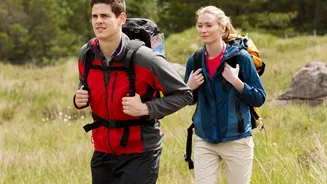
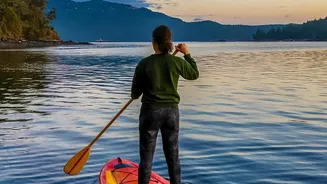
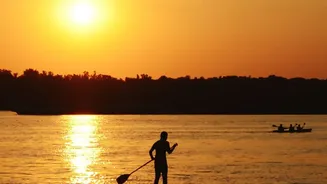
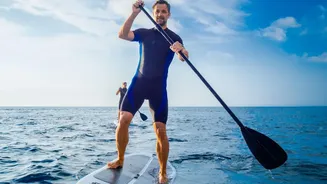
is a classic cardiovascular workout that improves heart health by keeping you moving over varied terrain. Walking up hills and navigating uneven paths elevates your heart rate, which over time can help lower blood pressure and improve circulation. It's a form of steady-state cardio, where your heart rate remains consistently elevated, providing a reliable aerobic challenge. Stand-up paddleboarding (SUP), on the other hand, offers a more dynamic cardiovascular experience. The continuous effort of paddling elevates your heart rate, much like brisk walking or running. But the real challenge comes from maintaining balance on the water. This constant balancing act engages small stabilizer muscles throughout your body, especially in your core and legs, forcing your heart to work consistently to support them.
Stamina Building: Which Pushes You Further?
Both activities are excellent for building stamina, but they do so differently. Hiking builds endurance through sustained effort over time. Gradually increasing the length and incline of your hikes forces your cardiorespiratory system to adapt, allowing you to go further without tiring. Carrying a pack adds resistance, further boosting your stamina. Paddleboarding builds endurance by combining continuous movement with resistance from the water and wind. Consistent paddling sessions train your body to sustain effort, while interval training—alternating between hard paddling and recovery—can rapidly increase your stamina for longer distances. Since SUP is a low-impact activity, it's easier on the joints, which may allow for longer or more frequent training sessions without the strain of high-impact sports.
Muscle Engagement: Full-Body vs. Lower-Body Focus
Hiking is predominantly a lower-body workout. It heavily targets your glutes, quadriceps, hamstrings, and calves, especially during uphill and downhill sections. Your core muscles also get a solid workout as they work to keep you stable on uneven ground. Using trekking poles can help engage your upper body, including your arms, shoulders, and back, creating a more well-rounded workout. Paddleboarding is renowned for being a total-body workout. While your arms and shoulders power the paddle, the real engine is your core. Your abdominal muscles, obliques, and lower back are constantly engaged to maintain balance and transfer power into each stroke. Your legs and glutes also work nonstop as stabilizer muscles, absorbing the movement of the water.
Calorie Burn: A Tale of Two Intensities
The number of calories you burn depends heavily on intensity, duration, and your own body weight. A leisurely hour of paddleboarding can burn between 300 and 430 calories. However, more vigorous paddling, like racing or SUP yoga, can burn upwards of 500 to 700 calories per hour. Hiking generally burns more calories on average, with a typical hourlong hike burning between 400 and 600 calories. This number can increase significantly based on the difficulty of the trail, the steepness of the inclines, and the weight of your backpack.
Accessibility and Enjoyment
One of the biggest factors in any fitness routine is consistency, which often comes down to accessibility and enjoyment. Hiking requires minimal specialized gear to start—just a good pair of shoes—and trails are often widely available in local parks and nature preserves. It's an activity that can be easily scaled from a gentle walk to a challenging mountain trek. Paddleboarding requires access to a body of water and more initial investment in equipment, including a board, paddle, and personal flotation device. However, the calming effect of being on the water provides significant mental health benefits, such as stress reduction, which can be a powerful motivator. Many find the smooth, gliding motion of paddling to be meditative and more enjoyable than the repetitive impact of walking.