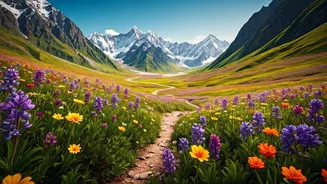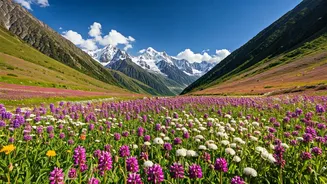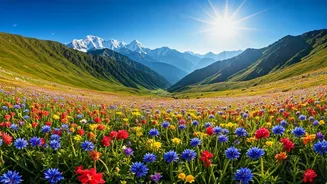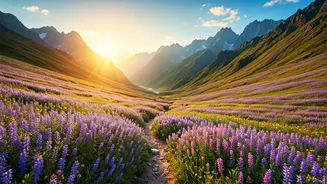



A Carpet Woven by Nature
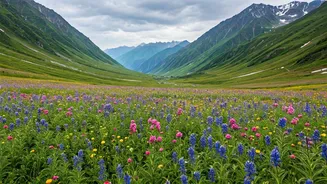
The place is the Valley of Flowers National Park, a UNESCO World Heritage Site nestled in the Chamoli district of Uttarakhand. For most of the year, this high-altitude valley lies dormant under a blanket of snow. But for a few precious months, beginning
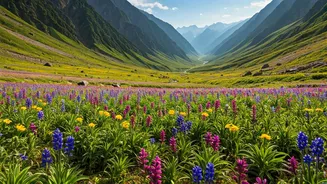
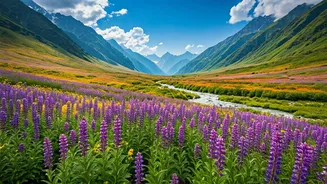
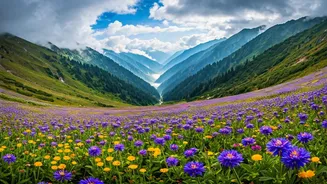
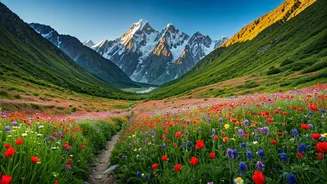
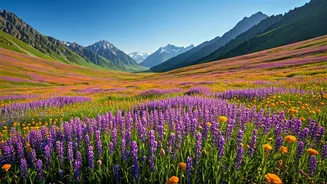
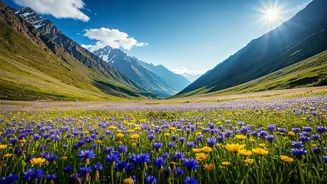
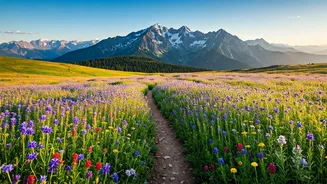
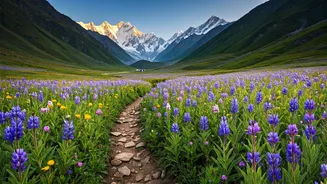
with the monsoon in July, it undergoes a breathtaking transformation. Over 500 species of wildflowers burst into life, carpeting the meadows in a riot of colour. We're not talking about a few scattered blossoms; we're talking about an entire landscape painted in shades of purple, yellow, pink, and blue. This is not just a garden; it's an ecosystem, a vibrant spectacle that has inspired myths and drawn botanists, adventurers, and spiritual seekers for generations.
The Science of a Short-Lived Spectacle
The term 'peak bloom' is a bit of a misnomer. There isn't one single day when the valley is 'perfect.' Instead, it's a dynamic, rolling wave of colour. Different flowers bloom at different times and altitudes. The bloom is entirely dependent on the monsoon's arrival and intensity, the amount of winter snowfall, and the ambient temperature. This makes predicting the 'best' time to visit an educated guess, an art practiced by the Uttarakhand Forest Department and local experts. They analyse weather patterns and early growth to forecast the period—usually a two-to-three-week window in late July or early August—when the maximum number and variety of flowers, including the famed Blue Poppy and Brahma Kamal, are likely to be in full display. This prediction becomes the starting gun for the annual tourist race.
A Journey Earned, Not Given
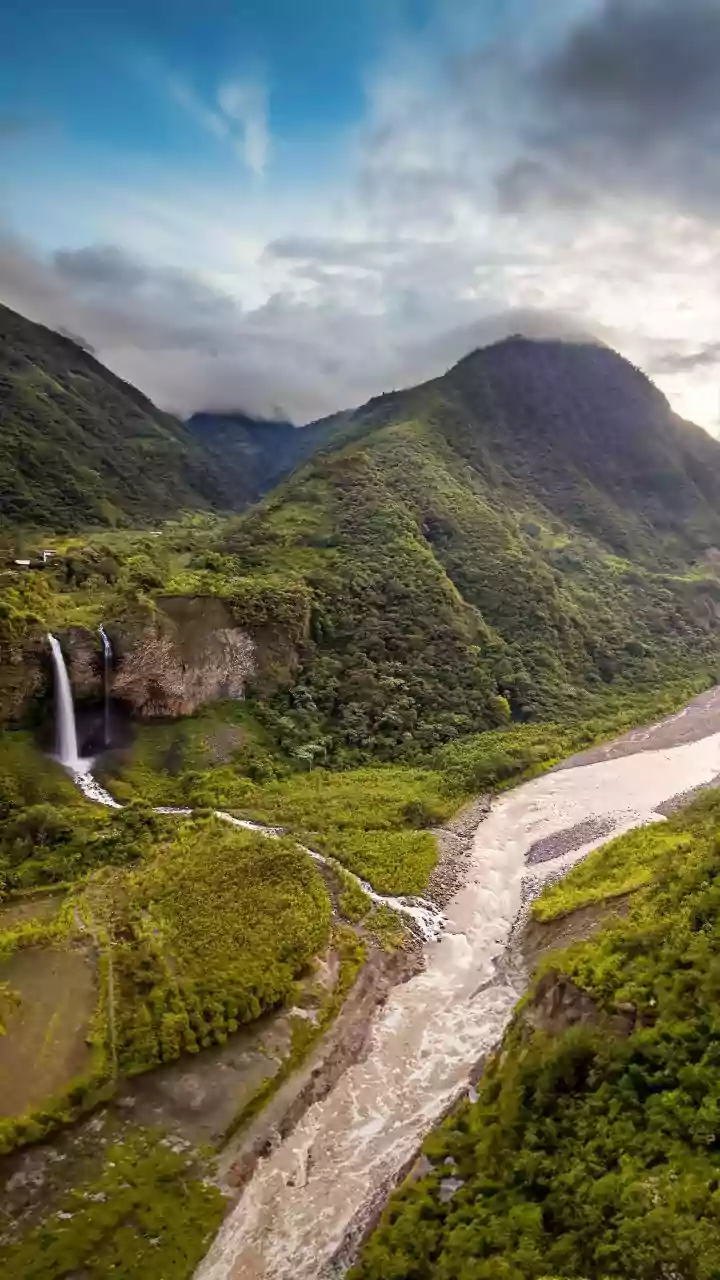
Reaching this floral paradise is no simple feat. The journey is an integral part of the experience, a filter that ensures only the determined arrive. The trek begins from Pulna village, a short drive from Govindghat. From there, it’s a 9-kilometre trek to the village of Ghangaria, the base camp for both the Valley of Flowers and the Sikh pilgrimage site of Hemkund Sahib. This path, though scenic, is a strenuous, uphill climb. After an overnight stay in Ghangaria, another trek of about 4 kilometres takes you to the entrance of the valley. This difficulty is precisely part of the allure. The effort magnifies the reward, making the first glimpse of the flower-strewn meadows an emotional, hard-won victory.
The Psychology of the Rush
So why do thousands heed this call? The motivation is a cocktail of modern desires and ancient urges. In an age of curated digital perfection, the valley offers an authentic, untamable beauty. It's a powerful antidote to a world lived on screens. For many, it's a spiritual quest, an opportunity to connect with nature in its purest form, heightened by the proximity to Hemkund Sahib. For others, it’s the thrill of adventure—a challenging trek with an incredible payoff. The short, unpredictable window also creates a powerful sense of FOMO (Fear Of Missing Out). You can't just go anytime; you have to go *now*. This ephemerality makes the experience precious and fuels the urgency that sees Ghangaria's guesthouses fill up overnight.
Balancing Blooms and Footfalls
The surge in popularity, while a boon for the local economy which is heavily dependent on tourism, presents a significant challenge. The Valley of Flowers is a fragile alpine ecosystem. To protect it, authorities have implemented strict rules. Tourists are only allowed in the valley during the day; overnight camping is strictly forbidden. Visitors must stick to the designated 5-kilometre trail and are prohibited from picking flowers or leaving any litter. These measures are a crucial attempt to strike a balance, allowing people to witness the magic without destroying the very thing they came to see. The future of the valley depends on this delicate dance between accessibility and conservation.