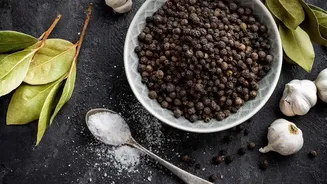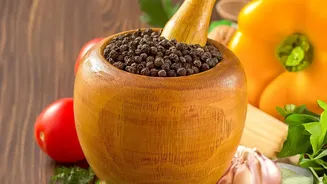

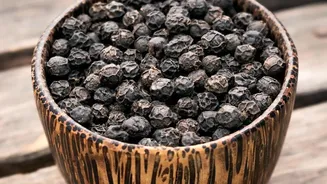
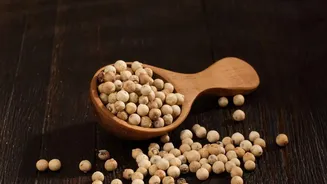
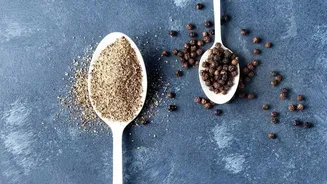
Black pepper, the 'king of spices', is a staple in every Indian kitchen. But its high value makes it a target for adulteration, often with cheaper lookalikes. These simple, at-home tests can help you ensure you are using the real deal.
Why Adulteration Happens
The primary reason
for black pepper adulteration is economic gain. Unscrupulous traders mix in cheaper substances that resemble whole peppercorns to increase the weight and volume of their product, thereby boosting profits. The most common adulterant is dried papaya seeds, which, at a glance, look strikingly similar to real peppercorns in size, shape, and colour. Other substitutes can include 'light berries', which are immature or hollow peppercorns with little flavour, and in rarer, more dangerous cases, materials like coal powder or artificial dyes to achieve a convincing look. While some adulterants like papaya seeds mainly cheat you on flavour, others can pose health risks.
The Simple Water Test
The easiest and most well-known method to check for adulteration is the water test, recommended by the Food Safety and Standards Authority of India (FSSAI). Simply fill a clear glass with water and drop in a spoonful of your whole black pepper. Stir gently and observe. Pure, dense black peppercorns will sink to the bottom. Adulterants like dried papaya seeds and hollow, light berries are less dense and will float to the surface. If you see a number of 'peppercorns' floating, you have good reason to be suspicious.
A Close Visual Inspection
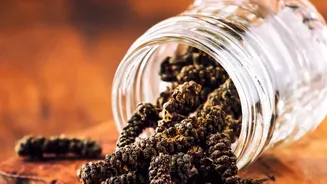
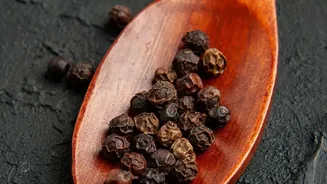
Your eyes can be a powerful tool. Spread a small sample of peppercorns on a white plate or sheet of paper. Genuine black peppercorns have a distinctly wrinkled, rough surface and are typically a uniform dark brown to black colour. Dried papaya seeds, on the other hand, often appear slightly more oval or shrunken and have a smoother surface. You might also spot a greenish or blackish-brown hue that differs from the rest. While it can be hard to spot fakes when they are mixed in, any peppercorns that look unusually smooth, light, or have an inconsistent shape warrant a closer look.
The Crush and Smell Test
Your senses of touch and smell are excellent detectors. Place a few peppercorns on a hard surface and press down firmly with your finger or a spoon. A mature, high-quality peppercorn is quite hard and will not break easily. However, light berries or other adulterants will often crumble with little pressure. Once crushed, give it a sniff. Real black pepper releases a sharp, pungent, and woody aroma almost immediately. Fake peppercorns, like those made from papaya seeds, will have a very faint or even repulsive smell and lack the characteristic heat and pungency when tasted.
Checking for Artificial Coatings
Sometimes, adulterants are coated with mineral oil to give them a uniform, shiny black appearance that looks 'premium'. To check for this, you can perform a simple rub test. Vigorously rub a few peppercorns in your palm or on a piece of white paper. If you notice a greasy residue or a faint smell of kerosene, the peppercorns have likely been coated with mineral oil. Another method involves using a small amount of rubbing alcohol; pure peppercorns shouldn't leave a colour stain, whereas those with artificial dyes might.