


A New Cosmic Surveyor
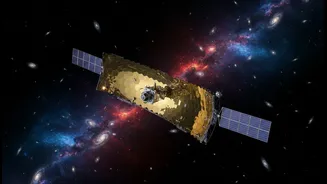
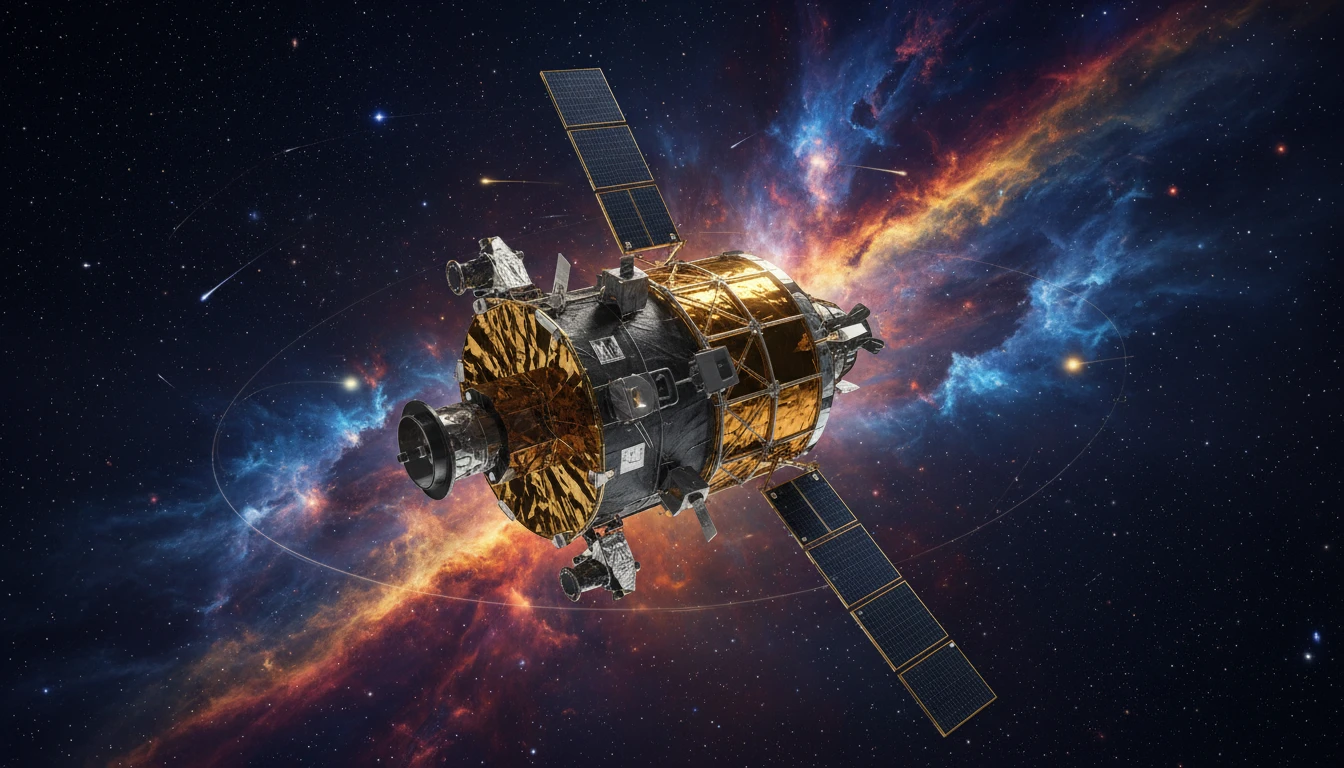
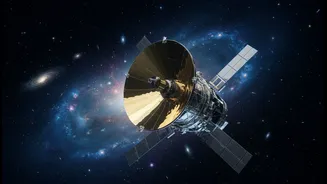
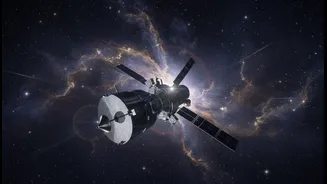
Scheduled to launch on August 30, 2026, the Nancy Grace Roman Space Telescope is NASA's next great observatory. Named after the agency's first chief of astronomy, the 'Mother of Hubble', this mission has a distinct and powerful purpose. While its predecessors
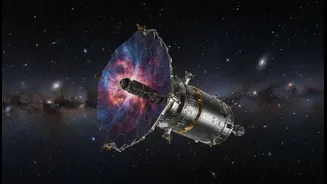
like Hubble and the James Webb Space Telescope (JWST) act like microscopes, zeroing in on specific cosmic targets for deep, detailed views, Roman is built to be a wide-eyed surveyor. It possesses a 2.4-metre primary mirror, the same size as Hubble's, but its instrumentation is engineered for a completely different task: speed and scale. Its main goal is not to stare intently at one patch of sky, but to rapidly scan vast cosmic territories, creating the largest, high-resolution maps of the universe ever assembled.
The Power of a Panoramic View
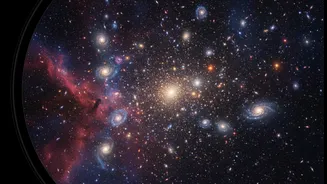
Roman's superpower is its incredible field of view. Its Wide Field Instrument (WFI) can capture a patch of the sky at least 100 times larger than Hubble's infrared camera in a single snapshot. To put that in perspective, where Hubble might need hundreds of observations to mosaic a picture of a neighbouring galaxy like Andromeda, Roman could achieve it in just two. This immense survey speed will allow it to image more than 50 times the amount of sky Hubble covered in its first 30 years, all within its initial five-year mission. This isn't just about taking bigger pictures; it’s about collecting a massive dataset that can reveal large-scale patterns in the universe's structure, track changes over time, and identify rare phenomena that are easily missed with a narrower view.
Illuminating the Dark Universe
About 95% of our universe is made of mysterious substances we call dark matter and dark energy. We can't see them, but we can see their effects. Dark matter’s gravity sculpts galaxies and the cosmic web, while dark energy is the force causing the expansion of the universe to accelerate. Understanding these phenomena is one of the most pressing goals in modern science, and it’s Roman’s primary objective. The telescope will tackle this in several ways. By mapping the positions of billions of galaxies, it will study how gravity and cosmic expansion have shaped the universe's structure over time. It will also hunt for thousands of Type Ia supernovae—exploding stars that act as 'standard candles'—to precisely measure distances and chart the history of cosmic expansion.
A Census of Distant Worlds
Beyond cosmology, Roman is set to revolutionize the search for exoplanets. While NASA's Kepler mission found thousands of planets using the 'transit' method (watching for a star's light to dim), Roman will primarily use a technique called gravitational microlensing. This effect occurs when a star and its planet drift in front of a more distant star, with their combined gravity briefly acting like a lens to magnify the background starlight. This method is sensitive to planets with wider orbits, from the habitable zone outwards, and can even detect rogue planets that drift through the galaxy untethered to a star. Astronomers anticipate that Roman will discover thousands of new worlds this way, providing a more complete census of planetary systems and revealing how common systems like our own truly are.
A Cosmic Collaborator
Roman is not a replacement for Hubble or Webb; it's a powerful collaborator. Its strength lies in identifying targets and providing context. Roman's vast surveys will create catalogues of millions of galaxies and thousands of interesting transient events. Once Roman finds something particularly noteworthy—a uniquely distant galaxy, an intriguing planetary system, or a powerful stellar explosion—the more focused vision of Webb and Hubble can be called upon for detailed follow-up observations. Webb can analyze an exoplanet’s atmosphere, and Hubble can provide high-resolution imaging across a broad spectrum of light. Together, these observatories represent a complementary toolkit, allowing scientists to first find the needles in the cosmic haystack with Roman, and then study them in exquisite detail with its partners.