







Decoding On-Time Performance
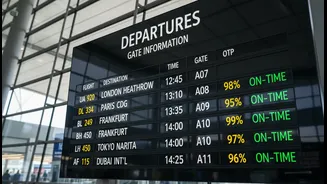
In the aviation world, 'On-Time Performance' or OTP is the industry's yardstick for punctuality. Globally, and in India, a flight is generally considered 'on time' if it departs or arrives within 15 minutes of its scheduled time. Anything beyond that
15-minute buffer, and the flight is officially late. In India, the Directorate General of Civil Aviation (DGCA) is the primary body that tracks and publishes monthly OTP data for domestic airlines. This data provides a crucial, audited metric that helps passengers see beyond marketing claims and understand which carriers are most likely to get them to their destination as planned. An airline's ability to maintain a high OTP is a sign of operational efficiency and reliability, which directly impacts passenger satisfaction.
A Tale of Two Metrics
The fresh context in recent years comes from understanding that punctuality isn't just about the airline. It's a shared responsibility between the airline and the airport. A key distinction lies in how each is measured. Global bodies like Cirium and OAG often rank airline OTP based on arrivals, which is what matters most to passengers. Conversely, airport OTP is typically measured by on-time departures, as this reflects factors within the airport's control, such as runway availability, gate management, and ground handling efficiency. The DGCA’s reports for India now provide data for both. For example, recent data for May 2026 showed Chennai International Airport (MAA) as India's most punctual airport, while IndiGo led among airlines. This dual perspective is vital; a highly efficient airline can still be delayed by a congested airport, and a well-run airport can't prevent an airline's internal operational issues.
The Data's Blind Spots
While OTP figures are valuable, they have significant limits. One major loophole is 'schedule padding', where airlines deliberately inflate their scheduled flight times to create a buffer. A flight that might only take 1 hour and 40 minutes in the air could be scheduled for 2 hours and 30 minutes, making it easier to absorb minor delays and still register as 'on time'. Furthermore, standard OTP metrics don't always differentiate between a 20-minute delay and a three-hour one. They also don't fully capture the passenger experience, such as a missed connection. If your first flight is delayed causing you to miss your next, the second flight still departing on time doesn't help you at all. Finally, most reports, including the DGCA's primary metric, focus on major metro airports, meaning performance on routes to and from smaller, tier-2 cities is often not reflected in the headline numbers.
Behind Every Delay
The reasons for delays are multifaceted. The DGCA categorises them into reactionary, operational, weather-related, and Air Traffic Control (ATC) issues. Reactionary delays are the domino effect where a late arriving aircraft leads to a late departure for its next flight. This is often the largest cause of disruption. Other factors include technical snags with the aircraft, crew availability, airport congestion, and, of course, weather. During monsoon season in India, for example, OTP for all airlines can drop by 5-10 percentage points. Similarly, fog in North India during winter can severely impact schedules, not just at the affected airport but across the entire network due to those cascading reactionary delays.
A Smarter Way to Read the Rankings
So, how should a savvy traveller use this information? Instead of blindly booking with the top-ranked airline, use the data as a guide. Look at trends over time rather than a single month's data. If you're flying a specific route frequently, pay attention to which airlines consistently perform well on that corridor. According to recent DGCA reports, IndiGo has consistently led the OTP charts in India, often with a score between 80-85%, followed closely by Akasa Air. However, even the most punctual airline can have a bad day. It's wise to consider the time of your flight—the first flights of the morning are less likely to be affected by reactionary delays from earlier in the day. Also, consider the airport; flying out of a hub known for congestion and lower OTP, like Mumbai or Delhi, carries a higher inherent risk of delays than a more punctual airport like Chennai.