




Why Sitting Causes So Much Stiffness
When you sit for extended periods, your body adapts to the position in ways that create strain. Your hip flexor muscles at the front of your hips remain shortened, leading to tightness. Meanwhile, the opposing muscles, your glutes, become less active
and weaken. Many people also tend to slouch or lean forward, causing shoulders to round and strain to build in the neck and back. This combination of muscle imbalances and poor posture is the primary cause of that end-of-day stiffness and can contribute to chronic aches and pains over time. Prolonged sitting also slows blood flow, which can further contribute to discomfort and fatigue.
Incorporate 'Movement Snacks' Throughout Your Day
The most effective strategy to combat sitting-induced stiffness is to prevent it from building up in the first place. Instead of waiting until you feel sore, integrate short, frequent bursts of activity into your day. Experts recommend getting up and moving around at least once every 30 to 60 minutes. This doesn't need to be a full workout. Simply standing up, walking to get a glass of water, or taking a quick stroll around the office can make a significant difference. Setting a timer on your phone or computer can be a helpful reminder to take these crucial 'movement snacks' and break the cycle of prolonged sitting.
Simple Stretches You Can Do At Your Desk
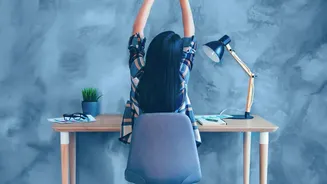
You don't need to roll out a yoga mat to get relief. Several effective stretches can be done right from your office chair.Seated Spinal Twist: Sit upright with both feet flat on the floor. Gently twist your torso to the right, placing your left hand on your right knee for a deeper stretch. Hold for 15-30 seconds and repeat on the other side. This helps relieve tension across the back.Chest and Shoulder Opener: Clasp your hands behind your back. Straighten your arms and lift them gently until you feel a stretch across your chest. This counteracts the slumping posture many adopt at a desk.Neck Stretch: Gently tilt your head toward your right shoulder, holding for about 15 seconds to feel a stretch along the left side of your neck. Slowly return to the center and repeat on the other side.Wrist and Forearm Release: Extend one arm in front of you with the palm facing up. Gently bend your wrist down, using your other hand to deepen the stretch. Hold, then repeat with the palm facing down. This helps relieve tension from typing.
Reset and Unwind After Work
Once your workday is done, a few targeted movements can help undo the day's accumulated tension. A brisk walk is a great way to improve circulation and loosen up. For more targeted relief, consider movements that open the hips and lengthen the spine. A standing hip flexor stretch, where you step one foot forward into a lunge, can help lengthen the muscles at the front of your hips. Another great option is the 'glute bridge', where you lie on your back with knees bent and lift your hips toward the ceiling, which helps reactivate weakened glute muscles. Simple desk squats, performed by standing in front of your chair and lowering yourself down before standing back up, can also engage your glutes and quads.
Prevention Is Key: Check Your Ergonomics
While movement is crucial, a properly arranged workstation can prevent much of the strain from occurring in the first place. Ensure your chair supports your lower back and allows your feet to rest flat on the floor with your knees at roughly a 90-degree angle. Your monitor should be positioned so the top of the screen is at or just below eye level, and about an arm's length away, to keep your neck in a neutral position. Your keyboard and mouse should be at a height that allows your elbows to bend at a 90-degree angle, with wrists straight and shoulders relaxed. Small adjustments can make a major impact on your long-term comfort and health.