


Catch the Final Perseid Meteors
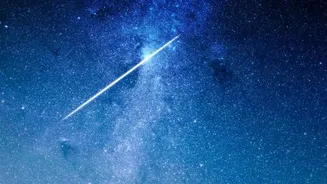
If you missed the peak of the Perseid meteor shower earlier in the month, you still have a chance to spot some of its stragglers. The shower remains active until the last week of August, with activity winding down around August 24. While you won't see
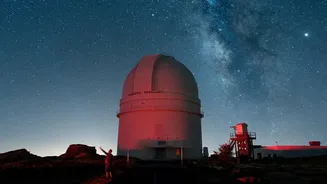
the peak rate of nearly 100 meteors per hour, you can still catch several bright meteors in the hours after midnight. For the best experience, find a location away from city lights, let your eyes adjust to the darkness for at least 20 minutes, and look towards the northeastern sky. The meteors will appear to radiate from the constellation Perseus but can streak across any part of the sky. These 'shooting stars' are tiny debris particles left behind by the comet Swift-Tuttle, burning up as they enter Earth's atmosphere at incredible speeds.
Saturn Begins Its Grand Show
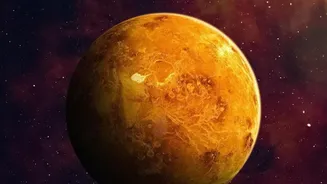
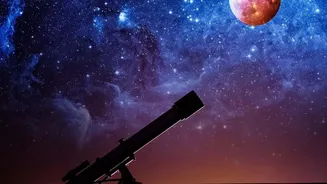
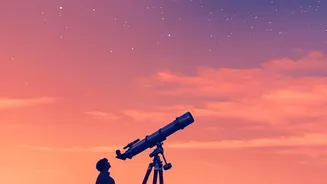
The star of the show for the next couple of months, the planet Saturn, is now becoming a brilliant target in the evening sky. While its official opposition—the point where it is brightest and closest to Earth—is not until early October, late August marks the beginning of its prime viewing season. The ringed planet rises in the east around sunset and remains visible all night long, shining as a steady, bright, yellowish point of light. You can find it within the constellation Cetus. Even a small pair of binoculars can reveal its distinctly oval shape, a hint of its magnificent rings. A modest backyard telescope will provide a clearer view of the rings themselves. As Earth continues its journey, Saturn will only appear brighter and larger in our sky over the coming weeks, making now the perfect time to start tracking it.
The Bright 'Sturgeon' Full Moon
On the night of August 28, look up to see the month's full moon, traditionally known as the Sturgeon Moon. This name comes from the historical abundance of sturgeon fish in North American lakes during this time of year. The moon will rise in the east around sunset and travel across the sky throughout the night. While this full moon coincides with a deep partial lunar eclipse, it is important to note that the eclipse itself will not be visible from India. The entire event occurs during the daytime in India, when the moon is below the horizon. Nonetheless, the full moon's brilliance will dominate the night sky, making it a beautiful sight, though it will wash out fainter stars and deep-sky objects.
The Moon and Saturn's Close Dance
To close out the month, treat yourself to a beautiful celestial pairing. On the night of August 31, the bright, waning gibbous moon will appear close to Saturn in the sky. This event, known as a conjunction, offers a fantastic photo opportunity and makes the ringed planet incredibly easy to locate. Simply find the moon, and the bright 'star' nearby will be Saturn. They will be visible together for most of the night, rising in the eastern sky in the evening and slowly journeying west. While they appear close from our vantage point, they are, of course, separated by an immense distance in space. Such conjunctions are excellent guideposts for amateur astronomers and a visually pleasing sight for all.
Your Guide to the Summer Triangle
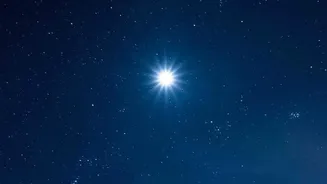
While specific events come and go, some celestial landmarks are constants of the season. High overhead in the evening sky is the Summer Triangle, an asterism—a simple pattern of stars—that is easy to spot even from moderately light-polluted areas. It is composed of three of the brightest stars in the sky: Vega, in the constellation Lyra; Deneb, in Cygnus; and Altair, in Aquila. Vega is typically the brightest of the three and will be almost directly overhead in the late evening. Once you locate these three bright stars forming a large triangle, you can use them as a map to explore the rich star fields of the Milky Way, which runs right through the triangle from a dark-sky location.