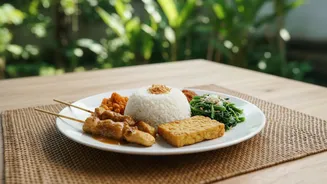








What Exactly Is a Warung?
Think of a warung as Bali’s version of a local dhaba or a family-run eatery. The term refers to a small, family-owned business, most often a simple restaurant or food stall serving traditional Indonesian and Balinese food. These are not the flashy cafes
with smoothie bowls you see on Instagram; they are unpretentious, often with plastic stools and handwritten menus. Run by families for generations, they offer a genuine taste of Balinese culture and home-cooked meals made with recipes passed down over years. For a solo traveller, stepping into a warung is more than just a meal—it’s an authentic cultural immersion.
The Unbeatable Value of a Warung Meal
For any solo traveller from India, budget is key. This is where warungs truly shine. A full, satisfying meal at a local warung, such as Nasi Goreng (fried rice) or a plate of Nasi Campur (mixed rice with various small dishes), can cost as little as IDR 25,000 to IDR 50,000. That’s roughly ₹150 to ₹300 for a complete meal. Compare this to tourist-facing cafes where a single dish and a coffee can easily cost over IDR 180,000 (around ₹1,000). By choosing to eat at warungs for most of your meals, you can keep your daily food expenses under ₹500, a fraction of what you would spend in mainstream restaurants. This massive saving is the secret weapon for budget-conscious travel in Bali.
Finding Warungs with Million-Rupee Views
The magic of Bali lies in its stunning scenery, and you don’t need an expensive restaurant to enjoy it. Many authentic warungs are situated in incredible locations, offering breathtaking views without the premium price tag. In the Ubud area, you can find warungs tucked away beside lush rice paddies, where you can eat while watching farmers at work. Along the cliffs of Uluwatu or the beaches of Amed, simple warungs serve fresh food with ocean vistas. The key is to look beyond the main tourist streets. Often, the best spots have simple, hand-painted signs and are filled with locals—a sure sign of good, fresh food. Don't be afraid to explore a small side street or follow a sign that looks unassuming; it might just lead to a memorable meal with an unforgettable view.
What to Order: A Guide for the Indian Palate
The flavours of Indonesian food can be both new and wonderfully familiar to the Indian palate, with a shared love for rice, spices, and vibrant ingredients. For a safe and delicious start, try Nasi Goreng (fried rice) or Mie Goreng (fried noodles), which are available everywhere. For vegetarians, Bali is surprisingly accommodating. A must-try is Gado-Gado, a salad of lightly boiled vegetables, tofu, and tempeh served with a rich peanut sauce. Another great option is Nasi Campur Sayur, where you get a plate of rice and can point to a variety of vegetarian dishes on display. Tempeh Manis (sweet fried tempeh) is another staple that offers a delicious, protein-packed option. If you're specific about your dietary needs, learning a simple phrase like "Saya vegetarian" (I am a vegetarian) can be very helpful.
How Eating Cheaply Unlocks Bali's Best Experiences
The real benefit of saving money on food is that it frees up your budget for everything else that makes Bali special. The money saved from a few warung meals can pay for a scooter rental for a day (around IDR 80,000 or ₹450), giving you the freedom to explore remote beaches and viewpoints at your own pace. It could cover the entrance fees to several temples like Tirta Empul or Uluwatu. Or, it could go towards a guided sunrise trek up Mount Batur. For a solo traveller, this strategy is empowering. It means you don't have to choose between experiencing the culture and seeing the sights. By eating smart and local, you can afford to do both, making your solo trip richer, more adventurous, and completely unforgettable.