







AI's Military-First Momentum
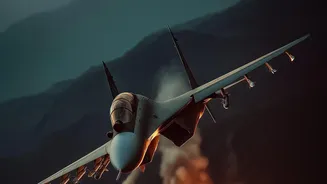
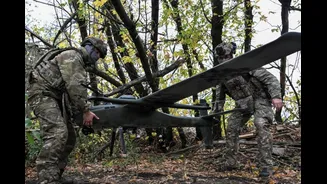
From its earliest days, AI research has been intertwined with defense funding and national security objectives. Today, major world powers are investing billions into AI for everything from logistics and surveillance to cyber defense and autonomous weapons
systems, often referred to as LAWS. This investment creates a powerful gravitational pull, attracting top talent and shaping the questions researchers are paid to answer. The result is an innovation ecosystem heavily geared towards creating more efficient, precise, and potentially autonomous methods of warfare. This momentum is evident in the rapid development of systems that can select and engage targets with decreasing levels of human supervision, a trend that many experts and ethicists find alarming.
The Global Push for Guardrails
In response to the rise of AI in warfare, a significant international movement is underway to establish legally binding rules. Discussions at forums like the United Nations' Convention on Conventional Weapons (CCW) have been ongoing for years, aiming to define and regulate lethal autonomous weapons. While progress has been slow, a growing number of states are calling for a treaty to ensure 'meaningful human control' over the use of force. An open letter signed by thousands of AI researchers and prominent tech figures like Elon Musk and Steve Wozniak called for a ban on offensive autonomous weapons, warning of a new global arms race. These efforts are not just about ethics; they are also driven by fears of rapid, unintended escalation and the proliferation of cheap, mass-producible autonomous weapons.
Following the Money and the Talent
A treaty restricting or banning certain military AI applications would not just set legal precedent; it would reroute the flow of money and talent. Government funding, a primary driver of AI research, would necessarily shift. If defense contracts for autonomous weapons systems were to dry up, the billions currently allocated to them would need to be redirected. Universities and private labs that currently rely on military grants might pivot their focus to comply with international law and access new funding streams. This could create a 'peace dividend' for the AI sector, as researchers and engineers who might have worked on defense projects turn their skills toward challenges in medicine, climate science, and public infrastructure.
Unlocking Civilian Innovations
A shift away from defense could supercharge AI development for civilian use. The complex problems solved for battlefield navigation and target recognition could be adapted for humanitarian purposes. Imagine autonomous systems used for rapid disaster response, delivering supplies to inaccessible areas, or for precision agriculture to combat food shortages. Research into AI-driven data analysis, currently used for intelligence gathering, could be repurposed to model climate change with greater accuracy or to accelerate the discovery of new medicines. The key is that a treaty would create strong incentives—both financial and ethical—for the global research community to prioritize projects that directly benefit humanity rather than focusing on a narrow set of military objectives.
Hurdles to a Global Pivot
Despite the compelling vision, the path to this future is fraught with challenges. Major military powers have been reluctant to agree to binding limitations, often arguing that such weapons could be more precise and less prone to error than human soldiers. There are also significant verification issues; how would a treaty be enforced, and how could nations be sure their adversaries are not developing these technologies in secret? Furthermore, much of the most advanced AI research now happens in the private sector, which has complex relationships with governments. National security exemptions are often carved out of international agreements, potentially creating loopholes that would allow military development to continue, albeit more quietly.