




Douglas Jardine and 'Bodyline'
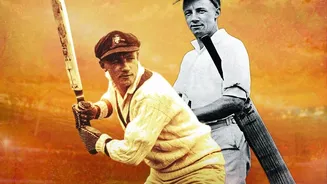
To find cricket’s original villain, we must go back to the 1932-33 Ashes series. England captain Douglas Jardine was obsessed with neutralising the peerless Australian batsman, Don Bradman. His solution was 'Bodyline' – a tactic where fast bowlers like
Harold Larwood would aim short-pitched deliveries at the batsman's body. The goal was to intimidate, forcing defensive shots that would be caught by a packed leg-side field. The strategy was brutally effective, helping England win the Ashes, but it was a public relations disaster. It caused serious injuries, with Australian wicketkeeper Bert Oldfield suffering a fractured skull, and strained diplomatic relations between the two nations. While not illegal at the time, Bodyline was seen as a vicious violation of cricket's spirit, cementing Jardine's status as a ruthless antagonist.
Greg Chappell and the Underarm Incident
Few moments have generated such immediate and widespread outrage as the underarm bowling incident of 1981. In a one-day match against New Zealand, with the Kiwis needing six runs off the final ball to tie, Australian captain Greg Chappell instructed his younger brother, Trevor, to bowl the ball underarm along the ground. This prevented batsman Brian McKechnie from having any chance of hitting a six. While technically legal at the time, the act was universally condemned as cowardly and contrary to the spirit of fair play. The then-Prime Minister of New Zealand called it "an act of true cowardice". The fallout was immense, leading the ICC to ban underarm bowling in limited-overs cricket. For many, Chappell’s win-at-all-costs mentality in that moment made him an unforgettable villain.
Hansie Cronje and the Fall from Grace
In the 1990s, Hansie Cronje was the beloved captain of South Africa, a symbol of the nation's successful return to international cricket. That image was shattered in 2000 when Delhi police accused him of match-fixing. After initial denials, Cronje admitted to taking money from bookmakers for providing information, an admission that rocked the cricketing world. The subsequent King Commission inquiry revealed a deeper involvement, leading to a life ban from the sport. The scandal was a profound betrayal from a player who was seen as an icon of integrity. Cronje, who died in a plane crash in 2002, had his name linked to more than 70 undeclared offshore bank accounts, suggesting the corruption was far more extensive than initially admitted.
The Pakistani Trio's Spot-Fixing Scandal
The 2010 Lord's Test between England and Pakistan became infamous for one of the most brazen cheating scandals in modern cricket. A British tabloid sting exposed a plot where captain Salman Butt had instructed young fast bowlers Mohammad Amir and Mohammad Asif to bowl deliberate no-balls at specific times. This was not match-fixing (determining the overall result) but spot-fixing—manipulating minor events within the game for betting purposes. The evidence was irrefutable, leading to lengthy bans and even jail sentences for the three players. The scandal was a tragedy for Pakistan cricket, especially for the prodigiously talented teenager Amir, whose career was derailed just as it was taking off.
Australia's 'Sandpapergate'
In 2018, during a Test match against South Africa in Cape Town, the cricketing world was aghast as Australian player Cameron Bancroft was caught on camera attempting to alter the condition of the ball with a piece of sandpaper hidden in his trousers. The ensuing investigation revealed a premeditated plan involving captain Steve Smith and vice-captain David Warner. The scandal, dubbed 'Sandpapergate', led to long suspensions for all three players, with Smith and Warner banned for a full year. The incident provoked a period of deep introspection in Australian cricket, forcing the team to confront a culture that many felt had prioritised winning over integrity.