







Ancient Roots of a Modern Trend
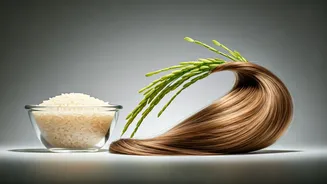
Long before these ingredients became a social media sensation, they were staples in traditional beauty rituals. For centuries, women in many parts of Asia have used rice water as a hair rinse. The famed Yao women of China, known for their exceptionally
long and healthy hair, attribute their luscious locks to a fermented rice water regimen passed down through generations. Similarly, fenugreek, or methi, is a cornerstone of Ayurvedic medicine in India. It has been used for ages in masks and oils to combat hair fall, soothe scalp issues, and add shine, grounding this modern trend in a rich history of natural hair care.
Rice Water: What's the Science?
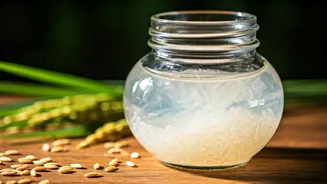
The milky liquid left after soaking or boiling rice is rich in starches, amino acids, B vitamins, vitamin E, and minerals. A key component is inositol, a carbohydrate that studies suggest can penetrate damaged hair and remain there even after rinsing, helping to reduce surface friction and improve elasticity. While large-scale scientific studies on hair growth are limited, the existing evidence points towards rice water's ability to strengthen the hair shaft, add shine, and make hair feel smoother. The starches coat the hair, giving it a temporarily fuller appearance. Fermenting the rice water can lower its pH, making it closer to the hair's natural pH, and may increase its antioxidant levels.
Fenugreek's Power-Packed Profile
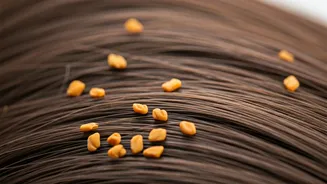
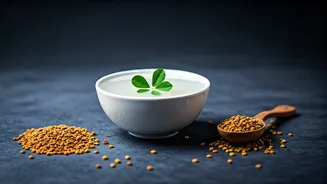
Fenugreek seeds are a nutritional powerhouse for hair, containing high levels of protein, iron, and nicotinic acid—all crucial for healthy hair growth. They are also rich in compounds like flavonoids and saponins, which have anti-inflammatory and antifungal properties that can help maintain a healthy scalp. Some studies suggest fenugreek may help reduce hair loss by interacting with DHT, a hormone linked to hair loss, though more research is needed. The seeds also produce a slippery substance called mucilage when soaked, which acts as a fantastic natural conditioner, providing slip and moisture to detangle hair and reduce frizz.
DIY Recipe: Simple Rice Water Rinse
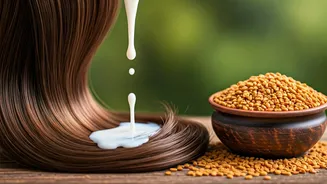
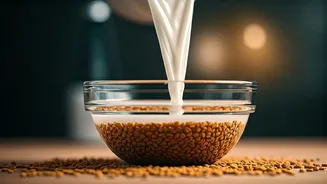
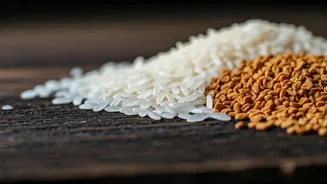
Making your own rice water is simple. Take half a cup of uncooked rice, rinse it once to remove impurities, and place it in a bowl with two to three cups of water. Let it soak for at least 30 minutes, or up to 24 hours at room temperature to ferment it. The water will become cloudy. Strain the liquid into a clean bottle or jar. To use, first shampoo and rinse your hair as usual. Then, pour the rice water over your hair and scalp, massaging it in gently. Let it sit for up to 20 minutes before rinsing thoroughly with warm water.
DIY Recipe: Nourishing Fenugreek Mask
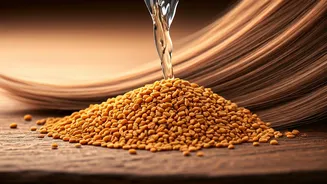
To make a basic fenugreek hair mask, soak two to three tablespoons of fenugreek seeds in water overnight. In the morning, grind the soaked seeds into a smooth, fine paste, adding a little water if needed. For extra conditioning, you can mix the paste with a few tablespoons of yogurt or a tablespoon of coconut oil. Apply the mask generously to your scalp and hair, from roots to ends. Leave it on for about 30 minutes, then rinse thoroughly with water before washing your hair with a mild shampoo.
A Word of Caution
While natural, these treatments aren't for everyone. Rice water contains a lot of protein, and overuse can lead to 'protein overload' for some hair types, especially those with low porosity. This can make the hair feel stiff, dry, and brittle. It's best to start by using a rice water rinse once a week and see how your hair responds. Fenugreek has a strong, maple-like scent that can linger, and the paste can be a bit messy to apply and rinse out. As with any new treatment, it is wise to do a patch test first to ensure you don't have an adverse reaction.