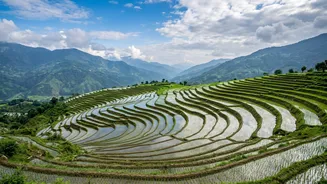








The Great Retreat of the Southwest Monsoon
The dominant weather story for most of India in October is the withdrawal of the southwest monsoon. This is not a sudden event but a gradual retreat that begins in the northwestern parts of the country, like Rajasthan, around mid-September. The withdrawal line
moves southeast across the subcontinent, and by the beginning of October, it has typically vacated the northern plains. The official criteria from the India Meteorological Department (IMD) for declaring a withdrawal include cessation of rainfall for five continuous days and a significant drop in atmospheric moisture. This process continues throughout the month, with the monsoon completely leaving the northern half of the peninsula by mid-October and the entire country by early December in a typical year. For 2026, the IMD noted that the monsoon season ended with a rainfall deficit and withdrawal from most of north and west India was expected to be complete in the first few days of October.
The Uncomfortable 'October Heat'
Just as the rains depart, many regions, particularly in northern and central India, experience a phenomenon known as 'October Heat'. This isn't just a return to summer temperatures; it's a unique and uncomfortable combination of conditions. After the monsoon withdraws, the cloud cover dissipates, leading to clear skies and direct, intense sunlight. However, the ground and lower atmosphere still hold a great deal of residual moisture from the preceding rainy months. This mix of rising temperatures and high humidity creates a sultry, oppressive heat that can feel more suffocating than the dry heat of summer. While daytime temperatures are high, the nights often become cool and pleasant, marking this as a distinct transitional phase before the onset of true winter coolness.
A Second Act: The Northeast Monsoon
While most of the country is drying out, a completely different story unfolds in the southern peninsula. October marks the onset of the Northeast Monsoon, often called the 'retreating monsoon'. As a high-pressure system builds over the cooling landmass of northern India, winds begin to reverse direction, blowing from the northeast. These initially dry winds pick up moisture as they cross the Bay of Bengal and bring significant rainfall to the southeastern coast. This season, lasting from October to December, is crucial for states like Tamil Nadu, which receives about 48% of its annual rainfall during this period. Other affected regions include coastal Andhra Pradesh, Puducherry, Kerala, and parts of Karnataka. The normal onset date for the northeast monsoon is around October 20th.
Pleasant Days in the North and West
For North India, including the Golden Triangle cities of Delhi, Agra, and Jaipur, October ushers in some of the best weather of the year. With the monsoon gone, the skies are generally clear, and the days are warm and sunny without the extreme heat of summer, with temperatures often around 30-34°C. This makes it an ideal time for travel and outdoor activities before the peak tourist season begins. Similarly, in the Himalayan foothills and states like Himachal Pradesh and Uttarakhand, the weather becomes pleasantly warm and dry, perfect for exploring the lush green landscapes left behind by the rains. Central India, including Maharashtra, also sees pleasant, dry conditions emerge as the month progresses.
What to Expect in Daily Life
This meteorological patchwork means October demands different preparations depending on your location. In the north and west, it's time to enjoy the outdoors, but be prepared for warm days that can feel humid, a phenomenon known as 'October Heat'. In the south, particularly Tamil Nadu and Kerala, umbrellas are still a necessity as the northeast monsoon brings new spells of rain, often in the form of thunderstorms. According to IMD forecasts for 2026, the post-monsoon season from October to December is expected to be drier than normal for most of the country, though southern peninsular India might see normal rainfall. Temperatures are also predicted to be above normal across most regions. This variety is the hallmark of October—a month that simultaneously hosts the end of one rainy season and the beginning of another, all while giving the rest of the country a welcome, sunny respite.