



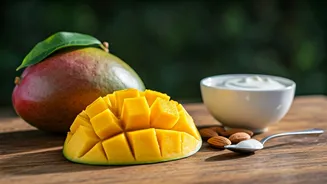



The Sweet Dilemma of Summer Fruits
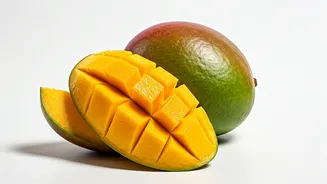
Mangoes and watermelons are nature’s candy for a reason: they are rich in natural sugars like fructose. While these are healthier than processed sugars, they can still have a significant impact on your blood sugar levels. This is measured by the Glycaemic
Index (GI), a scale that ranks foods on how quickly they raise blood glucose. Watermelon has a relatively high GI of around 72-80, while a ripe mango’s GI can range from 51 to 56. Foods with a higher GI are digested and absorbed quickly, leading to a rapid spike in blood sugar, followed by a potential crash that can leave you feeling tired and craving more sugar. For individuals managing diabetes, pre-diabetes, or simply trying to maintain stable energy levels, these frequent spikes are a major concern.
Fibre: Your Blood Sugar’s Best Friend
This is where dietary fibre comes to the rescue. Think of fibre as a natural brake system for your digestive tract. When you consume fibre along with sugar, it slows down the entire digestive process. Specifically, soluble fibre—found in foods like oats, nuts, seeds, and beans—dissolves in water to form a gel-like substance in your gut. This gel traps sugars and slows their absorption into the bloodstream. Instead of a sudden jolt of sugar, you get a slower, more sustained release of energy. This simple act of pairing prevents the dramatic highs and lows, helps you feel full for longer, and places less stress on your body's insulin response. In short, fibre moderates the fruit's effect, allowing you to get all the vitamins and antioxidants without the negative consequences of a sugar rush.
Practical Ways to Pair Your Fruits
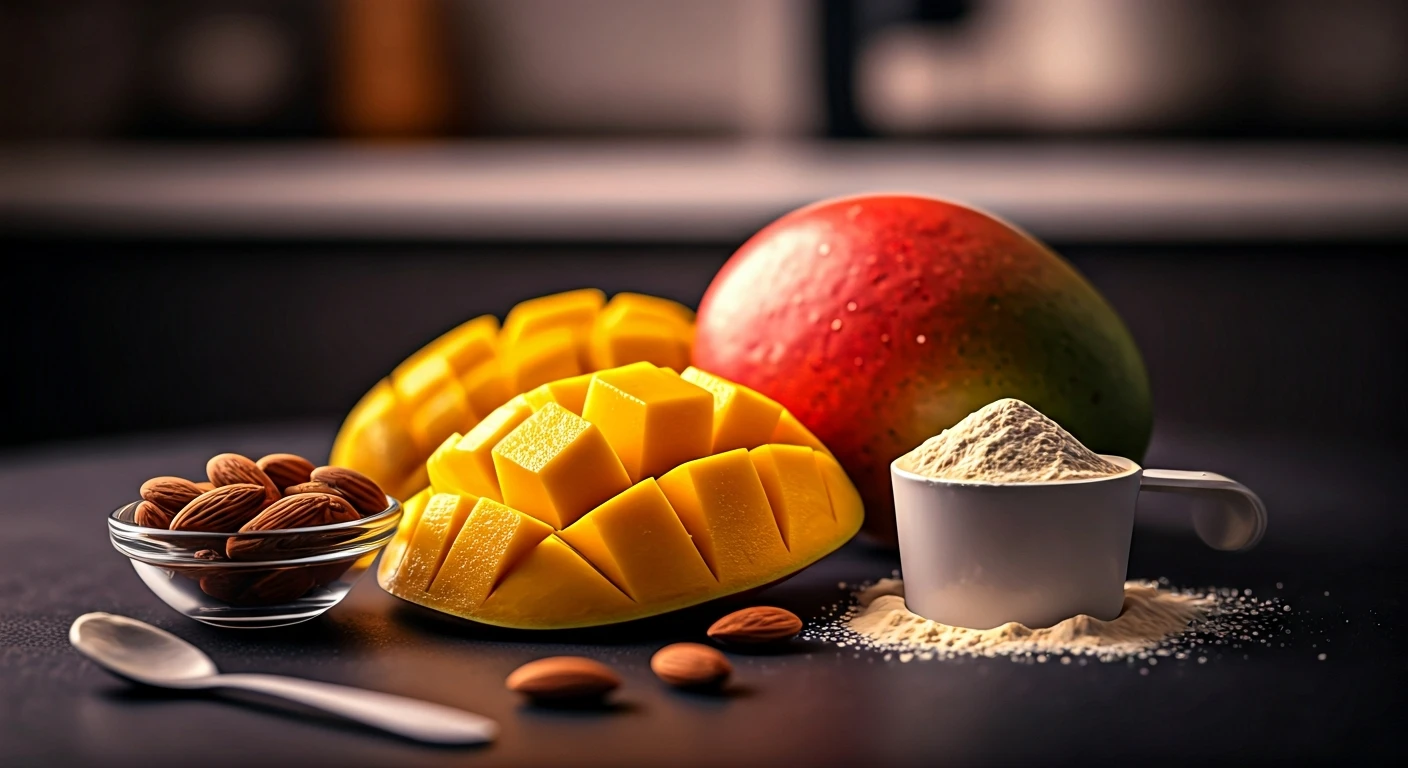
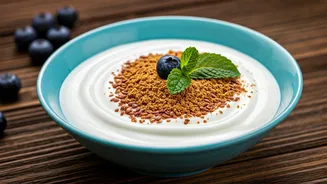
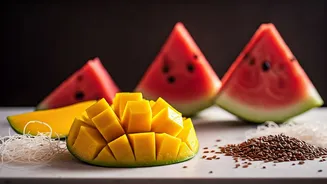
Incorporating fibre with your favourite summer fruits is easier than it sounds and doesn't require complex meal planning. The goal is to add a source of fibre, protein, or healthy fat alongside the fruit. Here are a few simple ideas: 1. **Add Nuts and Seeds:** Enjoy your bowl of chopped mango or watermelon with a handful of almonds, walnuts, or pistachios. You can also sprinkle a tablespoon of chia seeds or flaxseeds over the top. These not only add fibre but also healthy fats and a satisfying crunch. 2. **Make it a Salad:** Toss watermelon cubes into a salad with leafy greens like spinach or rocket, cucumber, and a light vinaigrette. The greens provide excellent fibre. 3. **Yoghurt and Oats:** Blend mango into a smoothie with plain yoghurt and a scoop of rolled oats. Yoghurt provides protein and probiotics, while oats are a powerhouse of soluble fibre, creating a balanced and filling meal. 4. **Eat the Whole Fruit:** Always choose the whole fruit over its juice. The juicing process removes nearly all the beneficial fibre, leaving you with a concentrated glass of sugar that will spike your blood sugar almost instantly.
Beyond Just Blood Sugar Control
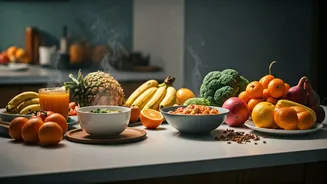
The benefits of this smart pairing extend far beyond managing blood sugar. The added fibre contributes significantly to your daily intake, which is crucial for digestive health. It promotes regular bowel movements and feeds the beneficial bacteria in your gut, supporting a healthy microbiome. Furthermore, because fibre and healthy fats increase satiety, you’re more likely to feel full and satisfied after your fruit snack. This can prevent overeating later and aid in weight management. It transforms a simple fruit snack from a quick sugar hit into a more nutritionally complete and sustaining part of your diet, giving you vitamins, minerals, antioxidants, and stable energy all in one go.