






Choosing a fitness routine you can stick with is the ultimate goal. Dancing and swimming are both fantastic options, but they are worlds apart in practical terms. So, which one is actually easier to weave into the fabric of a busy modern life?
The Accessibility Hurdle
When it
comes to pure convenience, dancing has a clear edge. You can dance almost anywhere: in your living room with an online tutorial, in a dedicated studio, or even out with friends. It requires minimal space and no special environment. Swimming, by its very nature, demands a body of water. This means you are tied to the location and operating hours of a swimming pool or club, which may not be conveniently located or accessible for everyone. While India has a growing number of public and private pools, their distribution is uneven, making dancing the far more accessible 'anytime, anywhere' option.
A Look at the Costs
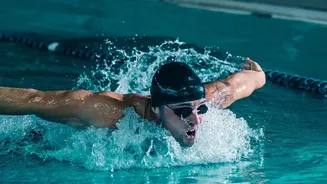
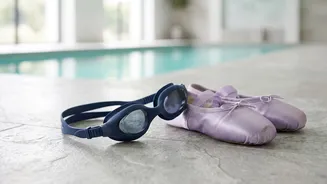
The financial investment for these two activities can vary wildly. Dancing can be virtually free if you're learning from online videos at home. If you opt for classes, group sessions in most Indian cities can range from ₹2,000 to ₹6,000 per month. The only essential gear is comfortable clothing. Swimming, on the other hand, has a higher barrier to entry. Monthly access to a decent pool can cost anywhere from ₹1,500 at a community facility to over ₹8,000 at a premium club. On top of that, you'll need to purchase a swimsuit, goggles, and a cap. While casual swimming can be affordable, costs rise significantly if you seek certified coaching or join a competitive club.
Fitting It Into Your Schedule
Flexibility is a major factor for busy individuals. A 20-minute dance session can be squeezed into a lunch break at home, offering incredible scheduling freedom. You decide when and for how long you want to move. Swimming requires more logistical planning. You have to factor in travel time to and from the pool, time for changing, and the swim itself. Even a 30-minute swim can easily become a 90-minute commitment. Furthermore, pools have fixed timings, which might clash with your work or family responsibilities. Dance offers on-demand fitness, while swimming demands you work around its schedule.
The Social vs. Solo Question
Your personality plays a huge role in which activity you'll stick with. Dance is often a highly social activity. Group classes, from Bollywood and hip-hop to classical forms, provide a sense of community, shared energy, and fun. It’s an expressive and interactive way to exercise. Swimming, particularly lap swimming, is typically a more solitary and meditative pursuit. While you might be at a pool with others, the focus is internal—on your breath, your strokes, and your rhythm. It can be a fantastic way to disconnect and destress. The choice here is simple: do you get energised by a group, or do you prefer a peaceful, personal workout?
Fitness Gains and Mental Perks
Both activities are brilliant for your health. Swimming is a low -impact , full -body workout that builds cardiovascular endurance and strength by using water resistance . It is exceptionally kind to the joints , making it a great option for many people . Dancing is a powerful cardiovascular exercise that improves coordination , balance , and rhythm . Some studies have found that certain dance styles can burn more calories than swimming in the same amount of time due to constant acceleration and deceleration . Mentally , both offer significant benefits . Swimming can be meditative , while dancing is celebrated for its mood -boosting , stress -reducing effects and has even been linked to a lower risk of dementia due to its combination of mental effort and social interaction .