




Why September Shines
September is a fantastic month for stargazers in the Northern Hemisphere. The month hosts the autumnal equinox, which in 2026 falls on September 23. This event marks the official start of autumn, bringing longer nights and, often, clearer, less hazy skies
as the season transitions. This year, the celestial calendar is particularly generous. Venus reaches its peak brightness, the Moon will have close encounters with several planets, and the famous Harvest Moon makes an appearance. There are no major meteor showers to plan around, which allows the planets and deep-sky objects to take centre stage.
Timing is Everything: Follow the Moon
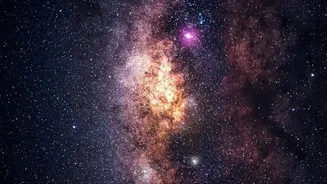
The single biggest factor in your stargazing success is the Moon. A bright full moon can wash out all but the brightest stars and planets. For September 2026, the New Moon falls on September 11. The days surrounding this date are your golden ticket for the darkest skies, making them ideal for viewing faint objects like the Milky Way or distant galaxies. The first half of the month, as the moon wanes towards the new moon, will offer progressively darker skies. The Full Harvest Moon arrives on September 26, which will brightly illuminate the night, making it better for moonlit walks than for spotting faint stars.
Your Celestial Viewing Guide
Mark your calendars for these must-see events. In the first two weeks, the Moon will journey past four planets. On September 6 and 7, look for the crescent Moon near Mars in the pre-dawn sky. On September 8, the Moon will have a close encounter with Jupiter. One of the month's biggest highlights occurs on September 22, when Venus reaches its peak luminosity for the year, blazing as a brilliant 'Evening Star' in the west just after sunset. Finally, on September 26, Neptune reaches opposition, meaning it is at its closest point to Earth. While you'll need binoculars or a small telescope to spot its blueish tint, the Full Harvest Moon will be nearby, rising alongside Saturn, to help guide your way.
Escape the City Glow
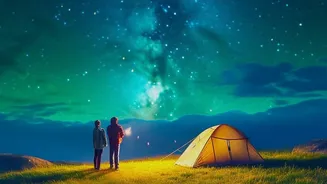
To truly experience the night sky, you must escape light pollution. For city dwellers, this means a road trip. India is home to several locations renowned for their dark skies. Hanle in Ladakh is India's first certified Dark Sky Reserve, offering some of the clearest skies in Asia. Other fantastic high-altitude options include Spiti Valley in Himachal Pradesh and villages like Almora in Uttarakhand. If a Himalayan trip isn't feasible, the Rann of Kutch in Gujarat, the deserts around Jaisalmer, and remote spots in Coorg, Karnataka, also offer stunningly dark skies, far from the urban haze. Even a short drive an hour or two away from city limits can make a dramatic difference.
Essential Stargazing Gear
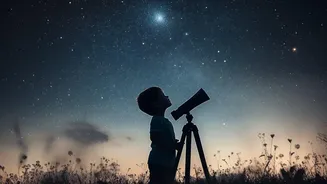
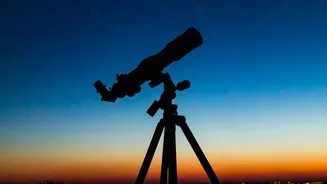
You don't need expensive equipment to start. The most important tool is patience. Give your eyes at least 20-30 minutes to fully adapt to the darkness, avoiding your phone screen. A red torch is a stargazer's best friend as it preserves your night vision. A comfortable chair or a blanket will make craning your neck much more pleasant. For a better view, a simple pair of binoculars is a game-changer, revealing details on the Moon and bringing fainter star clusters into view. Finally, a star chart or a stargazing app on your phone (used in night mode) can help you identify the constellations and planets you are seeing, turning a simple glance upwards into a guided tour of the cosmos.