



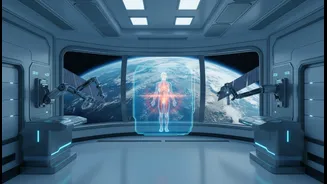


The Doctor Will See You Now, in Orbit
Anil Menon is not just any astronaut. He is a lieutenant colonel in the U.S. Space Force, an emergency medicine physician with fellowships in wilderness and aerospace medicine, and was SpaceX's first-ever flight surgeon. In that role, he helped launch
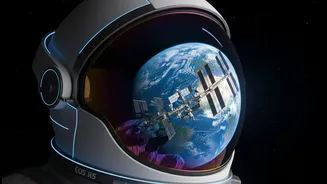
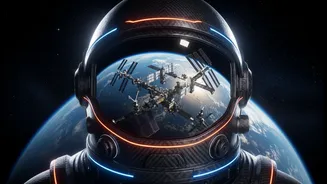
the first humans on a commercial spacecraft and built a medical organization to support future missions. Born to Ukrainian and Indian immigrant parents in Minneapolis, Menon's journey to NASA's 2021 astronaut class was built on a foundation of medicine in extreme environments, from treating wounded soldiers in Afghanistan to helping earthquake victims in Haiti and Nepal. This extensive background makes him uniquely qualified for his upcoming eight-month stay on the ISS, where he will serve as a flight engineer for Expeditions 74 and 75 starting in July 2026.
The Challenge of a Weightless Body
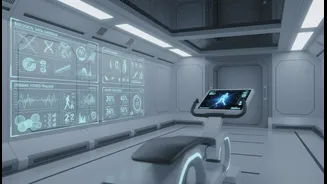
Living in space is incredibly harsh on the human body. Without the constant pull of gravity, astronauts face a barrage of physiological challenges. Muscles, particularly those used for posture and movement on Earth, begin to atrophy, with astronauts at risk of losing up to 20% of their muscle mass in under two weeks. Bones lose density at an accelerated rate—about 1% to 1.5% per month—which is comparable to what an elderly person with osteoporosis might lose in a year. Fluids shift upwards, causing a puffy face, stuffy nose, and increased pressure on the brain and eyes, which can lead to vision problems known as Space-Associated Neuro-ocular Syndrome (SANS). The cardiovascular system also deconditions, and astronauts face higher exposure to space radiation.
A Laboratory 400 Kilometres Up
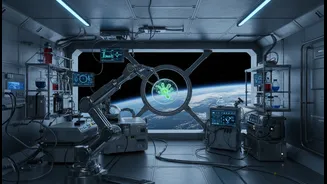
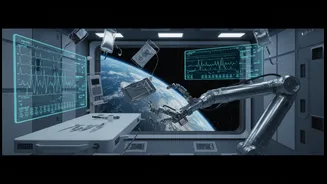
Menon's mission will directly address these challenges. A key part of his research involves studying how blood flow, vein structure, and blood composition are affected by microgravity. He will also be a test subject for experiments aimed at protecting the health of future deep-space explorers. One of the most fascinating tasks on his docket is testing methods for producing intravenous (IV) fluids from the station's own potable water system. This is a critical step toward medical self-sufficiency on long-duration missions to the Moon or Mars, where carrying all necessary medical supplies from Earth would be impossible. He will also use ultrasound with the help of augmented reality and AI, a technology that could one day allow astronauts to diagnose medical issues without real-time guidance from Earth.
From Space Research to Earthly Cures
The research conducted on the ISS isn't just for astronauts. Understanding the rapid bone and muscle loss in space provides invaluable data for treating osteoporosis and muscular dystrophy on Earth. Studying how the body’s cardiovascular and immune systems change in microgravity offers new insights into the aging process. The ISS has become a unique laboratory for medical research that has advanced our understanding of diseases like Alzheimer's, Parkinson's, and cancer. For example, protein crystals associated with diseases like Duchenne muscular dystrophy grow larger and more perfectly in space, allowing scientists to study their structure in detail and develop targeted drug therapies. Menon's work on bioprinting vascular tissues could also improve our understanding of aging and lead to new therapeutic developments.