
Mapping a Hidden World
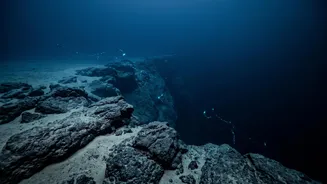
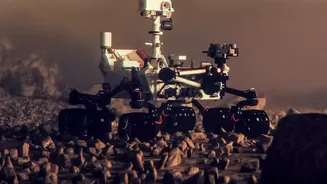
It is a surprising fact that we know more about the surface of Mars than we do about the Earth's own seafloor. For centuries, this underwater landscape was a complete mystery. However, since the mid-20th century, technologies like sonar, remotely operated
vehicles (ROVs), and satellite altimetry have begun to pull back the curtain. This mapping effort is about more than just satisfying curiosity. Detailed maps of the seabed are crucial for safe navigation, laying underwater cables, and managing fisheries. They also reveal the planet's dynamic geology, from vast mountain ranges like the Mid-Atlantic Ridge to the deepest trenches. By charting these features, scientists gain fundamental insights into plate tectonics, the process that drives earthquakes and shapes continents.
A Library of Climate History
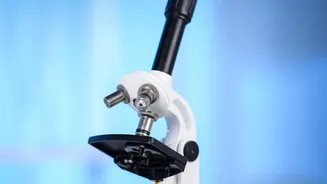
The ocean floor is a massive historical archive. Every year, a slow rain of sediment—containing dust, volcanic ash, and the remains of dead marine organisms—settles on the bottom. Scientists drill deep into this layered mud to extract sediment cores, which act like timelines of Earth's past. By analyzing the chemical composition and the types of microscopic fossils trapped inside, researchers can reconstruct ancient climates with remarkable detail. These cores have revealed cycles of ice ages, documented past periods of rapid warming, and shown how the ocean's chemistry has changed over millions of years. This information is invaluable for testing and refining the climate models we use to predict future changes.
Where Life Thrives in Extremes
Perhaps the most startling discovery on the ocean floor came in 1977 with the identification of hydrothermal vents. These are underwater hot springs, often called "black smokers," that spew superheated, mineral-rich water from the Earth's crust. In what was thought to be a barren wasteland, scientists found vibrant, otherworldly ecosystems. Here, life does not depend on sunlight. Instead, microbes use a process called chemosynthesis to convert toxic chemicals like hydrogen sulfide into energy. This forms the base of a unique food chain that includes giant tube worms, ghostly fish, and strange crabs. The existence of these communities has completely reshaped our understanding of the conditions required for life and has even led some scientists to theorize that life on Earth may have originated in such environments.
A Treasure Chest of Biodiversity and Resources
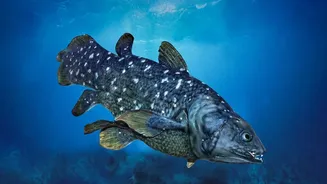
The deep sea is a frontier for biological discovery, with estimates suggesting that 90% of the organisms living there have yet to be described by science. Expeditions regularly uncover new species, from deep-sea corals that form vital habitats to microbes that have evolved unique chemical defenses for survival. These chemicals are of great interest to medical researchers. Scientists have already discovered compounds in deep-sea organisms that show promise in treating human diseases, including cancer and arthritis, while one discovery is already used in skin creams. Beyond biology, the seafloor holds vast reserves of valuable minerals, such as cobalt, manganese, and nickel, which are critical for modern technologies like batteries. This potential for deep-sea mining has created a new urgency to understand these fragile ecosystems to ensure they are managed and protected from irreversible damage.