




The Primary Muscles Worked
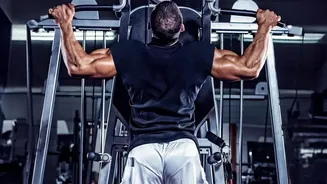
The seated row is a compound exercise, meaning it engages multiple muscle groups at once. The primary movers are the muscles responsible for pulling your arms back towards your torso. This includes the latissimus dorsi, or 'lats', which are the large,
wing-like muscles spanning your middle back. It also heavily recruits the rhomboids, located between your shoulder blades, and the trapezius muscles ('traps'), which run from your neck down to your mid-back. These muscles work together to retract your shoulder blades, a key action for both strength and posture.
Essential Supporting Muscles
Beyond the main back muscles, the seated row calls on several important assisting groups. Your biceps are engaged as you bend your elbows to pull the weight. The posterior deltoids, or rear shoulders, also play a significant role in the horizontal pulling motion. Furthermore, your core muscles, including the erector spinae along your spine, must work to keep your torso stable and upright throughout the exercise, preventing your lower back from rounding. This core engagement makes the seated row a comprehensive upper-body builder.
The Functional Benefits of a Stronger Back
Strengthening these back muscles provides benefits that extend far beyond the gym. A strong back is crucial for maintaining good posture, especially for those who spend hours sitting at a desk. By pulling your shoulders back and down, these muscles counteract the tendency to slouch. This improved posture can relieve tension in the neck and shoulders. It also enhances spinal stability, which helps reduce the risk of injury during everyday activities that involve lifting or pulling, like carrying groceries or opening a heavy door.
How to Perform the Seated Row Correctly
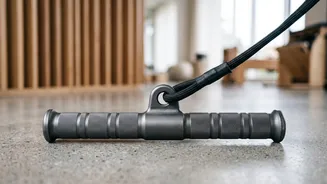
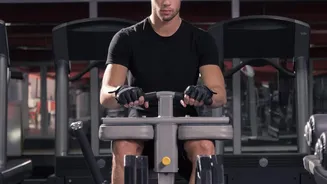
Proper form is crucial for maximizing benefits and preventing injury. Sit at a cable row machine with your feet firmly on the footplates and knees slightly bent. Sit tall with your chest up and a neutral, straight spine. Grasp the handle with your arms fully extended. Before you pull, retract your shoulder blades as if you're trying to pinch them together. Exhale and pull the handle towards your torso, keeping your elbows tucked in close to your sides. Focus on driving your elbows back and squeezing your back muscles. Pause for a moment at the peak of the contraction before inhaling and slowly returning the handle to the starting position with control.
Common Mistakes to Avoid
Several common errors can reduce the effectiveness of the exercise and increase injury risk. One major mistake is using momentum by rocking your torso back and forth. This takes the tension off the target muscles. Keep your torso relatively still, with only a slight, controlled lean from the hips if any. Another error is shrugging your shoulders up towards your ears, which shifts the work to your upper traps and neck instead of your mid_back. Finally, avoid rounding your back, as this places undue stress on your spine. If you can't maintain a straight back, the weight is likely too heavy.