
What is the 'Suneung'?
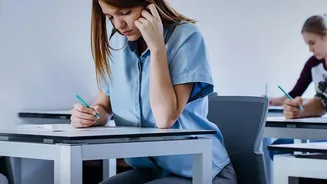
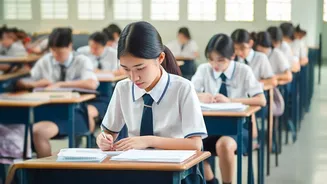
The College Scholastic Ability Test, known colloquially as 'Suneung', is an intense, eight-hour standardised exam that over half a million South Korean high school seniors and graduates take each year. Held annually on the third Thursday of November,
it is the culmination of more than a decade of rigorous, non-stop study. The test covers multiple subjects, including Korean, Mathematics, English, Korean History, and other electives, all packed into a single, gruelling day. For many, its outcome is seen as the single most important event of their young lives, a day of national importance and collective anxiety.
A Life-Defining Day
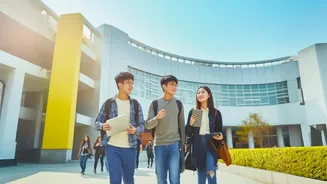
The stakes for the Suneung are astronomically high. In South Korea's hyper-competitive society, a student's score largely determines which university they can attend. Gaining admission to one of the country's top-tier 'SKY' universities (Seoul National, Korea, and Yonsei) is widely seen as a golden ticket to a successful career, social status, and even desirable marriage prospects. This immense pressure has fueled a massive private tutoring industry, with students often studying in 'hagwons' (cram schools) late into the night for years in preparation. The pressure is so significant that the exam has been linked to issues of teenage depression and high stress levels, a subject of ongoing national debate.
The Sound of Silence
Perhaps the most extraordinary measure taken on exam day is the nationwide effort to control noise. During the 35-minute English listening comprehension test in the early afternoon, all airport takeoffs and landings across the country are suspended. Dozens of flights are rescheduled, and planes already in the air are ordered to maintain an altitude of at least 3 kilometres to avoid creating any sound disturbances for the students below. Even train conductors are instructed to slow down and avoid using their horns when passing near any of the 1,300 test centres nationwide. Construction work is also halted, and heavy trucks are banned from roads near exam venues.
A Nation on Pause
The logistical adjustments extend far beyond noise control. To ensure students can get to their exams without traffic delays, most government offices and many private companies delay their opening time by an hour, to 10 a.m. The Korea Exchange (KRX), the country's stock market, also opens an hour late. Public transportation is ramped up, with more subway trains and buses running to accommodate the morning rush of students. For those running desperately late, police cars and motorcycles are on standby to provide emergency escorts, sirens blaring, to get them to the test on time. This year, these measures have been supplemented with new anti-cheating protocols, including stricter inspections and the use of random emergency alerts to detect hidden smartphones, following a recent AI-assisted cheating scandal in another professional exam.