






A New Frontier on Earth
NASA recently announced it is seeking volunteers for its most ambitious Earth-based space simulation yet. The project, called the Moon and Mars Exploration Analog (MMEA), will ask a four-person crew to live and work in a confined habitat for a full year,
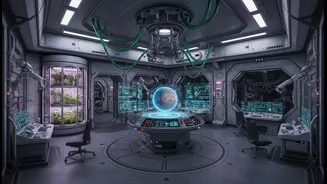
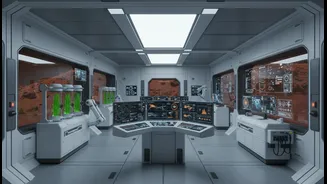
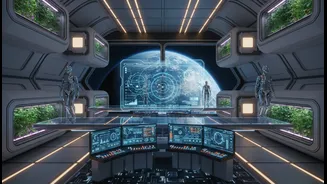
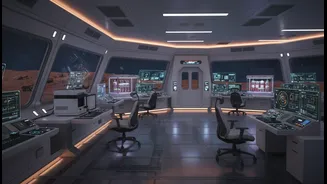
starting in 2027. What makes this mission unique is its integrated approach. For the first time, a single simulation will mimic both the long, isolated transit to another world and the experience of living on a planetary surface. The crew will begin in a module representing a spacecraft, later transitioning to a separate 3D-printed habitat designed to feel like a base on the Moon or Mars. This will allow researchers to study how humans adapt to the different psychological and physical stages of a deep-space expedition, providing crucial data long before the actual Artemis missions venture out for extended stays.
The Psychology of Deep Space
While the physical effects of space travel like bone density loss and muscle atrophy are well-documented, the psychological challenges of a multi-year mission remain a critical hurdle. Astronauts on missions to the Moon, and eventually Mars, will face profound isolation, confinement in a space roughly the size of a small apartment, and sensory monotony. Unlike on the International Space Station, where crews can communicate with Earth in near real-time, deep-space missions will involve significant communication delays, compounding feelings of separation. Researchers in analog missions consistently see the impact of these conditions on mood, team cohesion, and cognitive function. Add in the stress of high-stakes tasks, limited resources, and the so-called “disappearing Earth” phenomenon—watching our planet shrink to a distant dot—and the mental resilience of a crew becomes paramount for mission success.
A Day in a Simulated Life
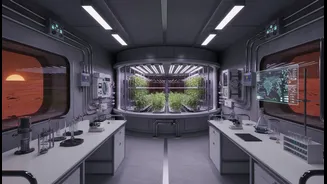
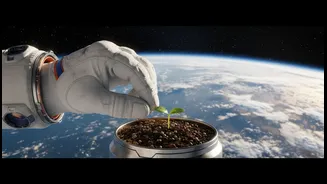
Life for the volunteers in these analog missions is anything but a vacation. The current CHAPEA (Crew Health and Performance Exploration Analog) mission, which houses a crew in a 1,700-square-foot habitat at Johnson Space Center, offers a glimpse into this grueling routine. The crew follows a strict schedule of activities that includes conducting mock spacewalks in a sandbox, operating rovers, growing crops for food, performing habitat maintenance, and running scientific experiments. They contend with realistic mission challenges, such as resource limitations, equipment failures, and the aforementioned communication delays with “mission control.” By studying how the crew responds to stress, solves problems, and maintains relationships under these demanding conditions, scientists can develop better coping strategies, support systems, and protocols for future astronauts.
From Earth Data to Lunar Boots
The data gathered from missions like CHAPEA and the upcoming MMEA is not just theoretical. It directly informs everything from crew selection and training to the very design of spacecraft and habitats. For NASA’s Artemis program, which aims to establish a sustained human presence on the Moon, these insights are invaluable. Understanding how to mitigate interpersonal conflict can influence who gets chosen for a mission. Discovering which leisure activities best combat monotony and resignation—such as personal conversations or virtual reality experiences—can shape the daily schedules and available amenities for astronauts. The findings will help refine operations for the planned Gateway lunar space station and the future Artemis Base Camp. By identifying potential psychological breaking points on Earth, NASA can save not only billions of dollars but also protect the lives and well-being of the explorers who will one day take humanity’s next giant leap.