

Your Stargazing Starter Kit
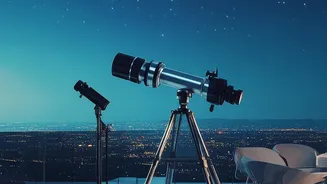
The best part about stargazing is its simplicity. You don’t need expensive equipment to begin your cosmic journey. The most essential tool is a dark sky. Find a spot away from city lights—a local park, a quiet terrace, or a trip to a designated dark-sky
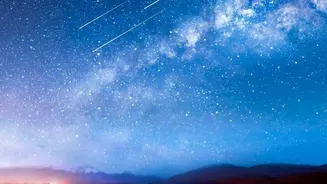
location like Hanle in Ladakh or the Rann of Kutch can make a world of difference. Once you’re there, the second key is patience. Give your eyes at least 20 to 30 minutes to fully adapt to the darkness, and avoid looking at your bright phone screen. If you need a light, use a red torch, as it’s less likely to spoil your night vision. While a telescope isn’t necessary, a simple pair of binoculars can dramatically enhance your view, revealing craters on the Moon and the countless stars that form the Milky Way. Finally, dress in comfortable layers and consider bringing a reclining chair or a blanket to lie on. Sky-watching is a still and quiet activity, so comfort is key.
A Parade of Planets Before Dawn
August 2026 features a stunning pre-dawn planetary alignment. If you’re an early riser, look to the eastern sky about an hour before sunrise to see several worlds gather. The easiest planets to spot will be Mars and Saturn. Mars will appear as a distinct, reddish point of light high in the sky, while golden-hued Saturn will be visible for much of the night. Though Saturn reaches its brightest point in October, August is a fantastic time to get acquainted with the ringed planet. Closer to the horizon, you might be able to spot bright Jupiter and Mercury, though they will be challenging as the morning twilight begins to glow. While you won’t see its rings without a telescope, spotting Saturn with your naked eye is a rewarding experience, knowing you are gazing upon a gas giant more than a billion kilometres away.
Navigate with Summer Constellations
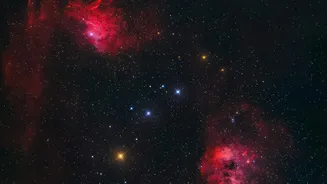
Constellations are the roadmaps of the night sky, and August is prime time for some of the most famous ones. Look almost directly overhead for three brilliant stars that form the Summer Triangle. These are Vega, Deneb, and Altair, and they are so bright you can often spot them even with some light pollution. From a darker location, turn your gaze south to find the constellations Scorpius and Sagittarius. These star patterns are significant because they point toward the dense, bright core of our own Milky Way galaxy. For observers in India, the monsoon can often obscure this view. However, on a clear, haze-free night before or after a spell of rain, the sight is breathtaking. You can see the Milky Way arching across the sky as a faint, glowing band of light, interspersed with dark dust lanes that hide the galactic centre from view.
Look for a Familiar Friend and a Star Cluster
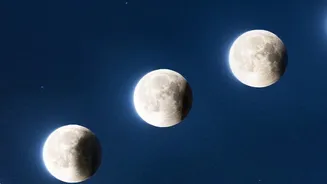
The Moon is often the first object we learn to identify, and following its phases is a wonderful way to connect with the sky's rhythms. In early August, the Moon offers a special treat. On the morning of August 7th, the crescent moon will appear very close to the Pleiades star cluster, also known as the Seven Sisters. This close pairing, or conjunction, makes it easy to find the Pleiades, which looks like a tiny, misty dipper of stars to the naked eye. Through binoculars, it resolves into a stunning cluster of brilliant, young blue stars. It’s one of the nearest and brightest open star clusters to Earth, making it a rewarding target for beginners and seasoned observers alike.