
The Problem with Martian 'Soil'
The first major hurdle for any Martian farmer is the ground itself. It isn't soil as we know it, but a lifeless mineral dust called regolith. This crushed volcanic rock is devoid of the organic matter and essential nutrients, like nitrogen, that plants
need to thrive. Worse, it contains toxic compounds like perchlorates, which would need to be removed before the regolith could be used for growing crops. Earth-based experiments using Martian regolith simulants, often made from volcanic rocks from places like Hawaii, are helping scientists tackle this. These studies consistently show that simply planting seeds in raw regolith results in stunted, unhealthy plants, if they grow at all.
Making Barren Dust Fertile
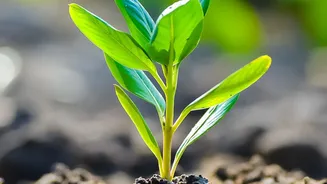
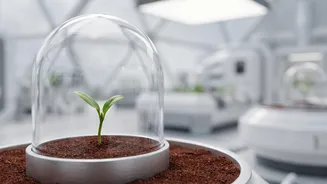
The solution lies in transforming the regolith into living soil. Researchers are exploring several strategies. One promising approach involves using hardy 'pioneer' plants. Experiments have shown that alfalfa can grow in the nutrient-poor simulant. Once grown, the alfalfa can be tilled back into the regolith, acting as a biofertilizer that enriches it enough to support more demanding food crops like turnips, radishes, and lettuce. Another innovative line of research focuses on microbiology. Scientists are investigating how beneficial fungi and bacteria could be introduced to the regolith. These microorganisms can help break down rock, unlock essential nutrients, and even capture nitrogen from the atmosphere, effectively kickstarting a living soil ecosystem from scratch.
Soilless Solutions: Hydroponics and Aeroponics
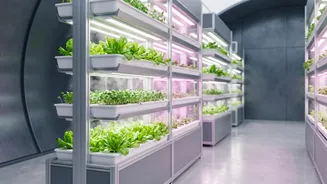
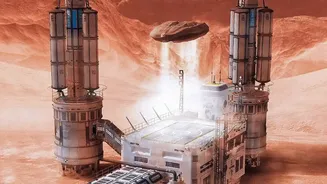
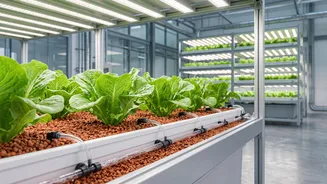
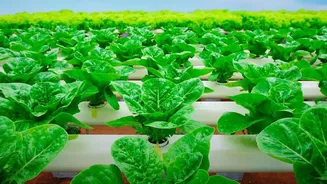
An alternative to fixing the soil is to bypass it entirely. This is where controlled environment agriculture (CEA) comes in. Hydroponics, a method of growing plants in a nutrient-rich water solution, and aeroponics, which involves misting plant roots with nutrients, are leading contenders for Martian greenhouses. These systems are incredibly efficient, using up to 80% less water than traditional farming—a critical advantage on a dry planet. NASA has been testing these technologies for decades, with astronauts on the International Space Station successfully growing lettuce and other greens using systems like 'Veggie'. These soilless farms would be housed in pressurized, underground habitats to protect the crops from Mars's thin atmosphere, extreme cold, and intense radiation.
Let There Be (Artificial) Light
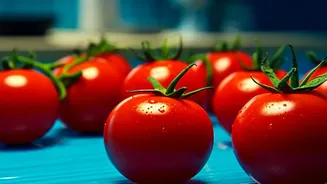
Being farther from the sun, Mars receives less than half the sunlight of Earth. While some regions get enough light for photosynthesis, frequent planet-wide dust storms can block out the sun for weeks. To guarantee a steady food supply, Martian farms will rely heavily on artificial lighting. Experiments on Earth are optimising the use of full-spectrum LED grow lights, tailoring the light recipe to maximise growth for different plants like kale, tomatoes, and radishes. These enclosed systems allow for complete control over the growing cycle, ensuring harvests are predictable regardless of the weather outside.
From Mars Research to Earth Benefits
The quest to farm on Mars has a surprising benefit: it’s driving innovation in agriculture here on Earth. The challenges of extreme resource scarcity in space are forcing scientists to develop hyper-efficient, closed-loop systems. Controlled environment agriculture, vertical farming, and water reclamation techniques pioneered for space are already being adopted to grow food in urban centres and harsh climates on our own planet. Developing these systems helps address food security and sustainability challenges on Earth. This work shows that solving problems for a future on another planet can help us better sustain our own.